Welcome to the new digital home for your continuing care. Let us know if there is anything you would like to see us add.
Search in site
Author: thinkPress
Thinkpress is a team of think professionals that help create informative and interesting content for our blog. With more than 300 employees dedicated to your health and wellbeing, we strive to provide information that's relevant to you. If you have subject matter requests, please contact us.
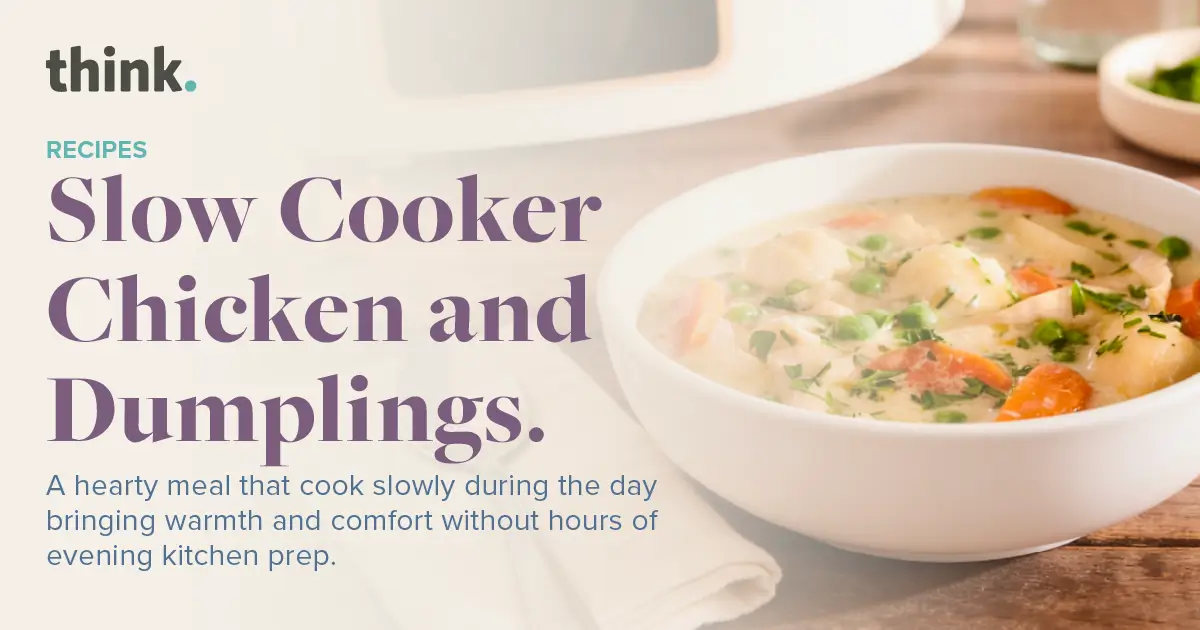
As autumn arrives in Nebraska, hearty meals that cook slowly during the day bring warmth and comfort without hours of evening kitchen prep. Inspired by the classic slow-cooker recipe from The Pioneer Woman, this updated version uses lean protein, root vegetables, and a lighter broth.
The Slow Cooker Chicken and Dumplings Recipe combines tender shredded chicken, hearty vegetables, and a savory broth, all without spending hours at the stove. Using refrigerated biscuit dough as a shortcut gives you soft dumplings that cook right in the broth. You can use boneless, skinless chicken breasts for a leaner meal or chicken thighs for extra flavor. Either way, it is a nourishing dinner that brings the family together after a busy day.
Prep Time:
30 Minutes
Cook Time:
3 Hours, 30 Minutes
Total Time:
4 Hours
Serving Size: 8 – 12 servings
Ingredients
1.5 lbs Boneless, skinless chicken breasts
1 medium Yellow onion, finely chopped
3 large Carrots, peeled and sliced into rounds
3 ribs Celery, sliced
3 cloves Garlic, minced
4 cups Low-sodium chicken broth
1 tsp Dried thyme (or 1 tbsp fresh thyme leaves)
1 Dried bay leaf
1/2 tsp Sea salt and freshly ground black pepper (to taste)
1 can (16.3 oz) Refrigerated biscuit dough (or homemade whole-grain dumpling dough), cut into bite-sized pieces
1 cup Frozen sweet peas (added in the final 30 minutes)
Cook Steps
Step 1: Layer the Base.
Place the chicken breasts in the bottom of a 6-quart slow cooker. Top with the chopped onion, sliced carrots, celery, and minced garlic.
Step 2: Season and Simmer
Pour the low-sodium chicken broth over the top. Add the thyme, bay leaf, salt, and black pepper. Cover and cook on High for 2 to 3 hours until the chicken is tender and easily shreds with a fork.
Step 3: Shred Chicken
Remove the chicken breasts to a cutting board, shred into bite-sized pieces using two forks, and return the chicken to the slow cooker. Discard the bay leaf.
Step 4: Add Dumplings and Peas
Scatter the cut biscuit pieces evenly across the surface of the simmering liquid, pushing them down gently so they are partially submerged. Stir in the frozen peas. Cover and cook on High for an additional 30 to 45 minutes, or until the dumplings are puffed, cooked through, and no longer doughy in the center. Ladle warm into bowls and serve.
Articles that might interest you
Explore related articles that expand on the topics covered in this post. Dive deeper into insights and ideas that might interest you.
Avoiding the flu can be a challenge. Here are ten suggestions that can help you and your family members minimize the chance of catching the flu this season.
Staying hydrated is something 75% of Americans struggle with daily. Our diets play a significant role in how hydrated we are. Pop, caffeine, and salt – to name a few…
When a patient walks into a clinic, their experience is shaped long before they sit down with a physician. It is defined by how easily their appointment was scheduled, the attentiveness of the front-desk team, the efficiency of clinical rooming, and the quiet coordination between doctors, nurses, and laboratory staff.
For Kelli Blair, the newly appointed Clinic Manager of our expanding Think West location, those operational details are not secondary—they are the very foundation of good medicine.
“What gets me fired up about healthcare is knowing that the experience a patient has makes a real difference in how they feel about their health and their care,” Kelli explains. “I’ve spent much of my career working at the intersection of clinical care, education, and operations. I enjoy building strong teams, creating accountability, and refining workflows so all those moving parts behind the scenes create a steady, supportive experience for the patient.”
A Natural Connection to the Think Mission
Kelli’s introduction to think began years ago through her work in medical assisting education. In that role, she trained and mentored emerging clinical professionals while working closely with our organization from an outside vantage point. Over time, that relationship cemented her respect for the organization’s philosophy.
“I became deeply connected to the mission and the way think approaches healthcare,” she notes. “When the opportunity came to step into leadership at West Omaha, it felt like a natural next step. I love that think gives patients a voice. We genuinely listen to how a patient is feeling, and that focus on human dignity is rare.”
Her personal drive is anchored in lived experience. “My family has navigated some frightening medical battles, and I’ve experienced difficult healthcare challenges myself,” Kelli shares. “My ‘why’ comes down to wanting the absolute best care for anyone’s family member. I want patients to have their questions answered, understand what is happening in their bodies, and feel empowered to speak up.”
The True Meaning of Whole Person Healthcare
In an industry that often reduces individuals to isolated lab numbers or quick diagnostic codes, Kelli views her role as protecting a broader perspective.
“Whole Person Healthcare means remembering that the person sitting in our exam room is so much more than a symptom or a chart entry,” she says. “They have families, jobs, stress, responsibilities, fears, and personal goals. Whole-person care means taking the time to understand those elements and ensuring the medical plan fits their everyday reality.”
That commitment to empathy is reinforced by an early career experience in pediatrics that remains a guiding light. “I worked with a young boy who had been removed from a severely traumatic home environment. He was terrified of people. Over several weeks, what began as his grandmother having to assist with every step of his care turned into him running down the hall to hug me every visit. It was about building genuine trust and showing him he was safe. You never know what someone is carrying. Clinical competence is mandatory, but how we make someone feel while receiving that care matters just as much.”
A Clinical Pearl for Every Patient
When asked what single piece of guidance she would share with every patient, Kelli’s response is immediate and clear:
“You know yourself better than anyone. If something doesn’t feel right, speak up and ask questions. You don’t need to know the correct medical terminology or an exact diagnosis. Your job is simply to tell us what you are experiencing. Our job is to listen, ask the right questions, and partner with you to create a clear plan toward recovery.”
Leading the Next Chapter at ThinkWest
As our thinkWest location prepares to open its expanded clinic at the Pacific Springs end cap, Kelli’s operational focus is centered on community impact.
“My role is to build West Omaha into a facility where our patients receive exceptional care and our clinical teams have everything they need to succeed,” Kelli concludes. “Staffing, training, communication, provider collaboration—it all serves one purpose: ensuring West Omaha is a place where patients feel respected, staff feel supported, and everyone is pulling in the same direction.”
Think West will open its expanded doors in early October at Pacific Springs, offering Primary Care, Walk-In Urgent Care, and Integrated Behavioral Health. To learn more or schedule an appointment, call402.506.9000or visitthinkhealthcare.org.
Articles that might interest you
Explore related articles that expand on the topics covered in this post. Dive deeper into insights and ideas that might interest you.
Avoiding the flu can be a challenge. Here are ten suggestions that can help you and your family members minimize the chance of catching the flu this season.
Staying hydrated is something 75% of Americans struggle with daily. Our diets play a significant role in how hydrated we are. Pop, caffeine, and salt – to name a few…
With lingering late-summer temperatures outside, we are ready to summon crisp autumn breezes the best way we know how: baking with cinnamon, spice, and real pumpkin.
Inspired by the beloved Half Baked Harvest recipe, these pumpkin cream cheese muffins bring all the comfort of fall into your kitchen. Spiced pumpkin puree creates an exceptionally moist, tender crumb naturally rich in beta-carotene and dietary fiber, while a ribbon of lightly sweetened cream cheese adds a rich finish. They pair naturally with your morning routine, an afternoon coffee break, or a weekend family brunch.
2 tsp pumpkin pie spice (cinnamon, nutmeg, ginger, cloves)
1/2 tsp fine sea salt
1 cup pure pumpkin puree (not pumpkin pie mix)
1/2 cup pure maple syrup or honey
1/3 cup melted coconut oil or avocado oil
2 large eggs
1 tsp pure vanilla extract
Cream Cheese Swirl:
4 oz Neufchâtel or cream cheese, softened
2 tbsp pure maple syrup
1/2 tsp vanilla extract
Quick Preparation
Step One: Mix Dry and Wet
Whisk together the flour, baking soda, spices, and salt in a medium bowl. In a separate bowl, whisk pumpkin puree, maple syrup, oil, eggs, and vanilla until smooth. Gently fold the dry ingredients into the wet mixture until just combined.
Step Two: Prepare the Swirl
In a small bowl, beat the softened cream cheese, maple syrup, and vanilla until creamy.
Step Three: Layer and Swirl
Divide the pumpkin batter among 12 lined muffin cups. Spoon a dollop of the cream cheese mixture onto each muffin, then use a toothpick to gently swirl the cream cheese into the batter.
Step Four: Bake
Bake at 350°F (175°C) for 20 to 22 minutes, or until a toothpick inserted into the center comes out clean. Let cool on a wire rack.
Articles that might interest you
Explore related articles that expand on the topics covered in this post. Dive deeper into insights and ideas that might interest you.
Avoiding the flu can be a challenge. Here are ten suggestions that can help you and your family members minimize the chance of catching the flu this season.
Staying hydrated is something 75% of Americans struggle with daily. Our diets play a significant role in how hydrated we are. Pop, caffeine, and salt – to name a few…
You don’t need complicated recipes or special ingredients to make a balanced school lunch. A good lunch gives kids steady energy, helps them focus, and keeps their blood sugar stable in the afternoon. Mixing quality proteins, whole grains, and fresh fruits and vegetables helps students stay alert and energized all day. We have put together three easy lunch ideas for different age groups:
1st–4th Grade: Soft Cheese & Turkey Mini Bagels
5th–8th Grade: Chicken Ranch Protein Wrap
9th–12th Grade: Black Bean & Quinoa Burrito Bowl
You can make them the night before, and each one is balanced, helps keep kids hydrated, and stays fresh in a regular lunchbox with an ice pack.
1st–4th Grade: Soft Cheese & Turkey Mini Bagels + Fun Sides
Approx. 380–450 calories
Ingredients
1–2 mini whole-wheat bagels (or 1 regular bagel cut in half)
1–2 Tbsp cream cheese or whipped cheese
2 slices turkey or ham
Handful of grapes or apple slices
A few cucumber sticks or baby carrots
Optional: small yogurt tube or string cheese
Assembly
Spread cheese on the bagel halves, top with turkey, and close or leave open-faced. Pack fruit and veggies in separate compartments so everything stays fresh and easy for little hands.
Why it works: Soft texture, mild flavors, and the “mini” size feels fun and manageable. No complicated rolling or stuffing required.
5th–8th Grade: Chicken Ranch Wrap with Crunch
Approx. 450–550 calories
Ingredients (1 lunch)
1 whole-wheat or flour tortilla
½–¾ cup shredded or diced cooked chicken (leftover rotisserie works great)
1–2 Tbsp light ranch or Greek yogurt mixed with a pinch of ranch seasoning
Handful shredded lettuce or spinach
2–3 Tbsp shredded cheese
Optional: diced cucumber or tomato for crunch
Sides: apple slices or berries + a small handful of whole-grain pretzels or popcorn
Assembly
Toss chicken with a little ranch so it’s lightly coated (not drenched).
Layer greens, chicken, cheese, and any extra veggies on the tortilla.
Roll tightly, tuck the ends, and wrap in parchment or foil.
Pack sides separately so nothing gets soggy.
Pack tip: Keep the ranch light so the wrap doesn’t get wet. This one travels well and feels substantial enough for growing middle-school appetites.
Why it works: More filling and independent-feeling than younger-kid lunches, but still familiar (ranch + chicken is a reliable win). Easy to customize.
9th–12th Grade: Black Bean & Rice Burrito Bowl
Approx. 550–650 calories
Ingredients
¾ cup cooked brown rice or quinoa
½ cup black beans (rinsed)
¼–⅓ cup corn (frozen/thawed or canned)
Handful of shredded lettuce or spinach
2–3 Tbsp salsa or pico de gallo
Optional: 1–2 Tbsp shredded cheese or a dollop of guacamole/hummus
Side: an orange or apple + small handful of tortilla chips or almonds
Assembly
Layer rice, beans, corn, and greens in a container. Keep salsa and any creamy add-ins on the side so the bowl doesn’t get soggy. Stir together right before eating (or roll everything into a large tortilla if a wrap is preferred).
Why it works: Higher in fiber and plant protein to keep older teens full longer. Easy to customize and feels more like a real meal than a basic sandwich.
Articles that might interest you
Explore related articles that expand on the topics covered in this post. Dive deeper into insights and ideas that might interest you.
Avoiding the flu can be a challenge. Here are ten suggestions that can help you and your family members minimize the chance of catching the flu this season.
Staying hydrated is something 75% of Americans struggle with daily. Our diets play a significant role in how hydrated we are. Pop, caffeine, and salt – to name a few…
High August heat and late-summer physical activity can rapidly deplete fluid reserves and stored glycogen. Whether returning from a morning run, finishing yard work, or completing an afternoon workout, post-exertion nutrition requires a deliberate combination of hydration, electrolyte replenishment, and targeted protein synthesis to support muscle repair.
Our Virgin Piña Colada Recovery Smoothie offers the classic tropical flavor profile of pineapple and coconut, delivering a clean, functional ratio of nutrients to restore balance without relying on artificial additives, added sugars, or high-glycemic commercial mixers.
Prep Time 5 minutes
Blend Time 1 minutes
Total Time 6 minutes
Serving Size: 1 Large Serving (or 2 Small Servings)
Ingredients
1 cup Unsweetened coconut water (or coconut milk beverage for a creamier texture)
1 cup Frozen pineapple chunks
1/2 Medium banana (fresh or frozen, for natural creaminess and potassium)
1/2 cup Plain, unsweetened Greek yogurt
1 scoop Unflavored or vanilla protein powder (whey or plant-based)
1/2 tsp Pure coconut extract (optional, for enhanced tropical flavor)
1/4 cup Cold water or ice (to adjust consistency)
Instructions
Step 1: Load the Blender
Add the unsweetened coconut water, plain Greek yogurt, banana, coconut extract (if using), and protein powder into a high-speed blender first. Placing liquid and soft ingredients at the bottom ensures a smooth, even blend.
Step 2: Add Frozen Fruit
Add the frozen pineapple chunks on top of the liquid base.
Step 3: Blend Until Smooth
Blend on high speed for 45 to 60 seconds until the mixture reaches a creamy, uniform consistency.
Step 4: Adjust and Serve
If the smoothie is too thick, pour in an extra 1/4 cup of cold water or additional coconut water and pulse briefly. Pour into a chilled glass and enjoy immediately for optimal nutrient delivery.
Health Tip for the Whole Person
To keep this smoothie aligned with a low-glycemic health plan, avoid adding sweetened coconut cream or extra syrups. The natural sweetness of the frozen pineapple and banana provides sufficient, steady carbohydrates to replenish glycogen stores without causing sharp blood sugar spikes.
Articles that might interest you
Explore related articles that expand on the topics covered in this post. Dive deeper into insights and ideas that might interest you.
Avoiding the flu can be a challenge. Here are ten suggestions that can help you and your family members minimize the chance of catching the flu this season.
Staying hydrated is something 75% of Americans struggle with daily. Our diets play a significant role in how hydrated we are. Pop, caffeine, and salt – to name a few…
At Think Whole Person Healthcare, we are keeping a close eye on the wildfires in central Canada and other parts of North America. Here in Omaha and across Nebraska, smoke from these fires can travel long distances, making our skies hazy and affecting our air quality.
You might look outside and wonder how the smoke really affects your health. Wildfire smoke is more than just something you see—it contains gases and tiny particles. The smallest ones, called PM2.5, can get deep into your lungs and even reach your bloodstream. Local air quality monitors measure PM2.5 and share real-time updates for Omaha and nearby areas. You can check these levels on sites like AirNow.gov to see how much smoke is in our air each day. Knowing these risks and where to find good air quality information is the first step to staying safe, no matter what the sky looks like.
We want you to feel informed and supported. Our goal is to share clear, practical advice so you can protect yourself and your loved ones, and know that we are here to help whenever you need us.
Recognizing the signs of smoke exposure.
Your body often gives you the first signs that something is wrong. Some people may experience only mild irritation, while others, especially those with health conditions, may have stronger reactions. Watch for these common symptoms:
Respiratory irritation: A persistent cough, scratchy throat, or feeling of phlegm in the throat.
Difficulty breathing: Shortness of breath, wheezing, or the sense that you can’t take a full, deep breath.
Ocular and sinus discomfort: Stinging or watery eyes and irritated, blocked, or runny sinuses.
General malaise: Headaches, dizziness, nausea, or unusual fatigue.
Cardiovascular strain: Chest pain or a rapid, irregular heartbeat.
These symptoms can sometimes appear or worsen 24 to 48 hours after exposure, so it’s wise to stay observant even if the air seems to clear temporarily.
We encourage you to notice any changes in how you or your family members feel. Catching symptoms early helps us support you better.
“Paying attention to early warning signs is one of the most important things you can do. Research shows that even short-term exposure to wildfire smoke can trigger asthma attacks, worsen heart disease, and increase the risk of respiratory infections, sometimes before the air even looks or smells smoky. If you notice new or worsening symptoms, don’t wait to see if they pass. Reaching out to your care team early gives us the best chance to adjust your plan and keep a small problem from becoming a bigger one.” – Melanie Kim, DO
Who is most at risk?
Poor air quality can affect anyone, but some people are at higher risk for problems. If you or someone you care about is in one of these groups, taking extra steps is especially important:
Individuals with chronic conditions: Those managing asthma, COPD, heart disease, or diabetes are often most vulnerable to the inflammatory effects of smoke.
Children: Kids have developing lungs and breathe more air for their size, so they take in more pollutants. On smoky days, limit their time outside and encourage indoor play when the air is bad. If you can, keep windows closed and set up a clean room where children can spend time when smoke levels are high.
Older adults: Natural resilience can decrease with age, making seniors more susceptible to respiratory and cardiovascular stress.
Pregnant individuals: Smoke exposure has been linked to adverse birth outcomes, so extra caution is warranted.
Outdoor workers and athletes: Anyone whose work or lifestyle involves significant time outdoors receives higher cumulative particulate exposure.
We care about these differences because supporting whole-person health means meeting people’s needs at every stage of life.
A whole-person approach to your health during smoke events.
At Think Whole Person Healthcare, we believe health is more than just not being sick. It is about overall well-being, which comes from a complete and coordinated approach. When there is smoke in the air, it can be tempting to only treat the symptoms, but we believe in looking at the bigger picture.
Our philosophy is simple: we see you as a whole person, not just a list of symptoms. If you have a condition like asthma or heart disease, things like wildfire smoke are part of your health plan, not just outside problems. Our care model makes sure your doctor, specialists, and support teams all work together. By seeing the full picture, we can help you manage chronic conditions during tough times, avoid unnecessary hospital visits, and support your quality of life.
“Wildfire smoke doesn’t just affect the lungs in isolation, it can influence energy, sleep, anxiety, and how well someone manages their existing conditions. When our teams work together and stay in close communication with patients, we catch issues earlier and create plans that truly fit the individual’s life.”
How to protect yourself from wildfire smoke.
Taking control of your environment is one of the most effective ways to limit exposure. Here are practical strategies we recommend when forecasts indicate smoke in our area:
Stay indoors when you can. This is still the best way to protect yourself. Keep windows and doors closed.
Improve your indoor air: If you have an HVAC system, set it to recirculate and check that your filter is clean. Upgrading to a MERV 13 or higher filter, if your system allows, can help catch more particles.
Set up a clean room: Choose one room in your home for a portable HEPA air cleaner. Spend time there when the air quality is at its worst.
Avoid adding indoor pollutants: On smoky days, avoid things that make more particles, like burning candles, using wood stoves or fireplaces, frying or broiling food, or vacuuming unless you have a HEPA-filtered vacuum.
Stay updated on local forecasts: Use trusted sources like firesmoke.ca and AirNow.gov. Nebraska-specific tools, like the Nebraska Department of Environment and Energy Air Quality Index or Douglas County Health Department updates, are also helpful. Apps like AirVisual and the EPA’s AirNow app give Omaha air quality readings and alerts for your family. Knowing what’s happening nearby helps you make good choices each day.
These steps help make your space safer and lower your exposure to smoke.
“Even small actions add up. Wearing a well-fitting N95 or KN95 respirator mask when you must go outside can significantly reduce the amount of harmful particles you breathe. Cloth and surgical masks do not offer the same protection against wildfire smoke. Staying hydrated, keeping rescue medications (like inhalers) nearby, and reducing strenuous outdoor activity on high-smoke days are simple but effective ways to lower your risk and help your body recover more quickly.” – Melanie Kim, DO
When to seek medical attention.
If your symptoms do not get better, get worse, or do not improve with your usual care, please contact us. You do not have to handle this alone. Your health is our priority.
Connect with your Primary Care Physician: If you have an established asthma or COPD action plan (or similar), follow the guidance you and your doctor have already created. We’re here for quick check-ins and adjustments.
Visit the ThinkQuick Walk-in Clinic: For non-emergency symptoms that need quick attention, our walk-in clinics are ready to help. No appointment is needed at our Omaha locations.
Emergency care: If you experience severe symptoms such as significant chest pain, extreme difficulty breathing, dizziness, or confusion, call 911 immediately or go to the nearest emergency department.
By staying informed and working with us, you can handle these air-quality events with greater confidence.
Many families see their pets as part of the family, and smoke can affect them too. To keep your pets safe during smoky times, limit their time outside and make sure they have clean indoor air, just like everyone else in your home.
We are proud to support our patients and community through every season, even the smoky ones. If you have questions about wildfire smoke, your health plan, or anything else, contact your care team or visit one of our locations. We are here for you.
Avoiding the flu can be a challenge. Here are ten suggestions that can help you and your family members minimize the chance of catching the flu this season.
Staying hydrated is something 75% of Americans struggle with daily. Our diets play a significant role in how hydrated we are. Pop, caffeine, and salt – to name a few…
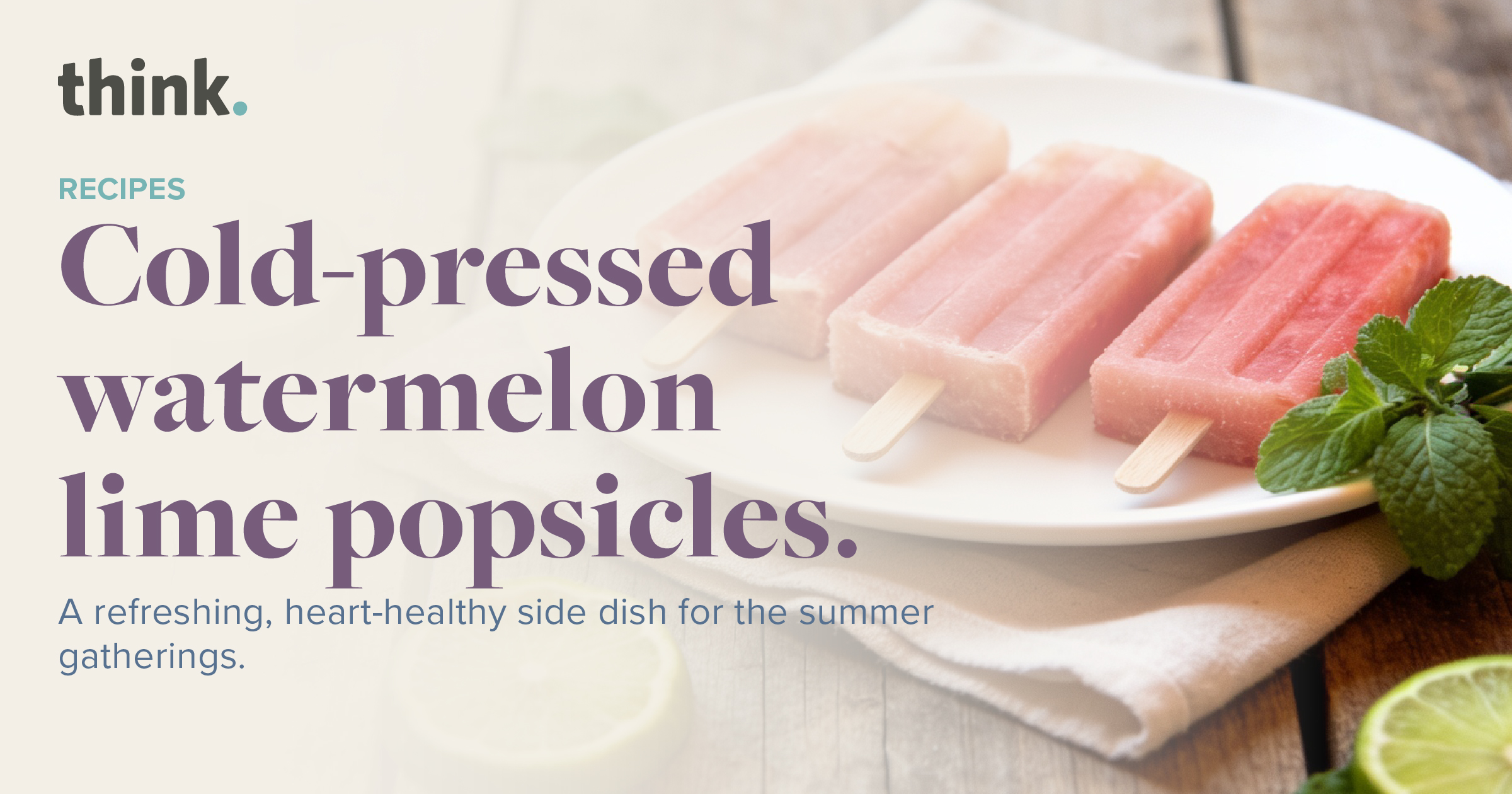
Maintaining proper fluid balance is essential when dealing with heavy summer heat. This refreshing, cold-pressed popsicle recipe serves as an exceptional alternative to store-bought frozen treats, providing clean hydration and electrolyte support without introducing refined sugars or artificial additives.
Prep Time 10 minutes
Cook Time 4 – 6 hours
Total Time 6 Hours
Serving Size: 4–6 Popsicles (depending on mold size)
Ingredients
4 cups Fresh watermelon, cubed and seeded
1 tbsp Fresh lime juice (roughly half a lime)
1 tsp Lime zest, finely grated
1 pinch Sea salt
Optional: 4–6 Fresh mint leaves, finely chopped
Cook Steps
Step 1: Blend the Base
Place the fresh watermelon cubes, lime juice, and a small pinch of sea salt into a high-speed blender. Blend on high for 30–45 seconds until the mixture is completely liquefied and smooth.
Step 2: Incorporate Texture and Herbs
Stir in the finely grated lime zest and the optional chopped fresh mint leaves by hand. This ensures the herbs and zest are evenly distributed throughout the liquid without being pulverized.
Step 3: Pour into Molds
Carefully pour the liquid mixture into your preferred popsicle molds, leaving about a quarter-inch of space at the top to allow for natural expansion as the liquid freezes.
Step 4: Insert Sticks and Freeze
Secure the lids on your molds and insert the wooden popsicle sticks. Place the molds in the flattest section of your freezer for 4 to 6 hours, or until the popsicles are completely solid.
Step 5: Unmold and Serve
To remove the popsicles easily, run the outside of the plastic molds under warm water for 10–15 seconds. Gently slide the popsicle out of the mold and serve immediately.
Tips for Success
If you are looking to add a clean source of protein or healthy fats to this treat, you can fill the popsicle molds halfway with the watermelon mixture, freeze for two hours, and then layer the remaining half with plain, unsweetened Greek yogurt or coconut milk before finishing the freeze.
Articles that might interest you
Explore related articles that expand on the topics covered in this post. Dive deeper into insights and ideas that might interest you.
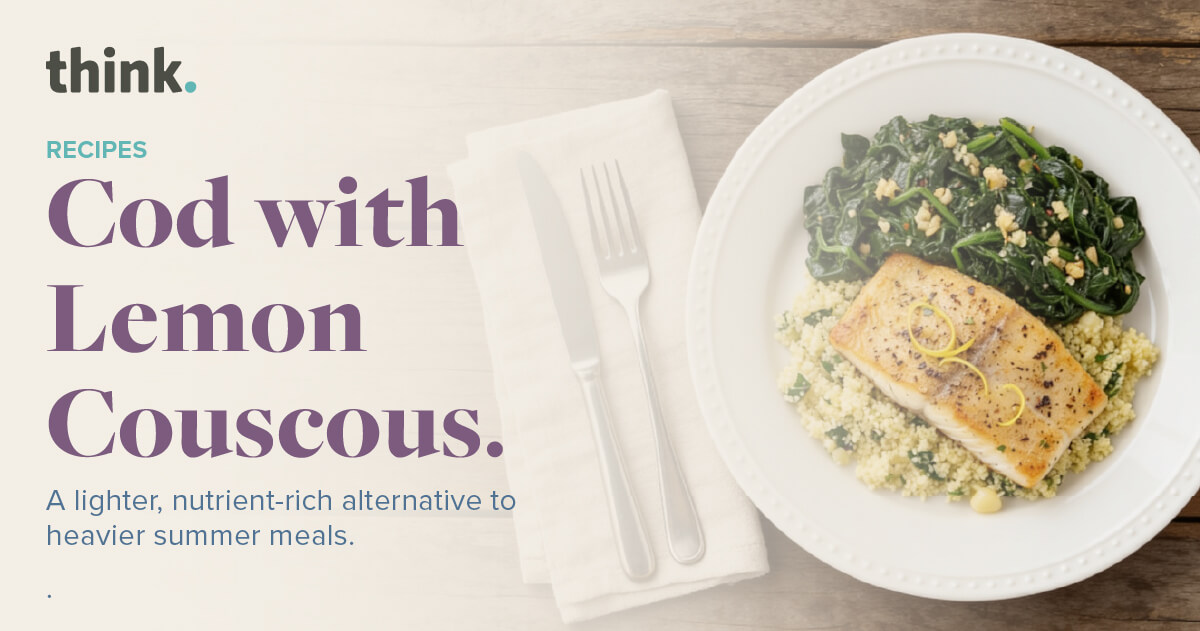
At Think, we focus on meals that provide high-performance fuel for your body without complicating your routine. This Cod with Lemon Whole-Wheat Couscous recipe is a straightforward, light summer option designed to support both your cardiovascular system and metabolic stability.
Pacific cod is an exceptional source of lean, high-quality protein and selenium, an antioxidant that protects your vascular system from oxidative stress. By pairing this clean protein with whole-wheat couscous, we introduce complex carbohydrates and dietary fiber that digest slowly, preventing sudden blood sugar spikes. Enhanced with fresh lemon and iron-rich spinach, this dish provides a clean, nutrient-dense profile that helps keep your energy steady and your body active.
Prep Time: 10 minutes
Cook Time: 15 minutes
Total Time: 25 minutes
Serving Size: 4 servings
Ingredients
For the Cod:
4 (6 oz) Pacific cod fillets (pat dry)
1 tbsp Extra virgin olive oil
1 tsp Garlic powder
1/2 tsp Paprika
Salt and black pepper to taste
1 Lemon, sliced into rounds
For the Lemon Couscous:
1 cup Whole-wheat couscous
1 cup Low-sodium vegetable or chicken broth
2 cups Fresh baby spinach, chopped
1 Lemon, zested and juiced
2 tbsp Pine nuts, lightly toasted
1 tbsp Fresh flat-leaf parsley, chopped
Cook Steps
Step 1: Season the Protein
Preheat your oven to 400°F (200°C). Pat the cod fillets dry with a paper towel to ensure proper searing and texture. Rub each fillet evenly with extra virgin olive oil, then season both sides with garlic powder, paprika, salt, and black pepper.
Step 2: Bake the Cod
Place the seasoned fillets in a baking dish and top each with a slice of fresh lemon. Bake for 12–15 minutes, depending on thickness. The fish is properly cooked when it reaches an internal temperature of 145°F and flakes easily with a fork. This baking method preserves the lean protein structure without adding unnecessary saturated fats.
Step 3: Prepare the Couscous Base
While the fish bakes, bring the low-sodium broth to a boil in a medium saucepan. Once boiling, stir in the whole-wheat couscous, remove the pan from the heat, and cover it immediately with a lid. Let it stand for 5 minutes to absorb the liquid efficiently.
Step 4: Integrate the Nutrients
Remove the lid from the couscous and fluff it gently with a fork. Immediately add the chopped baby spinach, lemon zest, and lemon juice. The residual heat from the couscous will gently wilt the spinach, preserving its active vitamins. The Vitamin C from the fresh lemon juice actively enhances your body’s absorption of the iron present in the spinach.
Step 5: Add Healthy Fats
Fold in the toasted pine nuts and fresh parsley. Pine nuts add a distinct texture while providing essential monounsaturated fats that support healthy cholesterol levels and arterial performance.
Step 6: Assemble the Plate
Divide the warm lemon-citrus couscous evenly among four plates. Top each bed of grains with a baked cod fillet and drizzle any remaining juices from the baking dish over the fish for added clean flavor. Serve immediately.
Tips for Success
If you are managing your carbohydrate intake closely, you can easily substitute the whole-wheat couscous with riced cauliflower. This simple modification reduces the glycemic load further while maintaining the vibrant flavor profile of the fresh lemon and herbs.
Articles that might interest you
Explore related articles that expand on the topics covered in this post. Dive deeper into insights and ideas that might interest you.
Avoiding the flu can be a challenge. Here are ten suggestions that can help you and your family members minimize the chance of catching the flu this season.
Staying hydrated is something 75% of Americans struggle with daily. Our diets play a significant role in how hydrated we are. Pop, caffeine, and salt – to name a few…
A balanced diet relies on whole, minimally processed ingredients that support metabolic health and long-term wellness. At Think Whole Person Healthcare, our clinical focus centers on preventive medicine through thoughtful nutrition. Choosing recipes rich in colorful vegetables, fiber, and lean nutrients helps manage inflammation, stabilizes blood glucose, and supports cardiovascular function.
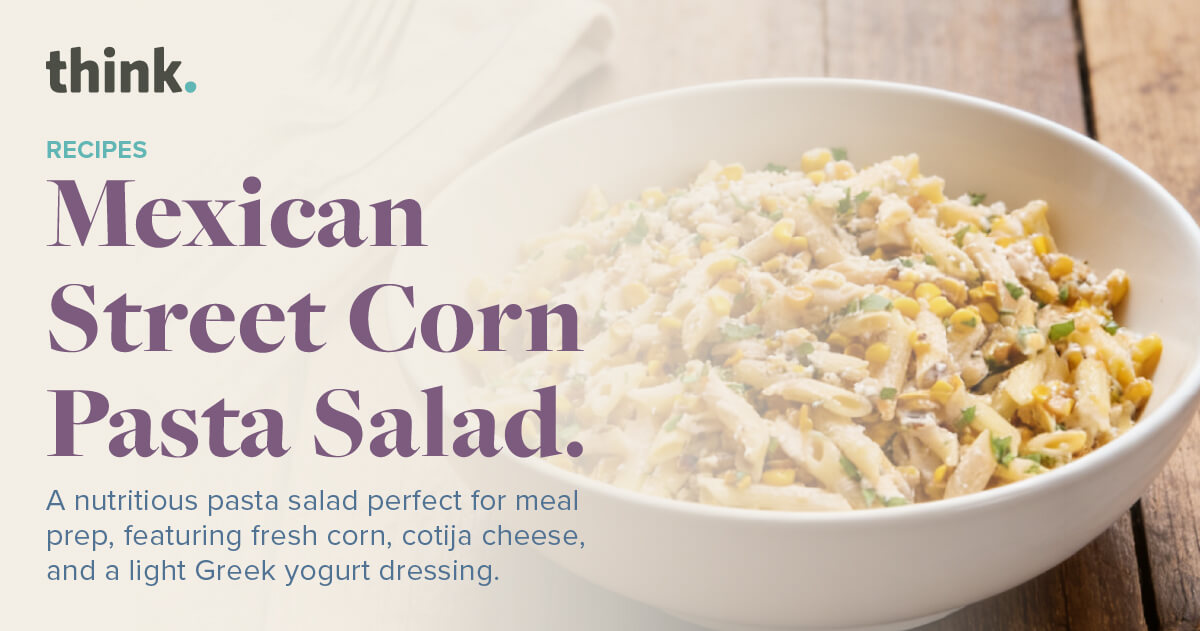
This Mexican Street Corn Pasta Salad offers a nutritious twist on traditional street corn (Elote). By substituting heavy mayonnaise with plain Greek yogurt and prioritizing crisp, fresh vegetables, this dish provides a satisfying balance of complex carbohydrates, dietary fiber, and essential micronutrients. It serves as an excellent side dish or a standalone lunch option for your wellness routine.
Prep Time 15 minutes
Cook Time 15 minutes
Total Time 30 minutes
Serving Size: 6 servings
Ingredients
8 ounces whole-wheat rotini, penne, or bow tie pasta
3 cups fresh corn kernels (cut from about 4 ears, or thawed frozen corn)
1 tablespoon olive oil
½ cup red onion, finely diced
½ cup fresh jalapeño, seeded and finely minced
½ cup fresh cilantro, chopped
½ cup cotija cheese or feta cheese, crumbled
¼ cup plain, unsweetened Greek yogurt
2 tablespoons mayonnaise
Juice of 1 large lime
½ teaspoon chili powder
¼ teaspoon ground cumin
Garlic powder, salt, and freshly ground black pepper to taste
Cook Steps
Step 1: Cook the Pasta
Bring a large pot of salted water to a boil. Add the whole-wheat pasta and cook according to the package instructions until al dente (usually 8 to 10 minutes). Drain the pasta, rinse briefly under cool water to stop the cooking process, and place it into a large mixing bowl.
Step 2: Char the Corn
Heat the olive oil in a large skillet over medium-high heat. Add the corn kernels and spread them into an even layer. Let the corn cook undisturbed for 2 to 3 minutes until it begins to brown and char. Stir and cook for another 3 to 4 minutes until evenly charred. Remove from the heat and let cool slightly.
Step 3: Whisk the Dressing
In a separate small bowl, combine the plain Greek yogurt, mayonnaise, fresh lime juice, chili powder, ground cumin, and garlic powder. Whisk thoroughly until the dressing is smooth and creamy.
Step 4: Assemble the Salad
Add the charred corn, diced red onion, minced jalapeño, chopped cilantro, and crumbled cotija cheese to the large bowl containing the cooled pasta.
Step 5: Toss and Season
Pour the yogurt dressing over the salad components. Toss gently until the pasta and vegetables are thoroughly coated. Taste and season with a pinch of salt and black pepper as desired. Serve immediately or chill in the refrigerator for one hour to let the flavors meld.
Articles that might interest you
Explore related articles that expand on the topics covered in this post. Dive deeper into insights and ideas that might interest you.
Avoiding the flu can be a challenge. Here are ten suggestions that can help you and your family members minimize the chance of catching the flu this season.
Staying hydrated is something 75% of Americans struggle with daily. Our diets play a significant role in how hydrated we are. Pop, caffeine, and salt – to name a few…
Summer holidays are a great time to relax, enjoy outdoor activities, and celebrate with family and friends. For many people, these gatherings include alcoholic drinks. However, drinking alcohol in hot weather can bring certain health risks.
By being mindful about how much you drink, pacing yourself, and staying hydrated, you can look after your health and help everyone have a safe and enjoyable time.
Summer Drinking and Hydration.
Knowing how things like heat and alcohol affect each other is important for staying safe during summer holidays.
Why does hydration matter in the heat? Alcohol acts naturally as a diuretic, which means it makes your kidneys to flush fluids from the body at an accelerated rate. When combined with high summer temperatures and sweating, our risk of dehydration goes up quickly.
Dehydration makes it harder for your body to control its temperature, which can make you more likely to have problems from the heat. Watch for these early signs of dehydration:
Persistent thirst
Dry mouth or thick saliva
Mild dizziness or lightheadedness
Headaches and muscle cramps
Uncharacteristic fatigue
If you notice these symptoms, stop drinking alcohol right away and focus on rehydrating.
Strategies for Staying Adequately Hydrated
To make up for the fluids lost from drinking alcohol, be sure to drink water or other hydrating drinks throughout the day.
The One-for-One Rule: Alternating every alcoholic beverage with a full glass of water or a non-alcoholic option helps maintain fluid balance and naturally regulates the pace of consumption.
Add electrolytes: Spending a long time in the heat makes you lose important minerals through sweat. Drinking beverages with added electrolytes can help you replace sodium and potassium.
Flavor Your Water: Adding fresh components like sliced cucumber, citrus fruits, or mint leaves makes plain water more appealing, encouraging regular intake during outdoor events.
Making Smart Beverage Choices.
Changing what you drink and paying attention to serving sizes can help you avoid drinking too much and becoming dehydrated.
Understanding Alcohol by Volume (ABV)
Drinks with more alcohol can make you feel the effects faster and cause dehydration. Look at the label for the Alcohol by Volume (ABV) percentage to help you choose wisely. Picking drinks with lower ABV, like light beers (3% to 5% ABV) or wine spritzers mixed with club soda, gives you a lighter and more refreshing choice.
Utilizing Healthier Mixers
Many summer cocktails use sweet mixers, sodas, and juices. These can hide the taste of alcohol, which may make you drink faster and feel sluggish. Try swapping them for healthier options instead:
Soda Water or Seltzer: Adds carbonation without introducing unnecessary sugars.
Fresh Citrus: A squeeze of lime, lemon, or grapefruit provides natural flavor.
Herbal Infusions: Muddled basil, rosemary, or mint elevates flavor profiles without adding artificial sweeteners.
Standard Drink Measurements in the United States
Being careful about how much you drink means keeping track of your alcohol intake. In the United States, a standard drink has about 14 grams of pure alcohol, which equals:
Beverage Type
Standard Serving Size
Beer (approx. 5% ABV)
12 ounces
Wine (approx. 12% ABV)
5 ounces
Distilled Spirits (approx. 40% ABV)
1.5 ounces
Recognizing these standard measurements helps prevent accidental overconsumption, particularly when drinks are served in oversized patio cups or communal punch bowls.
Establish boundaries and pace yourself.
Deciding on your personal limits before you get to a holiday gathering helps you avoid making impulsive choices that can happen in a relaxed, festive setting.
Practical Tips for Pacing Yourself
Eat Before and During Event Attendance: Consuming a balanced meal containing protein, fiber, and healthy fats before your first drink slows down the absorption of alcohol into your bloodstream.
Avoid Drinking Games: Competitive activities promote rapid consumption, making it difficult to gauge your true level of intoxication.
Monitor Internal Signals: Pay attention to shifts in coordination, speech, or mood. Feeling unusually fatigued or lightheaded indicates that your body requires a break from alcohol.
Determining a Definitive Stopping Point
Pick a time to stop drinking before the event starts, and let a friend know your plan for extra support. When that time comes, switch to non-alcoholic drinks like mocktails or iced herbal teas. This way, you can still enjoy your evening and feel good the next day.
What are your responsibilities as a safe summer host?
Hosting a summer gathering is about more than just food and entertainment. It’s also about making sure your guests feel comfortable and safe making their own choices.
Elevating Non-Alcoholic Offerings
Make non-alcoholic drinks a main part of your event, not just an afterthought. Set up a hydration station with options like infused waters, seltzers, and mocktails so everyone, including designated drivers and non-drinkers, feels welcome.
The Role of Substantial Food
Offer filling food throughout the whole gathering. Grilled proteins, hearty salads, and fresh veggies help guests get the nutrition they need to balance any drinking. Try some of our healthy recipes:
A good host helps guests plan a safe way to get home.
Encourage drivers to be designated prior to the event.
Keep ride-sharing applications accessible and offer to assist with booking if needed.
Offer a place to stay overnight for guests who need a safe option instead of traveling home.
Crucial Risks to Avoid
Maintaining personal safety during summer celebrations requires recognizing dangerous substance interactions and knowing when to seek professional medical advice.
The Dangers of Mixing Substances
Mixing alcohol with prescription drugs, over-the-counter medicine, or recreational substances can be very dangerous. Alcohol slows down your central nervous system, and combining it with other substances can make this effect much stronger and less predictable. This can lead to:
Severe coordination loss and disorientation
Respiratory depression or breathing difficulties
Cardiovascular strain or irregular heart rhythms
Always check your medication labels for alcohol warnings, and ask your doctor or pharmacist if you’re unsure about possible interactions.
Recognizing Medical Emergencies
It’s important to recognize when someone needs more than just time to recover. If a guest keeps vomiting, seems confused, has cold or bluish skin, is breathing slowly, or passes out, call emergency services immediately. For less serious issues, such as mild dehydration, a ThinkQuick Walk-in clinic can help.
Frequently Asked Questions
How does hot weather affect how my body processes alcohol?
Hot weather causes fluid loss through sweating. Because alcohol is a diuretic, it accelerates this fluid loss, leading to rapid dehydration. Dehydration concentrates the alcohol in your bloodstream, which can heighten the onset of impairment and increase your susceptibility to heat exhaustion.
What are the immediate signs of heat exhaustion versus alcohol impairment?
Both heat exhaustion and alcohol impairment can cause dizziness, headaches, and nausea. Heat exhaustion usually also brings heavy sweating, a fast pulse, pale skin, and muscle cramps. If someone is confused, slurring their words, or passing out, treat it as a medical emergency.
How can I gracefully decline a drink at a social gathering?
Be clear and direct. You can say, “I am sticking with water right now to stay hydrated in this heat,” or “I am driving tonight, so I am enjoying this mocktail.” That’s all you need to say.
Do caffeinated mixers help sober you up in the summer?
No. Caffeine can make you feel more awake, but it does not lower your blood alcohol level or help your body process alcohol faster. Caffeine is also a diuretic, so it can make dehydration worse in hot weather.
Articles that might interest you
Explore related articles that expand on the topics covered in this post. Dive deeper into insights and ideas that might interest you.
Avoiding the flu can be a challenge. Here are ten suggestions that can help you and your family members minimize the chance of catching the flu this season.
Staying hydrated is something 75% of Americans struggle with daily. Our diets play a significant role in how hydrated we are. Pop, caffeine, and salt – to name a few…