


Easy and Accurate Rapid COVID PCR Testing

A hand uses a swab with a Covid-19 PCR test kit. Text reads: Easy and Accurate. Covid PCR Testing Available. thinkhealthcare.org. Blue circle with think. appears on the right.

While cases of COVID-19 have dropped across the United States since 2020, the stubborn coronavirus continues to mutate and infect people of all ages. The latest data tracker results from the Centers for Disease Control and Prevention (CDC) reports a daily average of just over 100,000 new cases. In Nebraska, the Department of Health and Human Services (DHHS) reports that there are more positive tests now versus 2021 and 2020 in the same period.  Emergency department visits for COVID-like illness now exceed June 2021 and 2020. Some long-term care facilities have reverted to in-room dining restrictions to attempt to stop the spread to this at-risk population.    

To help keep you, your family, friends and co-workers safe during a current rise in COVID infections, Think Whole Person Healthcare now offers Rapid COVID PCR Tests. Using our on-site lab, the ultra-fast test is 98% accurate (compared to only 70% with most other rapid and/or traditional tests). And you get results in two hours or less in almost all instances. Our rapid test can also simultaneously check for influenza A and B and RSV.

How Does a Rapid COVID PCR Test Work?

PCR stands for polymerase chain reaction test. The diagnostic test uses a nasal swab to analyze if a person’s upper respiratory sample contains genetic material from the coronavirus. The think PCR test is a molecular in vitro diagnostic test that uses nucleic acid amplification technology. This means the convenient, FDA-approved test detects genetic material, specifically the ribonucleic acid (RNA) sequences in the COVID-19 virus. Searching for the virus at the genetic level ensures the specificity and sensitivity of results—leaving little margin for error. 

PCR tests done in the think lab are 98% accurate in positive results for SARS-CoV-2 and 100% accurate for detecting RSV and influenza A and 99% accurate for detecting influenza B. The minimally invasive test takes roughly five minutes to collect and is covered by most insurance carriers. 

When Should You Get a Rapid COVID PCR Test?

If you think you were exposed to the coronavirus or you notice any COVID symptoms, you should be tested—even if you’ve been vaccinated and boosted or have already had COVID-19. It may take anywhere from two days up to two weeks after COVID exposure to experience the virus symptoms. Typically, people are most contagious two days before and three days after symptoms first appear.

Being tested as soon as possible and self-quarantining will help stop the spread to others. COVID-19 is sometimes difficult to diagnose correctly without proper testing. Home self-testing can produce incorrect results, particularly if the swabbing is done incorrectly. 

Think makes it easy to get accurate testing at our ThinkQuick Walk-In Clinic, open every day of the week: Monday – Friday, 7 a.m.-8 p.m. and Saturday – Sunday, 9 a.m.-5 p.m. A special area in our lobby is designated for individuals who think they may have COVID. Upon arrival, once you notify the think front desk staff, they will notify a thinkQuick provider who can evaluate you and order a test. 

Our walk-in clinic treats anyone, even those who are not a think patient or do not have a primary care provider. To learn more about our wide-ranging healthcare services, visit our Services page online and choose your own think medical professionals by visiting our Meet Your Doctor page. 

How You Can Reduce the Risk of Getting COVID

Our Douglas County communities and our nation and world are not free from the infectious coronavirus and its variants. We all must continue to stay on guard against contracting the disease and spreading it to others. The Think Whole Person Healthcare team is here to help keep you healthy and safe from COVID-19 and any communicable disease and health concern. 

We recommend you wash your hands frequently and wear a mask if you have COVID symptoms, test positive to the virus or are exposed to someone with the virus. Be proactive with your health and wear a mask on public transportation or in certain crowded social settings. Make wise choices on wearing a mask to protect yourself, your loved ones and others where you live, work and play. 

If you have any health questions or concerns, please call 402-506-9049 to book an appointment with a Think Whole Person Healthcare physician or schedule an appointment online. Centrally located in Omaha, we offer convenient same-day appointments. 
Covid Update: 2022

COVID Update

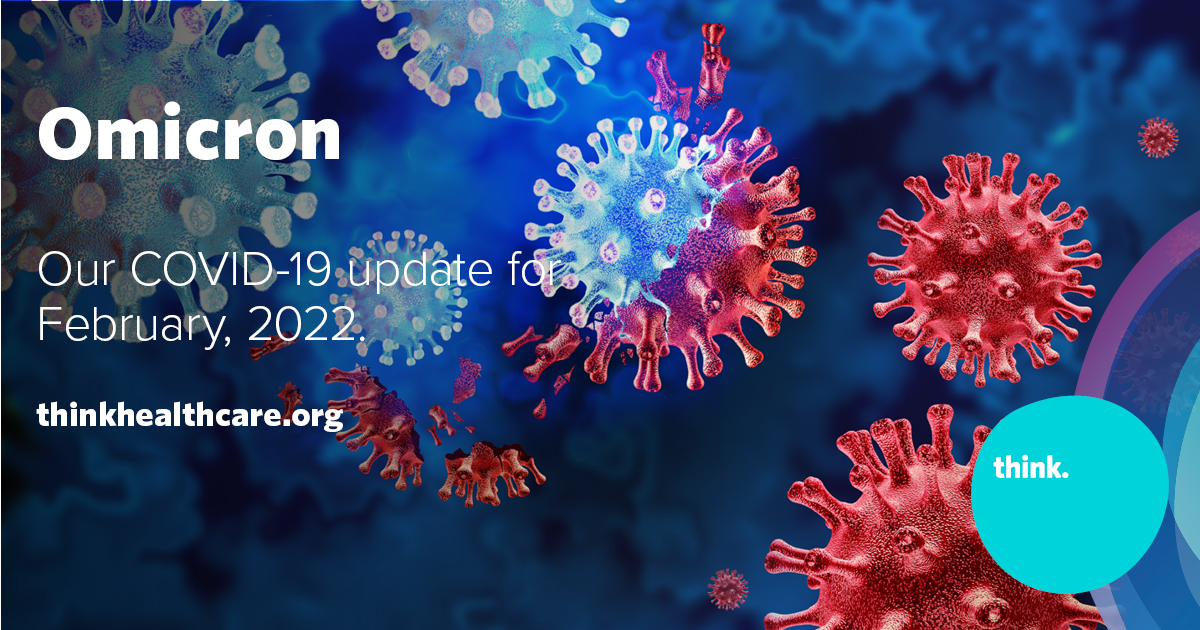
On New Year’s Eve, I was so excited to say “goodbye” to 2021 and welcome 2022 and hoped COVID-19 would become a distant memory. Unfortunately, the pandemic had other plans. Here we are, February of 2022, and the Omicron variant is working its way through our area. Here is our COVID Update for 2022.

Hospitals see a record number of cases, and the Douglas County Health Director implemented a mask mandate. Even though it seems like 2022 may be a repeat of the previous year, there is hope. 

Here’s what we know so far COVID-19 in 2022

  • There is a wide range of symptoms for COVID-19.
  • The variant doesn’t determine the symptoms. 
  • Omicron appears to be milder than Delta
  • Approximately 64.5% of Douglas County residents are vaccinated for COVID-19
  • More than 1 million vaccination doses have been administered in Douglas County.
  • Hospital occupancy rates are still quite high averaging above 84%
  • Most patients admitted to the hospital are unvaccinated.
  • A majority of people who have been vaccinated are becoming eligible for their booster dose
  • Children are now eligible for vaccinations, and almost 120,000 have been vaccinated!
  • Regardless of the variant, they are still the same SARS-CoV-2 virus
  • Testing for COVID-19 is readily available, and in-home kits can be purchased online and at most pharmacies
  • The Federal government has made it possible for everyone to have access to testing—free of charge.

Every day medical researchers and infectious disease experts learn more about the SARS-CoV-2 virus and continue to improve treatment programs for those presenting more severe symptoms, and outcomes are improving for hospitalized patients. Data continues to pour in, showing that the available vaccinations greatly reduce the chance of contracting COVID-19. Vaccinations also help reduce the severity of symptoms if you were to contract COVID.

The Centers for Disease Control continue to publish frequent updates, and the medical community is ready to adjust practices based on their findings. 

What can you do to minimize the risk of getting COVID?

Although there is no sure-fire way to avoid contracting COVID, you can take several steps to help reduce the opportunity to get exposed and infected. 

  • Wear a face mask in public and around others outside of those living with you.
  • Get vaccinated and if you qualify, get your booster shot.
  • Get your flu shot!
  • If you haven’t been to your doctor for your annual physical, this is the time to do so. Having a baseline for your health is important if you do contract COVID in the future. In the meantime, don’t put off seeing your doctor if you need medical assistance. If you are nervous about coming to the clinic, our Virtual Care Connection (telehealth) may be a good option.
  • Continue to wash your hands and avoid the 3 C’s:
    1. Crowded places
    2. Close contact
    3. Confined spaces
  • Wash your hands
  • If you think you were exposed to COVID or experiencing symptoms, get tested!

What if I suspect I may have COVID?

COVID is sometimes hard to diagnose without proper testing. A lot of the symptoms are similar to influenza and the common cold. The CDC published this list of the most common symptoms. If you have COVID, you may experience some or all of these: 

  • Fever or chills
  • Cough
  • Shortness of breath or difficulty breathing
  • Fatigue
  • Muscle or body aches
  • Headache
  • New loss of taste or smell
  • Sore throat
  • Congestion or runny nose
  • Nausea or vomiting
  • Diarrhea

If you are experiencing any of these, it’s best to get tested. Symptoms may appear anywhere from 2-14 days after exposure. People are most-contagious about two days before and three days after the onset of symptoms, so getting tested as soon as you suspect is critical so you can isolate or quarantine if you do test positive. Home “self-testing” kits are available at almost every pharmacy and online. You must follow the instructions to get incorrect results if you aren’t swabbing correctly. To be certain you don’t have COVID, we recommend getting tested at your doctor’s office.  

Think Whole Person Healthcare has a walk-in clinic that is open seven days a week: Mon-Fri, 7 am – 8 pm, Sat-Sun, 9 am-5 pm, where you can get tested. We have set up a special area in our lobby for folks who think they have COVID. When you arrive, tell the think staff at the front desk, and they will have someone from thinkQuick come down and administer a test. You don’t have to be a think patient to use our walk-in clinic and, if you don’t have a Primary Care provider, get one! Visit our “Meet your Doctor” page to learn more about the providers at think.

Final thoughts.

When I look back at two years, conditions are getting better, and we continue to move in the right direction, but it will take teamwork from everyone to overcome COVID. We all need to continue to:

  • Be diligent with our hand washing and wearing masks
  • Be kind to others
  • Offer help when we can
  • Get vaccinated and boosted

Travel and Safety Tips from the CDC

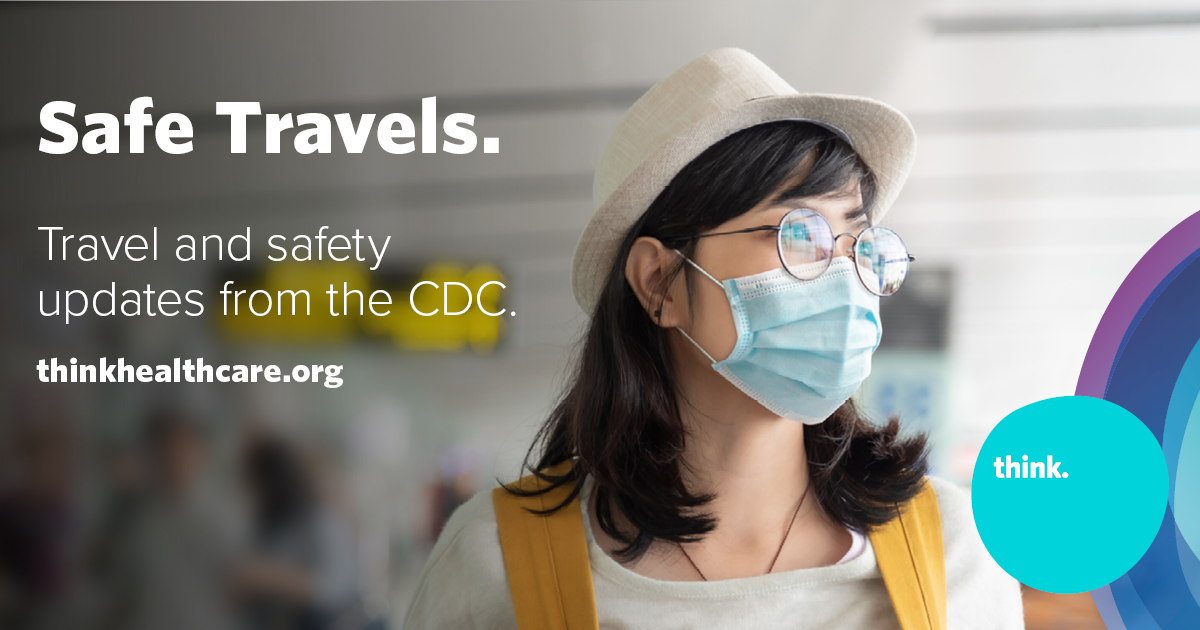
Woman wearing a hat, glasses, and a face mask stands in an airport. Text reads: Safe Travels. Travel and safety updates from the CDC. thinkhealthcare.org. Blue circle with think..

Tips on how to travel safely in the world of COVID-19.

As more and more people become vaccinated, it seems that life is able to return to a level of normalcy not seen in quite some time. When venturing back out, consider these helpful tips from the Centers for Disease Control and Prevention (CDC) for how to stay safe and keep those around you safe.

Disclaimer: The article’s content was based on recommendations from the CDC at the time of publishing. It is very possible the guidelines from the CDC have changed.

Daily activities and going out

When looking to venture out, be mindful that not everyone is vaccinated, that the longer you stay in one place, the amount of people who are present and the closer you are together, the higher your chances of catching or spreading COVID-19. To ensure your safety and the safety of those around you in these situations, bring a face mask and use hand sanitizer with at least 60% alcohol.

If you decide to meet a group of friends and someone within the group is not fully vaccinated, an outdoor activity is recommended. We recommend masks whenever the vaccination status of attendees is unclear.

Take a trip, but be safe.

The CDC recommends that until you are fully vaccinated, don’t travel unless necessary. If you are fully vaccinated, however, you can travel safely within the United States and United States territories. Be sure to check with local laws for your planned destination as some locations have specific rules regarding vaccinations, tests and face coverings. International countries may require COVID tests prior to and upon arrival. You may also be required to quarantine while waiting for results. Understand that the US may also require COVID tests upon returning to the states.

Vaccinated travelers

You are required by law to wear a face mask over your nose and mouth while on public transportation and in transportation hubs, in airports, on airplanes, buses and trains.

Unvaccinated travelers

Only travel if it is necessary. Make sure to get tested one to three days before you travel, if you are positive DO NOT travel. Mask requirements are the same as vaccinated travelers. Maintain a social distance of six feet from anyone who is not traveling with you and wash your hands / apply hand sanitizer with at least 60% alcohol on a regular basis.

Once you’ve returned from travel, get tested with a viral test three to five days after returning home. Stay home and self-quarantine for a full seven days.

Life during COVID-19 has been hard, but it looks like now we are starting to see the light at the end of the tunnel. Let’s all continue to do our part to keep everyone safe and healthy.