


Get Your Eye Health in Focus.

A smiling woman in a red knit hat and gloves holds a snowflake to her eye. Overlaid text reads: Get Your Eye Health in Focus. This National Eye Care and Glaucoma Awareness Month, prioritize your vision.

This National Eye Care and Glaucoma Awareness Month, prioritize your vision.

January marks the beginning of a new year and is a perfect time to prioritize your well-being—starting with your eye health. As National Eye Care Month and Glaucoma Awareness Month, January serves as a reminder of the importance of protecting your vision, detecting early signs of eye disease, and maintaining overall eye health. 

Your vision is more than just the ability to see; it’s a complex process involving your eyes and brain working together. The cornea, lens, retina, and optic nerve transform light and electrical signals into the images you perceive. A variety of conditions can disrupt this intricate system, and taking proactive steps to care for your eyes can help you maintain good vision for life.

Common Eye Conditions and Their Impact on Vision

Diabetes

Diabetes is a leading cause of blindness in the United States. Elevated blood sugar levels can damage the small blood vessels in the retina, leading to a condition called diabetic retinopathy. Symptoms may not appear initially, but as the disease progresses, it can cause blurred vision, dark spots, or complete vision loss.

Early detection is crucial. During a dilated eye exam, healthcare providers can identify signs of diabetic retinopathy, which often mirrors damage in other organs like the kidneys and brain. Managing diabetes through regular eye exams and effective treatment can prevent blindness and improve overall health outcomes.

High Blood Pressure

Hypertension, or high blood pressure, can also harm your vision. Consistently elevated blood pressure can cause hemorrhages in the retina, fluid buildup, or optic nerve damage. These conditions may lead to blurred or distorted vision and, in severe cases, permanent sight loss.

Routine health checkups that monitor blood pressure and cholesterol levels are essential in reducing the risk of hypertension-related eye issues. Combining preventive care with healthy lifestyle choices can protect your vision.

Glaucoma: The Silent Threat

Glaucoma is a group of eye diseases that damage the optic nerve, often due to increased pressure within the eye. This condition progresses silently, with no noticeable symptoms in its early stages. Left untreated, glaucoma can cause irreversible vision loss, starting with peripheral vision.

Regular comprehensive eye exams are the best defense against glaucoma. These exams measure internal eye pressure and assess the health of the optic nerve. Early intervention can effectively manage the condition and preserve vision.

Cataracts: Clouding Your Vision

Cataracts, a common age-related condition, cause the lens of the eye to become cloudy, leading to blurred or hazy vision. Symptoms include diminished night vision, glare sensitivity, and changes in color perception.

While cataracts often develop slowly, early detection and monitoring are essential. Fortunately, cataract surgery is a safe and effective treatment that restores clear vision for millions of people each year.

Dry Eye Syndrome

Dry eye occurs when your eyes don’t produce enough tears or the tears evaporate too quickly. This condition can cause burning, redness, and a gritty sensation. Factors such as age, screen time, and certain medical conditions increase the risk of dry eye.

Treatments range from over-the-counter artificial tears to prescription medications like Restasis. Lifestyle adjustments, such as taking regular breaks from screens and using humidifiers, can also alleviate symptoms.

Proactive Steps for Better Eye Care

Protecting your vision starts with simple, proactive measures:

  • Limit screen time: Follow the 20-20-20 rule—every 20 minutes, look at something 20 feet away for 20 seconds.
  • Wear sunglasses: Protect your eyes from harmful UV rays by wearing wraparound sunglasses outdoors.
  • Eat a balanced diet: Include foods rich in vitamin A (carrots, spinach) and omega-3 fatty acids (salmon, walnuts).
  • Stay hydrated: Drink at least 8 to 10 glasses of water daily to maintain tear production.
  • Quit smoking: Smoking increases the risk of cataracts, glaucoma, and macular degeneration.
  • Schedule regular eye exams: Comprehensive dilated eye exams detect early signs of conditions like glaucoma, diabetic retinopathy, and cataracts.

A closer look at Glaucoma, the “Silent Threat”

Glaucoma is a group of diseases that damage the optic nerve and can result in vision loss or blindness. It affects about 3 million Americans and is the second leading cause of blindness worldwide. Despite its prevalence, many are unaware they have glaucoma, earning it the nickname “silent thief of sight.”

The most common form, open-angle glaucoma, results in increased eye pressure that damages the optic nerve over time. While there is no cure, early detection and treatment can preserve vision and prevent further loss.

Risk Factors for Glaucoma

Certain groups are at higher risk of developing glaucoma, including:

  • African Americans over age 40 (6 to 8 times more likely to develop glaucoma than Caucasians).
  • All individuals over age 60.
  • People with a family history of glaucoma.
  • Individuals with diabetes (2 times more likely to develop glaucoma than those without diabetes).

Preventing Vision Loss from Glaucoma

Comprehensive dilated eye exams are essential for catching glaucoma early, especially for those in high-risk groups. Medicare even covers annual glaucoma tests for people at higher risk. Additional proactive steps include:

  • Maintaining a healthy weight.
  • Controlling blood pressure.
  • Staying physically active.
  • Avoiding smoking.

If diagnosed, glaucoma can be managed through eye drops, oral medications, laser treatments, or surgery to reduce eye pressure. Regular follow-ups with an eye doctor ensure effective monitoring and care.

Collaborative Care at Think Whole Person Healthcare

At think, we believe in a holistic approach to eye health. Our collaborative care model ensures seamless communication between eye care professionals and other healthcare providers, enabling timely diagnosis and treatment of conditions like diabetes and hypertension that impact vision.

Our comprehensive services include:

  • Thorough dilated eye exams
  • Monitoring and treatment of chronic conditions affecting eye health
  • Personalized care plans for patients with unique needs

TAKE THE NEXT STEP FOR YOUR EYE HEALTH WITH THINK.

We’re committed to making your healthcare experience comfortable and comprehensive. Our optometry services provide personalized care tailored to your needs. Whether it’s safeguarding your vision, managing chronic conditions like glaucoma, or addressing other health concerns, our team of skilled providers is here for you. think offers a full spectrum of healthcare services, from preventive care to specialty treatments, ensuring you and your family’s lifelong health and well-being. 

Think is committed to providing comprehensive, high-quality care at affordable costs. To schedule an appointment or learn more about our comprehensive healthcare services, visit our Services page online and choose your own think medical professionals by visiting our Meet Your Doctor page.

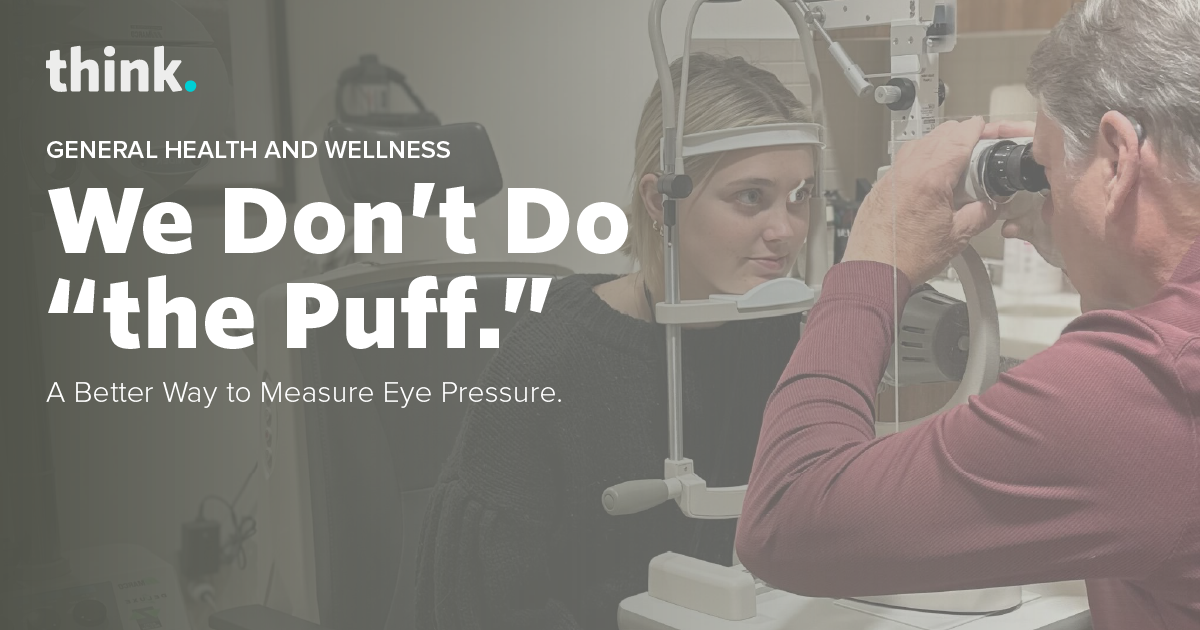
We Don’t Do “the Puff”: A Better Way to Measure Eye Pressure

A woman has her eye examined by a male optometrist using a slit lamp in a clinic. Text reads: We Don’t Do the Puff. A Better Way to Measure Eye Pressure. The image promotes a gentler eye exam method.

Learn how we use Goldmann tonometry for more comfortable eye exams.

If you’ve ever avoided an eye exam because of the dreaded air-puff test, we have great news for you: at think, we don’t use the puff. Instead, we provide a more comfortable and accurate method for measuring eye pressure.

The air-puff test, formally known as non-contact tonometry, is a common way to measure intraocular pressure (IOP), a key diagnostic factor for glaucoma. But for many patients, it’s also a source of stress. “The puff of air doesn’t hurt, but it’s startling,” says Dr. Tim Meyer, an optometrist here at think. “It’s one of those things that can make people feel anxious about coming in for an eye exam.”

So, why is measuring eye pressure so important? According to Dr. Meyer, “In glaucoma, elevated eye pressure is one of the main risk factors. Keeping an eye on pressure changes over time can help us diagnose the disease early and ensure treatments are effective.”

Why We Don’t Use the Puff

We’ve moved beyond the air-puff test to provide a better patient experience and superior accuracy. Instead of non-contact tonometry, we use Goldmann applanation tonometry, widely considered the gold standard for measuring eye pressure.

Dr. Meyer explains, “Goldmann tonometry uses a small, precise tip that gently touches the eye to measure pressure. With a numbing drop applied beforehand, patients don’t feel a thing. It’s not just more comfortable—it’s also the most accurate method available.”

Unlike the air-puff test, which can yield less precise readings, Goldmann tonometry ensures we’re providing our patients with the best possible care. “Accuracy matters, especially when monitoring conditions like glaucoma over time,” says Dr. Meyer. “This method allows us to deliver the highest level of care while minimizing discomfort.”

Addressing Common Concerns

For many, the thought of something touching their eye can be intimidating, even with numbing drops. Dr. Meyer emphasizes that the process is quick and painless. “Patients are often surprised at how easy it is. Once they experience it, they realize there’s really nothing to worry about,” he says.

If you’re still feeling nervous, consider this: tonometry is just one part of a comprehensive eye exam that helps safeguard your vision. Regular eye exams are critical for early detection of not only glaucoma but also other conditions like cataracts, diabetic retinopathy, and macular degeneration.

Dr. Meyer reassures patients, “Vision is one of the most precious senses we have. Taking a little time to get checked can make a big difference in catching problems early, when they’re most treatable.”

Why Goldmann Tonometry Is Better

Beyond its comfort and accuracy, Goldmann tonometry reflects think’s commitment to using the best tools and techniques in healthcare. “Innovation is one of the most exciting parts of optometry,” Dr. Meyer shares. “The way we practice today is unrecognizable compared to when I started in 1981. It’s amazing to see how far we’ve come in improving both the technology and the patient experience.”

This method also aligns with think’s whole-person approach to healthcare, which prioritizes patient comfort and well-being in every aspect of care.

A Better Eye Exam Experience

If you’ve been avoiding eye exams because of the puff test, it’s time to reconsider. At think, we’re dedicated to making your visit as comfortable and stress-free as possible while delivering the highest standard of care.

As Dr. Meyer explains, “We understand that eye exams can feel intimidating for some people. Our goal is to put you at ease and provide the best care in a way that works for you.” By utilizing Goldmann tonometry—recognized as the gold standard for measuring eye pressure—our optometrists ensure accuracy while prioritizing patient comfort.

Don’t let the puff test keep you from protecting your vision. Schedule an eye exam with our optometrists today and experience the think difference for yourself.

Discover Think’s Comprehensive Optometry Services

We integrate optometry into our whole-person care model, ensuring your vision is part of your overall health. Our experienced optometrists provide a range of services, including thorough eye exams, contact lens fittings, and the diagnosis and treatment of ocular diseases such as glaucoma and cataracts. Additionally, we specialize in managing complications arising from systemic conditions like diabetes and hypertension.

At think, we believe in collaboration. That’s why our optometrists co-manage cases with other think providers when needed, ensuring you receive coordinated, comprehensive care. With over 60 years of combined experience, our optometrists are dedicated to safeguarding your eye health as part of your total wellness.

Explore Our Optical Center

Conveniently located on the lobby floor of the think building, our full-service Optical Center offers precision, style, and personalized care. Featuring a curated selection of frames from designers like Betsy Johnson, John Varvatos, and Jimmy Crystal New York, we have something to suit every style and need—from petite women’s sizes to men’s XXL.

Our certified optician ensures that every pair of glasses is expertly fitted, optimizing comfort and vision. We also offer advanced lens technology, including Shamir Blue Zero lenses, which protect against overexposure to blue light. Whether you need glasses adjusted, new frames, or contact lenses, think’s Optical Center is here to help.

LEARN MORE ABOUT EYE CARE BY SPEAKING WITH YOUR THINK PROVIDER.

We’re committed to making your healthcare experience comfortable and comprehensive. Our optometry services go beyond accurate diagnostics like Goldmann tonometry to provide personalized care tailored to your needs. Whether it’s safeguarding your vision, managing chronic conditions like glaucoma, or addressing other health concerns, our team of skilled providers is here for you. think offers a full spectrum of healthcare services, from preventive care to specialty treatments, ensuring you and your family’s lifelong health and well-being. 
To schedule an appointment or learn more about our comprehensive healthcare services, visit our Services page online and choose your own think medical professionals by visiting our Meet Your Doctor page.
Protect Your Vision: Insights for Eye Health

A person holds eyeglasses toward the camera, with Protect your vision. Insights for your eye health. and thinkhealthcare.org text overlayed. A blue circle with think. appears in the lower right corner.

When was the last time you considered your eyesight? Regardless of whether you wear corrective lenses, maintaining good eye health is crucial. Even minor symptoms like itching or watering eyes could signal underlying eye conditions. Let’s explore key aspects of preserving healthy vision.

Understanding Your Eye’s Structure

Your vision involves a complex interaction between your eyes and brain. Essential components such as the cornea, lens, retina, and optic nerve work together to convert light and electrical signals into the visual images you perceive. Several factors, including aging, injuries, infections, and chronic illnesses, can affect your vision. Comprehensive whole-person healthcare includes eye health, as many diseases can be diagnosed, treated, and managed through eye examinations.

Common Eye Conditions and Diseases

Let’s explore some of the most common health conditions and diseases that can impact your vision.

Diabetes

Diabetes, marked by high blood sugar levels, ranks as the primary cause of blindness in the United States. Proper management is crucial for individuals with diabetes to lead fulfilling lives. Neglecting eye care in diabetes management poses significant challenges.

As a blood vessel disease, diabetes profoundly affects the highly vascularized eye. Unlike other organs, the eye provides a unique view of blood vessels directly. Through examinations of the cornea, lens, and retina, healthcare professionals can detect diabetes-related changes. Regular eye exams play a vital role in monitoring overall diabetic health, as manifestations of diabetic retinopathy often parallel changes observed in other organs affected by diabetes.

High Blood Pressure

High blood pressure, or hypertension, is another significant contributor to vision loss. Consistently elevated blood pressure levels can trigger intraocular hemorrhages, potentially damaging the sensitive retina. This impairment in blood vessel function can restrict blood flow to the retina, resulting in blurry vision or complete vision loss. Individuals with diabetes who also suffer from high blood pressure face an elevated risk of developing retinopathy, underscoring the importance of blood pressure management in safeguarding eye health.

Furthermore, hypertension can lead to the accumulation of fluid under the retina, known as choroidopathy, causing visual distortion and possible scarring. Optic neuropathy, resulting from blocked blood flow to the optic nerve, can also occur, leading to temporary or permanent sight loss. Regular monitoring of both blood pressure and cholesterol through routine preventive care plays a crucial role in maintaining optimal eye health.

Glaucoma

Glaucoma encompasses a range of eye conditions that cause damage to the optic nerve located at the back of the eye. Initially, glaucoma often progresses silently, displaying no noticeable symptoms. However, over time, individuals affected by glaucoma may experience an elevation in internal eye pressure, leading to the gradual loss of peripheral (side) vision. Left untreated, glaucoma can ultimately result in blindness. Its prevalence tends to increase with age, and certain medications can exacerbate eye pressure.

Early detection and intervention are paramount in managing glaucoma effectively. While the condition becomes more challenging to control in its advanced stages, treatment is considerably more successful in its early phases. A comprehensive dilated eye examination allows for the assessment of glaucoma by measuring intraocular pressure and evaluating the health of the optic nerve.

Cataracts

A cataract manifests as a cloudy region within the lens of the eye, responsible for focusing light onto the retina. Typically associated with aging, cataracts are prevalent among older individuals. However, they can develop earlier in life due to various factors. Initially, cataracts may go unnoticed, but as they progress, they can cause vision to become hazy, blurred, and less vibrant. Additionally, individuals may experience difficulties with night vision and perceive halos around lights. If left unaddressed, cataracts can ultimately lead to vision impairment. Fortunately, cataract surgery is a safe and highly effective treatment option.

Dry Eye

The cornea, situated at the front of your eye, is a transparent structure devoid of blood vessels. Hence, tears play a crucial role in nourishing the corneal tissue and facilitating the transmission of oxygen, akin to how blood sustains other bodily tissues. Insufficient tear production or inadequate tear function can lead to ocular discomfort and various complications.

Dry eye syndrome may result in eye and eyelid infections, as well as blurry vision. In cases of chronic dry eye, an inflammatory condition of the eye often necessitates treatment with steroids. Individuals aged 50 and above, contact lens wearers, and females are at a higher risk of developing dry eye.

Crying for Relief

Experiencing burning, itching, or redness in your eyes, especially upon waking, could indicate dry eye syndrome. Tears act as vital windshield wipers, ensuring clarity and comfort. Insufficient tear production affects vision and deprives the eyes and eyelids of nutrients and immune support.

Extended screen time reduces blinking, hindering tear production and causing dryness. Taking breaks and blinking more can alleviate strain and replenish tears. Using high-quality lubricating eye drops is crucial while avoiding decongestant products that worsen dryness.

During a comprehensive eye exam, we assess for dry eye and evaluate tear gland function, including production and evaporation rate. For severe cases, medications like Restasis may stimulate tear production. Punctal plugs retain tears, and surgical intervention can prevent excessive tear drainage.

Promoting Better Eye Care

Simple lifestyle changes can significantly impact eye health and prevent future complications:

  • Limit screen time and take regular breaks to rest your eyes.
  • Protect your eyes from environmental factors like wind, smoke, and air conditioning.
  • Wear wraparound sunglasses outdoors to shield your eyes from harmful UV rays.
  • Maintain hydration by using a humidifier, drinking plenty of water
  • Eat a balanced diet rich in vegetables.
  • Stop smoking
  • Prioritize regular eye exams for yourself and your family members, starting from early childhood.

At Think Whole Person Healthcare, our collaborative care system and instant communication are truly effective for diagnosing and treating both systemic diseases impacting the eye and ocular conditions themselves. During an eye examination, if I detect any issues requiring additional attention from another healthcare provider, I can promptly communicate with them within our facility. This streamlined approach ensures optimal patient care in a timely manner. Having spent years in private practice as an eye care professional, I deeply appreciate the comprehensive healthcare provided by all practitioners at Think.

LEARN MORE ABOUT EYE CARE BY SPEAKING WITH YOUR THINK PROVIDER

Think Whole Person Healthcare makes it easy to receive both preventive care and treatment for various health conditions. From thoroughly examining eyes to monitoring blood sugar to setting a broken bone, our physicians, advanced practice providers, and specialists are committed to you and your family’s lifelong health and well-being. Our walk-in clinic treats anyone, even those who are not a think patient or do not have a primary care provider currently. To learn more about our comprehensive healthcare services, visit our Services page online and choose your own think medical professionals by visiting our Meet Your Doctor page.
This article was written by ThinkPress based on “Protecting your Eye Health” by Tim M. Meyer, OD, Optometry. Read that complete article here: https://think-healthcare.local/protecting-your-eye-health/ 

Article Excerpt (55 Word Limit): Learn how to safeguard your vision with Think Whole Person Healthcare’s eye health guide. Understand common conditions like diabetes-related blindness and glaucoma, and discover preventive measures against high blood pressure’s impact on vision. With comprehensive eye care services, you can increase the likelihood of a lifetime of optimal eye health. Visit Think Whole Person Healthcare to learn more about protecting your vision and maintaining overall wellness.