




Practice Safe Movement during spring.

A woman wearing a sun hat and blue shirt sits outside holding a potted plant. Text on the image advises people to practice safe movement during spring to avoid injuries by easing back into activity slowly.

As Nebraska warms up, many people look forward to outdoor activities like running, cycling, or gardening. But jumping back in too quickly after winter can put extra stress on your muscles and joints. To avoid common injuries, it’s best to ease back into activity slowly instead of rushing.

The goal is to maintain physical stability while gradually increasing the load on your joints and tissues. Here are four tips to help your transition be effective and sustainable.

Tip 1: The 10% Progression Rule

One common cause of spring injuries is doing too much too soon. To protect your foundation, avoid increasing activity, whether running mileage, gardening hours, or weight lifted, by more than 10% per week. This gradual approach gives your tendons and ligaments, which adapt slower than muscles, time to strengthen without microscopic tears.

Tip 2: Prioritize “Dynamic” Readiness

Static stretching before your body is warm can decrease power and increase injury risk. Instead, focus on dynamic movements that mimic your upcoming activity. For gardeners, try controlled lunges or arm circles; for runners, leg swings or high knees. This activates the nervous system and directs blood flow to active muscles.

Tip 3: Support Your Kinetic Chain

Your body moves as a connected unit. Foot discomfort may come from hip instability, and back pain can stem from tight hamstrings.

  • Check your equipment: make sure your footwear is not compressed or worn out from last season.
  • Focus on the core: maintaining a stable trunk provides the steady center your limbs need to move efficiently.

Tip 4: Monitor Your Body’s Feedback

Understanding the difference between exertion and pain is key to proactive wellness.

  • Muscle Soreness: Expected 24–48 hours after a new activity.
  • Sharp/Localized Pain: A signal that your alignment may be off.

If persistent discomfort does not resolve with rest, it clearly indicates a consultation with our Physical Therapy team is the next step. They can find the root cause of the imbalance before it becomes a chronic problem.

We want to help you stay active and comfortable. Our Physical Therapy team is here to check your movement and help you build strength. Whether you’re getting ready for a 5K or just gardening on weekends, meeting with us early can help your joints and muscles handle the season ahead.

Grilled Lemon-Garlic Mahi Mahi with Pineapple Salsa.

A plate of grilled mahi mahi topped with colorful salsa, served with asparagus and rice. Text reads: Grilled Lemon-Garlic Mahi Mahi. A meal that fits a high-performance lifestyle..

With March coming to a close, it’s a great time to focus on foods that keep your energy up. Grilled Mahi Mahi with Pineapple Salsa is a tasty way to support your heart and metabolism. Mahi Mahi is a lean, high-quality protein packed with Vitamin B12 and selenium, both important for nerve health and cell protection. Choosing a white fish like this gives your body what it needs for muscle maintenance, without the extra fats that can cause inflammation.

Adding fresh pineapple salsa does more than add flavor, it helps your digestion, too. Pineapple has bromelain, an enzyme that breaks down proteins and supports healthy digestion. Paired with the antioxidants in bell peppers and red onions, this meal helps keep your energy steady. Whether you’re bouncing back from a workout or gearing up for a busy week, this recipe helps you stay strong and ready for anything.

Prep Time
15 minutes
Cook Time
8 minutes
Total Time
23 minutes

Serving Size: 4 servings

Ingredients

  • 4 (6oz) Mahi Mahi fillets
  • 2 tbsp Extra virgin olive oil
  • 1 tbsp Fresh lime juice
  • 2 cloves Garlic, minced
  • 1 tsp Dried cilantro
  • Salt and pepper to taste

For the Pineapple Salsa:

  • 2 cups Fresh pineapple, diced
  • 1/2 Red bell pepper, finely diced
  • 1/4 cup Red onion, minced
  • 1 Jalapeño, seeded and minced (optional)
  • 2 tbsp Fresh cilantro, chopped

Cook Steps

Step 1: Prepare the Salsa 

In a small bowl, combine the pineapple, bell pepper, onion, jalapeño, and cilantro. Let the flavors meld at room temperature while you prepare the fish. This fresh topping provides a vibrant source of Vitamin C.

Step 2: Season the Fillets 

Pat the Mahi Mahi dry with a paper towel. Whisk together the olive oil, lime juice, and garlic, then brush both sides of the fillets. Season lightly with salt and pepper.

Step 3: Preheat the Grill 

Clean and oil your grill grates. Preheat to medium-high heat (approx. 400°F). A clean grill ensures an efficient sear and prevents the lean fish from sticking.

Step 4: Grill the Fish 

Place the fillets on the grill. Cook for 3–4 minutes per side. The fish is ready when it is opaque throughout and flakes easily with a fork (internal temperature of 145°F).

Step 5: Garnish and Serve 

Remove the fish from the grill and immediately top with a generous portion of the pineapple salsa. This combination of warm protein and chilled fruit supports a balanced palate and a healthy digestive system.

Step 6: Pair for Performance 

Serve with a side of grilled asparagus or wild rice. This integrated meal provides the sustained energy required for a high-performance lifestyle.

Tips for Success

  • Sourcing Quality: For the best nutritional profile, look for wild-caught Mahi Mahi, which is naturally low in saturated fats.

Efficient Cleanup: Using a grill basket for the fish can make the process even more straightforward and ensure the fillets remain intact.

Zesty Blackened Fish Tacos with Avocado Crema

A plate of blackened fish tacos topped with avocado crema, shredded purple cabbage, and served with lime wedges. The text promotes a recipe for Blackened Fish Tacos with Avocado Crema and wellness tips.

With March here, it’s a great time to pick meals that offer high-quality protein without being complicated. Blackened Fish Tacos are a tasty, nutrient-packed choice. They give you lean protein and healthy fats that support your heart and brain. Using fresh, simple ingredients, you get a meal that feels light but still fills you up.

Also, our Blackened Fish Taco with Avocado Crema recipe is a great option if you’re observing Lent. White fish is a healthy alternative to red meat and still provides the nutrients your body needs. With a bright avocado sauce, these tacos show that eating well can be simple and full of flavor.

Prep Time:
15 minutes
Cook Time:
10 minutes
Total Time:
25 minutes

Serving Size: 4 servings (approx. 2 tacos per person)


Ingredients

For the Fish:

  • 1.5 lbs firm white fish (such as Tilapia, Cod, or Mahi Mahi)
  • 2 tablespoons olive oil
  • 2 tablespoons blackened seasoning (or a mix of smoked paprika, garlic powder, onion powder, and black pepper)
  • 8–10 small corn or flour tortillas

For the Creamy Avocado Sauce:

  • 1 large ripe avocado, pitted and peeled
  • ¼ cup Greek yogurt (a high-protein substitute for sour cream)
  • ¼ cup fresh cilantro, chopped
  • 1 clove garlic, minced
  • Juice of 1 lime
  • Salt to taste

Optional Toppings:

  • Shredded cabbage or slaw mix
  • Thinly sliced radishes
  • Fresh pico de gallo or salsa

Cook Steps

  1. Prepare the Sauce: In a blender or food processor, combine the avocado, Greek yogurt, cilantro, garlic, and lime juice. Blend until smooth and creamy. Set aside.
  2. Season the Fish: Pat the fish fillets dry with a paper towel. Brush both sides with olive oil and coat generously with the blackened seasoning.
  3. Sear the Fish: Heat a large non-stick skillet over medium-high heat. Place the fish in the pan and cook for 3–4 minutes per side, or until the fish is opaque and flakes easily with a fork.
  4. Warm the Tortillas: Briefly warm the tortillas in a separate dry skillet or microwave to make them pliable.
  5. Assemble: Flake the cooked fish into large pieces. Layer the fish onto the tortillas, top with shredded cabbage, and drizzle generously with the creamy avocado sauce.

Tips for Success

  • Sustained Energy: Use corn tortillas to add a steady source of fiber to your meal while keeping it gluten-free.
  • Efficient Cleanup: The avocado sauce can be made a few hours in advance. Keep it in an airtight container with the avocado pit to prevent browning.
  • Proactive Prep: If you are managing a busy schedule, the blackened seasoning can be mixed in bulk and stored in your pantry for quick future meals.

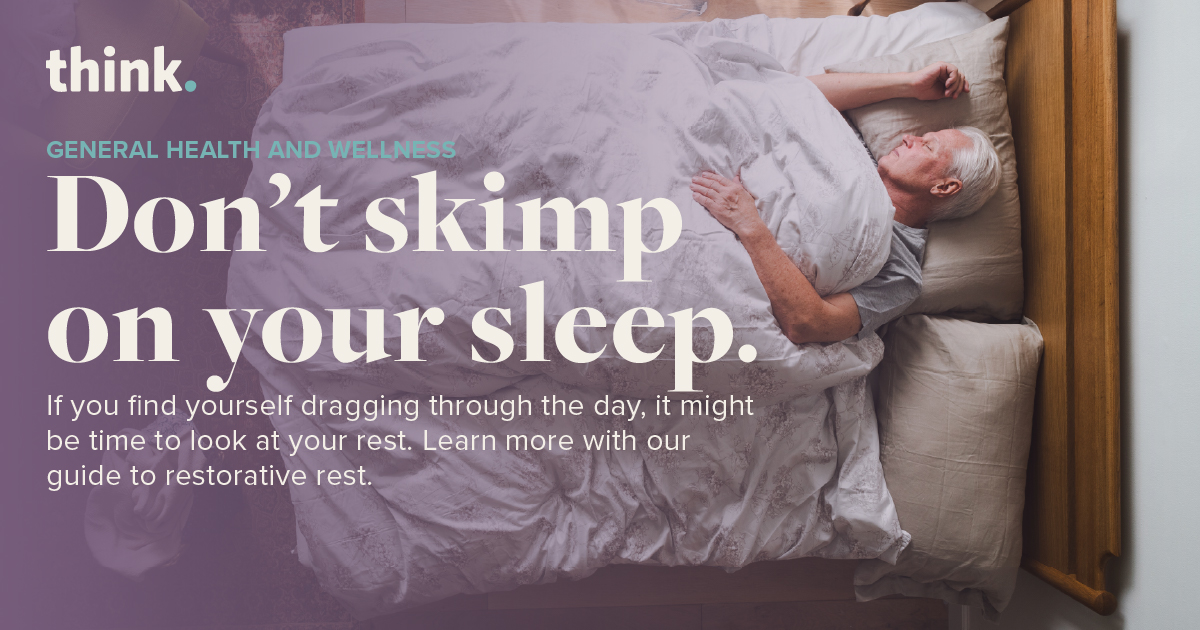
Improve your sleep quality.

An older man sleeps on a bed covered with a white comforter. Text reads: Dont skimp on your sleep. Learn more with our guide to restorative rest..

A Guide to Restorative Rest

If you find yourself dragging through the day, it might be time to look at your rest. Sleep is a fundamental pillar of health, yet more than 50 million Americans live with chronic sleep disorders. While many people attempt to manage fatigue through caffeine or lifestyle adjustments, persistent sleep issues often require a more structured approach to identify the root cause.

At think, we focus on your diagnosis to ensure you receive the most effective support. Understanding the mechanics of sleep and knowing when to consult a provider are the first steps toward better health.

The Mechanics of the Sleep Cycle

Sleep is not a static state of rest; it is an active process involving distinct stages that repeat throughout the night. A standard sleep cycle lasts approximately 90 minutes. For optimal cognitive and physical function, most adults require between seven and nine hours of sleep, allowing for four to five complete cycles.

  • Non-REM Sleep: This includes light sleep and deep, slow-wave sleep. Deep sleep is when the body repairs tissue, builds bone and muscle, and strengthens the immune system.
  • REM (Rapid Eye Movement) Sleep: This stage is associated with dreaming and memory consolidation. It is essential for emotional regulation and brain development.

Common Obstacles to Quality Sleep

A variety of medical and lifestyle factors can prevent the body from moving through these cycles efficiently. Common disorders include:

  • Insomnia: Difficulty falling or staying asleep, often linked to stress, anxiety, or poor sleep hygiene.
  • Obstructive Sleep Apnea (OSA): A condition where breathing repeatedly stops and starts during sleep.
  • Restless Leg Syndrome (RLS): An uncontrollable urge to move the legs, typically due to uncomfortable sensations.
  • Secondary Conditions: Chronic pain, menopause, diabetes, and heart failure can all disrupt the architecture of sleep.

Improving your sleeping habits

Establishing specific habits can refine sleep habits and support consistent rest. Key strategies for promoting better sleep include maintaining a regular bedtime schedule, reducing screen exposure before sleep, and avoiding heavy meals or alcohol in the hours leading up to rest.

Daily stress and busy schedules often disrupt natural rest patterns. Specifically, the use of social media and electronic devices often extends into the evening, which can disrupt necessary sleep. When sleep and wake times vary significantly, it can unbalance the circadian rhythm, the body’s internal biological clock. In many cases, poor sleep patterns are learned behaviors that can be corrected through a disciplined, regimented lifestyle.

Before pursuing medical interventions, establishing simple, consistent habits can often normalize circadian rhythms. Dr. Recker shares the following steps to improve your sleep habits:

  • Stay with a routine for when you go to bed and wake up every day. On weekends, limit your extra sleep to about an hour.
  • Reserve the hour before bed for quiet. Avoid bright artificial light from TV and computer screens. Turn off the loud music and skip intense exercise late in the day. Ensure your bedroom is quiet, dark, and cool.
  • Avoid large or heavy meals within a few hours of bedtime. A light snack can be okay, but don’t load up too much.
  • Avoid drinking alcohol close to bedtime. Alcohol can make you feel drowsy, but it interferes with the architecture of your sleep overall.
  • Consider the effect nicotine and caffeine (caffeinated sodas, coffee, tea, and chocolate) have on your body. Nicotine and caffeine are both stimulants that can impair sleep quality. Some people are not affected by caffeine later in the day, so beware of your individual response.
  • Stay physically active every day. When possible, get outside and move around during the day to reap the benefits of exercise.

When to Schedule a Sleep Study

If lifestyle changes do not resolve persistent daytime fatigue, morning headaches, or loud snoring, it may be time to consult your provider about a formal sleep study.

A sleep study is a non-invasive test that records your body’s activity during sleep. It allows clinicians to monitor heart rate, breathing, oxygen levels, and brain waves to identify specific disruptions.

How to Discuss Sleep with Your Provider

To prepare for your appointment at think, consider tracking your sleep patterns for one week. Be ready to discuss:

  1. How long it takes you to fall asleep.
  2. How many times you wake up during the night.
  3. Whether you feel rested upon waking.
  4. Any medications or supplements you currently use.

Our providers use these insights to determine if a referral to a sleep specialist or an at-home sleep test is necessary.

Comprehensive Support at Think

At Think Whole Person Healthcare, we support patients by providing clear, direct pathways to improved health. If a sleep disorder is suspected, our team collaborates to oversee your care, from initial consultation and diagnostic testing to treatment plans involving our Behavioral Health team or specialized medical interventions.

Addressing sleep issues is a proactive step in preventing long-term complications such as high blood pressure, stroke, and depression.

Our team in the Halloween Spirit.

Six adults in Super Mario-themed costumes, including Mario, Luigi, Princess Peach, and others, stand together smiling indoors by a wall. To the left, text reads Happy Spooky Halloween with a think wellness logo above.

Our team recently got into the spirit of the season by celebrating Halloween with a range of creative costumes. Seeing the various outfits brings a reminder of the unique perspectives and imagination that each team member brings to think. It was a fun day celebrating today!

Celebrating 10 years for a healthier life.

We are proud to present the First issue of our think magazine, a new publication from Think Whole Person Healthcare, promoting health and all things think. You may see them throughout the building and in your Provider’s pods. Inside this first edition, you will find insightful articles on proactive wellness, the new health offerings, and delicious recipes encouraging our “whole person” philosophy to life. We invite you to experience our first edition by viewing the interactive digital flipbook today.

Let us know what you would like to see in future Issues at info@thinkhealthcare.org.

How One Omaha Clinic Changed the Healthcare Game.

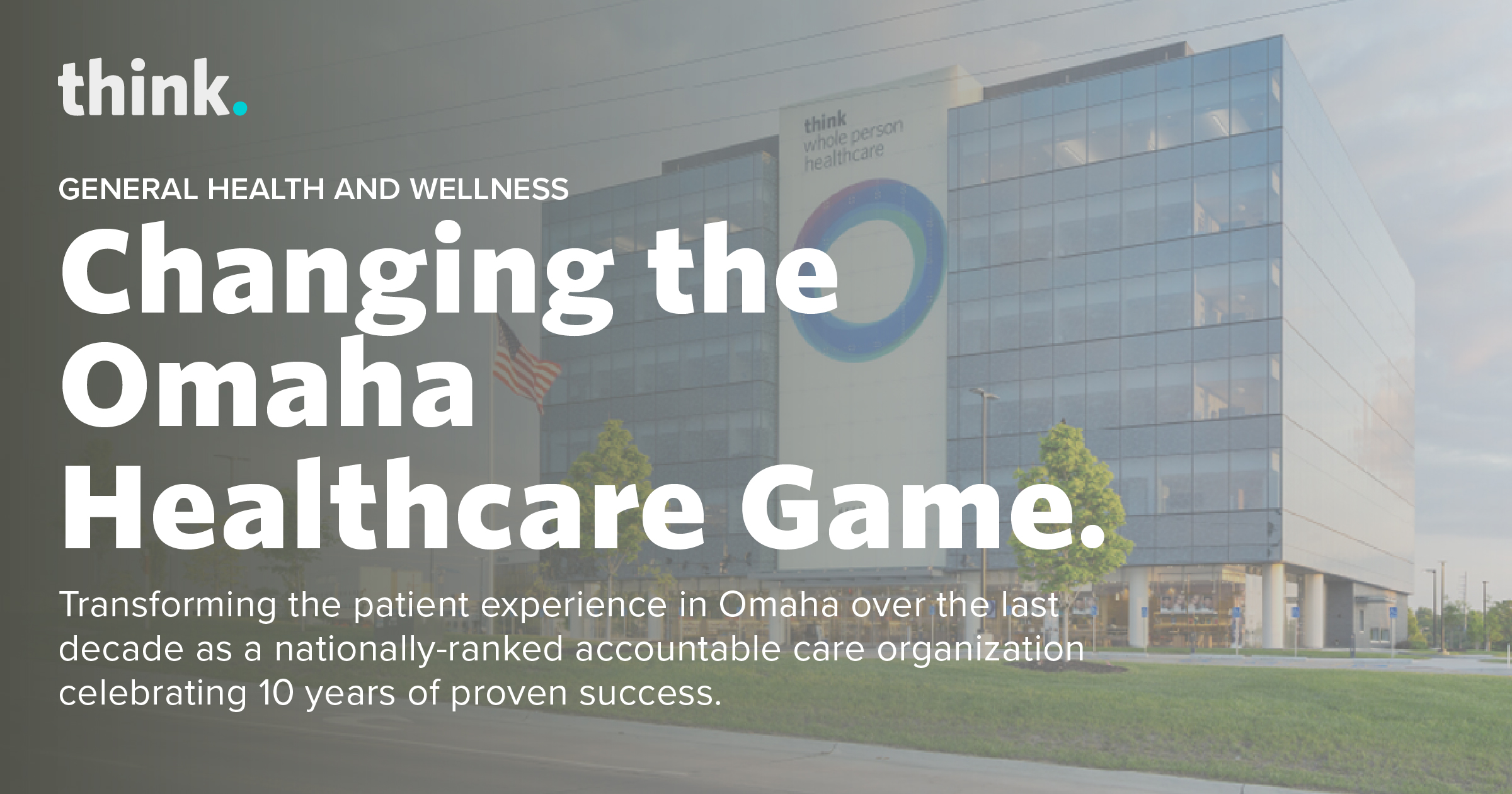
A modern healthcare building with large glass windows and a circular logo, featuring text about transforming Omahas healthcare system and celebrating 10 years of success.

A Decade of Difference

Ten years ago, a revolutionary idea took root in Omaha. What if healthcare wasn’t a frustrating maze of different offices, specialists, and disconnected appointments? What if, instead, you could go to one place designed to treat you, not just your symptoms? That was the promise of Think Whole Person Healthcare when it opened its doors in July 2015. A decade later, that promise has become a proven success story, transforming the healthcare experience for thousands of residents in Omaha.

This year marks not just an anniversary but a celebration of a healthcare model that has delivered better health, happier patients, and lower costs. Let’s dive into the ten-year journey of how think went from a bold idea to a nationally recognized leader.

It All Started with a Simple (But Radical) Idea.

Back in 2015, think set out to challenge a broken system. The founders were tired of fragmented care and wanted to build something new from the ground up, a place focused on well-being, easy access, and affordability. The core philosophy was simple: treat the “whole person.” Instead of just asking, “What’s wrong?” they started asking, “Why is it happening?” and examining the connections between a person’s physical, mental, and emotional health.

The mission was clear: to provide coordinated care that improves quality of life, keeps people healthy to lower costs, and creates a world-class workplace for the team, making it all happen.

A Building That Heals.

To bring this vision to life, think needed more than just a new clinic. They needed a new kind of building. The result is the award-winning, 150,000-square-foot facility on West Center Road, a structure designed by global architecture firm HDR to be a “clinical instrument” in its own right.

The design is genius. Public areas are open and welcoming, while “off-stage” corridors allow doctors and staff to collaborate seamlessly behind the scenes, breaking down the walls that usually separate different medical departments. The building is filled with meaning, with an exterior pattern on the glass facade inspired by the connections, or synapses, in your brain. Up close, this pattern appears as a collection of dots, but at a distance, the image gains clarity, and you perceive the network of connections. Additionally, the building features a stunning central atrium with a distinctive “rose window” structure. It is a wooden sculptural element that runs up through all seven levels of the center, referencing the decorative windows used in 17th-century churches. It was crafted from 20,000 lengths of Douglas Fir, molded into a fluid, natural shape. It’s a space that feels both high-tech and deeply human.

Every detail is designed around the patient. Exam rooms are big enough for family members. Microphones in the ceiling let doctors have a natural conversation with you while a scribe documents everything from another room, freeing the physician to focus entirely on you. The building even won design awards in its very first year, demonstrating that the space itself played a key role in the innovation.

The Secret Sauce is Better Care for Less.

So, how does think deliver on its promises? The engine behind the model is its status as an Accountable Care Organization (ACO), one of the first in the state of Nebraska.

Here’s what that means for you. In a traditional system, doctors get paid for every test and procedure they do. An ACO, however, gets rewarded for keeping its patients healthy and its costs down. When think provides high-quality care that reduces overall healthcare spending (think fewer ER visits and hospital stays), it shares in the savings, creating a system where your doctor’s goal is the same as yours: to keep you healthy.

And the results are staggering.

  • #1 in Nebraska: Think is the top-performing ACO in the state  in the Medicare Shared Savings Program for quality and cost savings.
  • #2 in the Nation: It ranks second nationally in the Medicare Shared Savings Program for quality and cost savings.
  • 22% Lower Costs: The average cost for a Medicare patient at think is 22% lower than the national average.

How do they do it? By seeing patients more frequently, an average of four times a year compared to the national average of two, they practice proactive, preventative care that catches problems early. This approach has earned major endorsements, including a partnership with Blue Cross and Blue Shield of Nebraska, whose leadership noted that “Think has been leading the way in changing how health care is practiced in Nebraska,” said Dr. Joann Schaefer, BCBSNE executive vice president. “The independent primary care model plays a key role in think’s success. By treating the whole person, in a coordinated effort, think has been able to improve the quality of care and reduce costs. With Clarkson’s help, we hope to expand upon what we’ve started.”

Your One-Stop-Shop for Health.

Over the last decade, think has built a true “circle of care” under one roof. What started with 24 primary care doctors has grown into a comprehensive team of over 300 professionals.

Today, patients can see providers for Primary Care, Behavioral Health, Dermatology, Podiatry, Physical Therapy, and much more, often in the same building on the same day. With its own lab and imaging services, you can often get test results before you leave the building. Think even added a walk-in clinic (ThinkQuick) and aesthetic services with thinkrestore.

For specialized care, such as oncology or orthopedics, think partners with top-tier independent groups, including Nebraska Cancer Specialists and OrthoNebraska, bringing their clinics directly into the think building. With these partnerships, it means your cancer specialist or orthopedic surgeon is part of the same coordinated system, working directly with your primary care provider.

The Next Chapter, Think Goes West.

After a decade of perfecting its model, think took its biggest step yet. On August 1, 2024, the organization expanded, integrating the respected Omaha Family Medicine practice to create a new think clinic in West Omaha.

CEO Jason Doll explained that after nine years of proven success, the organization was “ready to bring our model to the wider community”. The partnership was a natural fit, with Omaha Family Medicine’s founder, Dr. Charles Stoner, stating, “Our philosophies regarding patient care are aligned. think is best in class”. This expansion is the first true test of the original vision to create a healthcare “prototype” that could be replicated, proving that the think system of better, more affordable care can work anywhere.

The Verdict from the Community.

Ultimately, the real proof is in the patient experience. Online reviews and testimonials are filled with praise for the convenience and quality of care.

  • One patient loves that you can “get a bunch of your needs taken care of all in one place.”
  • Another was amazed to get their blood work results “just as they walked into the doctor’s office to discuss them.”
  • People describe the staff as “personable,” “caring,” and “good listeners”.

Official accolades back this positive feedback. In 2022, think was named the best Family Physicians Clinic by the Omaha World-Herald’s “Omaha’s Choice Awards” and the top Private Practice Medical Clinic by Omaha Magazine’s “Best of Omaha” awards.

Think’s commitment to Omaha extends beyond its walls. The organization partners with Clarkson College to offer reduced tuition to employees and their families, investing in the next generation of healthcare workers. It also sponsors a vital health screening program for Omaha’s firefighters and provides training programs for students, cementing its role as a true community partner.

A Decade of Promises Kept.

When think launched in 2015, it promised to change healthcare in Nebraska. Ten years later, the evidence is in. They did it. They built a facility that enables better care, an operating model that delivers higher quality at a lower cost, and an integrated system that has earned the trust of the community it serves.

As it celebrates its 10th anniversary, think isn’t just a local success story. It’s a blueprint for the future of American healthcare —a future that’s more coordinated, proactive, and focused on the whole person. Happy anniversary, think! Here’s to the next decade of transformation.

Conclusion

Think is an Accountable Care Organization (ACO), which means that our doctors work together to see an individual’s entire scope of health, preventing unnecessary procedures and medical errors through miscommunication. By offering a wide variety of specialties directly on the think campus, we are able to take care of our patients in a way unlike any other healthcare option in the Omaha metro area. If your doctor can keep you under our roof, they will. This means your record is shared between all of your think providers, and helps us control quality and costs by keeping your care in our circle of services. 

To learn more about the complete list of our healthcare services, visit our Services page online and meet your think Provider by visiting our Meet Your Doctor page. Visit our self-scheduling page or give us a call at 402.506.9000.

Comfort, Speed, and Peace of Mind.

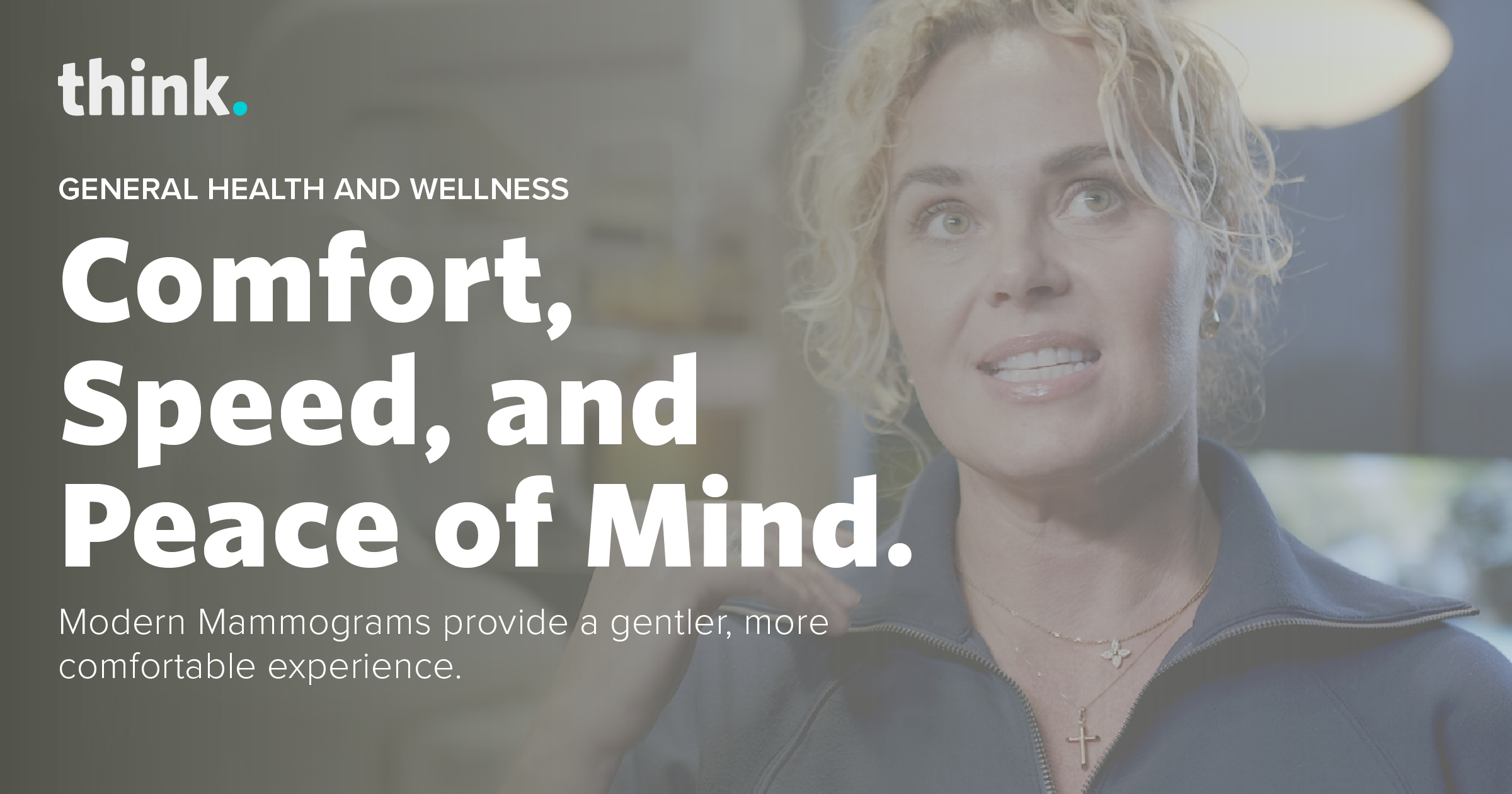
A woman speaks, smiling gently. Text reads: Comfort, Speed, and Peace of Mind. Modern Mammograms provide a gentler, more comfortable experience. Logo think. appears in the top left corner.

Modern Mammograms provide a gentler, more comfortable experience.

Breast cancer screening helps maintain women’s health, but some women delay or avoid mammograms due to fear, discomfort, or misconceptions. Fortunately, advancements in mammography technology have transformed the experience, making it faster, gentler, and more approachable. In a recent video, patient Elizabeth Lowndes and mammographer Chellie Molgard share how new technology is reshaping perceptions of mammograms, turning a once-dreaded appointment into a manageable and even pleasant experience. Watch the video here.

A Gentler, More Comfortable Experience

Elizabeth, who schedules a yearly mammogram due to her family history, described her latest screening as “like getting a gentle hug.” Unlike older machines that could feel harsh or uncomfortable, the new technology made the process seamless, quick, and noticeably less painful. Chellie, the mammographer, credits features like the comfort pedal, which adjusts the pressure applied during imaging to reduce tightness on the breast. With two types of pedals tailored to different comfort needs, patients now enjoy a more personalized experience that feels less clinical and more caring. “It’s more comfortable for the patient,” Chellie says, adding that the sharper, high-quality images also help clinicians provide accurate diagnoses.

This shift in technology is a game-changer for those who’ve avoided screenings due to past discomfort. As Elizabeth noted, walking into the imaging room felt “peaceful” and almost spa-like, a far cry from the sterile, intimidating settings of the past. The combination of a soothing environment and gentler equipment helps ease nerves and makes the process feel less daunting.

Why Annual Mammograms Make a Difference

Chellie emphasizes the value of regular screenings for early detection of breast cancer. “The faster we can get in front of that stuff, the better we can serve our patients,” she explains. Waiting too long—sometimes months or even years—can mean missing the chance to catch issues when they’re most treatable. Annual mammograms offer a proactive way to stay ahead, improving health outcomes and providing peace of mind. For Elizabeth, knowing she’s taking care of her health, especially with her family history, brings reassurance that’s hard to overstate.

Regular screenings are especially meaningful for those at higher risk, but they benefit everyone. As Chellie points out, the goal is to keep patients healthy and maintain their quality of life. By making mammograms less intimidating, new technology encourages more women to stick to a yearly schedule, turning a health habit into a positive routine.

Answers to Common Mammogram Questions

Our Breast Cancer Awareness article sheds light on common concerns about mammograms. Here, we address frequently asked questions with insights from Elizabeth and Chellie’s experiences:

Does a mammogram hurt?

Older machines sometimes cause discomfort, but today’s technology has changed that. Elizabeth called her recent mammogram “painless” and “gentle,” thanks to innovations like the comfort pedal that adjusts pressure for a softer touch.

How long does a mammogram take?

Modern mammograms are designed for efficiency. Elizabeth described the process as “fast” and “seamless,” typically taking 10-15 minutes from start to finish, making it easy to fit into a busy day.

When should I start getting mammograms?

The American Cancer Society advises women at average risk to begin annual mammograms at age 40. If you have a family history, like Elizabeth, or other risk factors, your doctor may recommend starting earlier or screening more frequently. Chatting with your healthcare provider can clarify what’s best for you.

What if I’m nervous about the process?

It’s normal to feel anxious, but today’s mammography settings are designed to put you at ease. Elizabeth compared her experience to “going to a spa,” with a calm, welcoming atmosphere that feels far less medical. Friendly staff and streamlined technology further reduce stress.

Are mammograms safe?

Mammograms use low-dose X-rays, and the risk is minimal compared to the benefits of early detection. Chellie highlighted the “really sharp” images produced by new machines, which help radiologists spot even small changes with greater accuracy.

What should I expect during the appointment?

You’ll be guided by a professional like Chellie, who ensures you’re comfortable throughout the exam. The machine gently compresses the breast for a few seconds to capture clear images, and the process repeats for both sides. Elizabeth found it “easy” and appreciated the supportive, non-rushed approach.

How often should I get screened?

For most women, yearly mammograms are the standard, as Chellie advocates, to catch any changes early. Your doctor can help determine the proper schedule based on your health history and risk factors.

Empowerment Through Proactive Health

Elizabeth’s story shows how far mammography has come. “It’s nothing to be afraid of with the technology that they have today,” she says, describing a process that’s not only tolerable but empowering. A mammogram is more than a medical test—it’s a step toward taking control of your health and gaining peace of mind. Modern mammography makes it easier for women to prioritize their well-being without hesitation by addressing common fears and focusing on comfort.

Ready to take charge of your health?

Schedule your mammogram today by speaking with your Primary Care Provider and discover how quick and comfortable it can be. Give us a call at 402.506.9000.
Think is a primary healthcare organization dedicated to keep you healthy through preventative care and treatment for a wide range of medical conditions. To learn more about the complete list of our healthcare services, visit our Services page online and meet your think Provider by visiting our Meet Your Doctor page.

Asparagus and Feta Crustless Quiche

A baked asparagus and feta crustless quiche in a white dish, garnished with herbs, sits on a table next to a small bowl of chopped green onions and a blue-striped napkin. Text reads: Asparagus and Feta Crustless Quiche.

Asparagus and Feta Crustless Quiche

Enjoy a light and flavorful meal with this easy Asparagus and Feta Crustless Quiche. It’s a healthy, low-carb option made with simple ingredients, perfect for any time of day.

Imagine a brunch table decorated with vibrant spring greens and the delicate aroma of baked eggs. Our Asparagus and Feta Crustless Quiche is the centerpiece you’ve been searching for. Picture tender asparagus spears, their earthy sweetness mingling with the tangy, crumbly feta, all suspended in a light, airy egg base. This dish isn’t just visually appealing; it’s a symphony of flavors and textures. Low-carb, high-protein, and naturally gluten-free, it caters to diverse dietary needs while offering endless customization. Add sun-dried tomatoes for a touch of sweetness, or perhaps some sautéed mushrooms for added depth. And the best part? It requires minimal prep time, leaving you more moments to savor the holiday with loved ones. It’s reminiscent of a frittata, but with a streamlined approach, ensuring a delicious and stress-free breakfast or brunch.

Prep Time
5 mins
Cook Time
35 mins
Total Time
40 mins

Servings: 4

Ingredients

What to buy at the store?

  • 8 thin asparagus spears, ends removed and cut into 1-inch pieces  
  • 4 green onions, chopped  
  • 6 large eggs  
  • 2/3 cup milk, of choice  
  • 1/4 cup half and half, (or substitute more milk)  
  • 1/2 tsp oregano  
  • 1/2 tsp salt  
  • 1/4 tsp black pepper  
  • 1/3 cup feta cheese, crumbled  
  • 2 Tbsp chives, finely chopped  

Instructions

Step One: Preheat and prep

Preheat the oven to 350 degrees F and lightly coat a 9-inch pie dish with nonstick spray .  

Step Two: Snap Asparagus

Snap off the ends of the asparagus spears and cut into 1-inch pieces and chop the green onions. (No need to cook the asparagus beforehand as long as you use thin asparagus spears!)  

Step Three: Whisk Together

In a large bowl, whisk together the eggs, milk, half and half, oregano, salt and pepper .  

Step Four: Add Everything Together

Arrange the asparagus pieces and green onions in the bottom of a prepared 9-inch baking dish and pour the egg mixture over top. Sprinkle on the feta cheese and chives .  

Step Five: Bake and Enjoy

Bake the quiche in the oven for 35 minutes, or until the egg is set in the center and the edges are golden. Serve warm .  

It’s more than just medication management. 

An open pill bottle with tablets spilled out. Text reads: Its more than just medication management. The role of clinical pharmacists in your healthcare journey and how they improve your care..

The Role of Clinical Pharmacists in Your Healthcare Journey and how they improve your care.

When it comes to your health, having a dedicated team of professionals by your side is essential. Among these professionals is the Clinical Pharmacist, an integral part of your care team at Think Whole Person Healthcare. While many people associate pharmacists with the person behind the counter at the drugstore, their role extends far beyond simply dispensing medications. So what are Clinical Pharmacists and the history of this profession? Let’s explore the fascinating history of pharmacy, the diverse specializations within the field, and how Think’s Clinical Pharmacists work to optimize your medication management and overall well-being

The Evolution of Pharmacy.

The roots of pharmacy can be traced back to ancient civilizations, with evidence of pharmaceutical practices dating as far back as 1,500 BC in Egypt. Paleopharmacologists have uncovered over 1,000 sheets of papyrus detailing hundreds of plant-derived medication recipes, showcasing the early expertise of apothecaries and chemists who worked alongside healers and priests to treat the sick.

Fast forward to the late 19th and early 20th centuries, and the Industrial Revolution brought about significant advancements in pharmaceutical science. Increased technical sophistication allowed for the purification of natural materials and the synthesis of organic chemicals, leading to groundbreaking discoveries like insulin and penicillin. Today, pharmacists play vital roles in drug manufacturing, research, and direct patient care, with the opportunity to specialize in 13 board-certified fields, including ambulatory care, cardiology, oncology, and more.

Clinical Pharmacy at Think.

The Clinical Pharmacists at think hold doctorate degrees in pharmacology and often specialize in medical areas that align with their passions. They collaborate closely with our physicians, specialists, and advanced practice providers to ensure that your medications are tailored to yield the best possible outcomes for your unique situation. 

What services do our Clinical Pharmacists provide?

Comprehensive Medication Reviews 

Our Clinical Pharmacists work hand-in-hand with your Primary Care physician, specialists, and other providers to conduct thorough medication reviews. As experts on each medication’s active ingredients and appropriate treatment approaches, they ensure that your prescriptions are the most suitable options for your specific circumstances, optimizing your therapy and minimizing potential risks.

Optimizing Medication Timing 

Did you know that the timing of your medication can significantly impact its effectiveness? For example, atorvastatin, a common cholesterol medication, works best when taken in the evening when your body’s cholesterol-making enzymes are most active. Think’s Clinical Pharmacists collaborate with you and your doctors to develop a medication schedule that maximizes the benefits of your prescription drugs, ensuring you get the most out of your treatment plan.

Exploring Alternative Medications

One of the key advantages of working with our Clinical Pharmacists is their commitment to finding the best medication options for your individual case. They stay up-to-date on the latest drugs and their interactions, allowing them to recommend alternative treatment paths if you’re not achieving the desired results. This personalized approach ensures that you and your doctor have access to the most current and effective solutions available.

Preventing Adverse Interactions 

For patients managing multiple health conditions, taking several medications simultaneously can pose risks if those medications don’t interact well with one another. Our Clinical Pharmacists possess a deep understanding of medication interactions and work to help you avoid adverse effects. In some cases, they may consolidate your medication regimen by identifying drugs that can treat multiple conditions, simplifying your treatment plan and reducing potential complications.

Ensuring Cost Savings 

At think, we recognize that medications can be a significant expense, even with insurance coverage. Our Clinical Pharmacists go the extra mile to help you save money on your prescriptions. They collaborate with your doctor, insurance company, and retail pharmacy to secure the lowest possible prices, whether that means prescribing a different brand of medication or adjusting dosages (e.g., three 100mg pills instead of one 300mg pill) to optimize cost-effectiveness without compromising quality of care.

Personalized Patient Consultations 

Some patients, such as those with uncontrolled diabetes or multiple health conditions, require more frequent support from their healthcare team. Our Clinical Pharmacists work directly with your physician to provide continuity of care and offer recommendations on medication adjustments tailored to your needs. In the case of uncontrolled diabetes, for example, you may benefit from a collaborative team that includes Physicians, Clinical Pharmacists, Pharmacy Technicians, Care Coordinators, Diabetic Educators, Dietitians, and Social Workers—all working together to design a treatment plan that gets your blood sugar levels back on track as efficiently as possible.

The Think Whole Person Healthcare Difference

At think, our commitment to your well-being goes beyond simply treating symptoms. Our Clinical Pharmacists incorporate this philosophy by taking a holistic approach to your medication management, considering factors like efficacy, safety, cost, and your individual circumstances. They ensure that your care is coordinated, comprehensive, and centered around you by partnering with our physicians and specialists.

Our Clinical Pharmacists are the unsung heroes of your healthcare journey, working behind the scenes to optimize your medication therapy and support your overall health. At Think Whole Person Healthcare, our highly trained Clinical Pharmacists bring their expertise, compassion, and dedication to every patient interaction. From conducting medication reviews and preventing adverse interactions to exploring cost-saving alternatives and providing personalized consultations, they play an indispensable role in helping you achieve your best possible outcomes.

To learn more about how our Clinical Pharmacy services can benefit you, visit our service page at https://thinkhealthcare.org/services/clinical-pharmacy/ or speak with your Primary Care physician at Think Whole Person Healthcare. Experience the difference of having a world-class Clinical Pharmacist as part of your care team and unlock the full potential of your healthcare journey today.

Think is a primary healthcare organization dedicated to keep you healthy through preventative care and treatment for a wide range of medical conditions.

To learn more about the complete list of our healthcare services, visit our Services page online and meet your think provider by visiting our Meet Your Doctor page. Visit our self-scheduling page or give us a call at 402.506.9000.