



The Truth About a Fast Life and Fast Food

A man in a suit eats a burger outdoors while holding documents. Text says: The Truth About a Fast Life and Fast Food. Nearly 42% of Americans are obese. Learn why. Website link and blue think. logo appear.

Our country is earning a thumbs down on how many of us live our daily lives. Our busy schedules and our tastebuds are front and center on why the Centers for Disease Control and Prevention (CDC) reports that nearly 42% of all Americans are obese. 

America is not alone in our struggle with extra pounds and eating habits that can lead to major health issues. The National Institutes of Health notes that “the worldwide prevalence of obesity has nearly tripled since 1975.” Much of the problem stems from the continued slide to a more sedentary lifestyle and our less healthy diets. 

Obesity in the United States is often linked to type 2 diabetes, heart disease, stroke and some forms of cancer. All of these conditions are among the top causes of preventable, premature death. The CDC finds that medical costs of obesity in our country were nearly $173 billion in 2019, and this was before COVID-19 affected our waistlines. It’s estimated that overweight adults spend roughly $2,000 more a year on medical costs. Fortunately, each of us can learn lifestyle habits — at any age — that will help keep us healthy throughout our lifetime. 

What is healthy living?

Healthy living encompasses more than one aspect of our lives. Part of healthy living is the food we take in and the energy we put out. Exercise and mental health are also a part of this. Putting family, friends and relationships above the stress of work is a really important part of healthy living. How we care for ourselves also includes finding the joys in life and focusing on the people and activities that make us happy.

What health shift is happening in America?

Americans are very productive people. We have a big list of things we need to do. We go from work to the PTO meeting, then maybe we go to a movie with friends. We try and jam-pack all these to-dos and activities into our lives. And the best way to get places is by car. We’ve cut out even small amounts of walking. In our larger cities everything is condensed, so walking is feasible. In contrast, in the Midwest we drive everywhere so we have more issues with obesity than say New York City. 

We end up driving to go get food instead of walking. We put so much into our life on the day-to-day that we don’t prioritize the importance of a meal as nourishment. Our dining habits are more on-the-go rather than sitting down and enjoying a meal with our loved ones. People in other cultures don’t usually eat in their cars. They don’t eat when they walk. Our attitude is more I need to eat food so I can keep doing my other things.

And technology makes it harder because we’re connected to the now and the instant. You’re always at beck and call to do something or go somewhere. Where previously, it was just assumed you would eat dinner every night at home. The problem is because everything else in our life is taking priority, food is just a means to not be hungry anymore.

What’s unhealthy about fast food?

Most fast food is quite unhealthy to eat, and manufacturers dump in fat, salt and sugar. When fat melts in the tongue it takes good. When salt hits the tongue, it tastes good. Sugar tastes good and it provides an instant carbohydrate load. You get instant energy from sugar. Yet sugar is a drug and we can become addicted to sugar. (That’s why everybody loves ice cream!) Restaurants do the same thing with food. Butter and salt are the two main ingredients in most every restaurant dish. These two ingredients along with sugar make you want to come back for more. Fast food is very addictive because of what’s added to it. 

I tell my patients that we are fighting an uphill battle against obesity because food in general is so accessible. Whenever our ancestors would hunt, it might be two or three days before they could track down a deer. To get food daily, they had to forage for berries. Today at the primal level, our brain tells our body to hold onto calories because it might be a while until we get more calories. 

We are designed to hunt and to look for food and not always eat, but for most of us in America, food is everywhere and our brain doesn’t know that. So having food around is a constant, but that very primal relationship about calories is still present. In my desk drawer, I have Sour Patch Kids® candy, and in my fridge I’ve got blackberries and protein shakes. I don’t have more than my arm’s length to get to food.

What about unhealthy habits for adolescents?

Unhealthy living is an epidemic. The longer a child is obese, the higher likelihood they will be obese in adulthood and the rest of their lives. Unhealthy eating sets up dangerous habits that children will carry into adulthood. Weight is not everything. It’s important to note that people come in all shapes and sizes. However, when we see the medical implications of obesity, it needs to be addressed. Being overweight unfortunately underlies pretty much all medical issues. An unhealthy body weight complicates and worsens medical problems.

For example, we are seeing pre-diabetes and diabetes in younger and younger people, especially children and adolescents. Once you have diabetes, you have it. Type 2 diabetes is increasing in adolescents, which used to mainly affect adults. We are also seeing an increasing number of young people with high blood pressure, which can then lead to heart attacks.

What can help turn around the unhealthy habits in youth?

Much of the problem stems from so much time watching TV, playing video games and not getting exercise. It’s important to encourage adolescents to love being outdoors, to love exercising. I’m not talking exercise in a gym class, but exercise as part of a regular day—getting up from sitting, moving the body. Exercise also helps with brain development as well.

Incorporating healthy habits into adolescence is vital. I always tell parents of my adolescent patients to not allow phones in the bedroom. That’s a big one. Adolescents need sleep so they can repair their bodies from activities during the daytime. It is also really important that we instill a love of whole food and healthy food. If we start with wise health choices when individuals are young, later when they are stressed in college or required to sit all day at a desk job, they will use their free time to do things to keep themselves healthy.

How do we address obesity?

Obesity is complicated. There are many factors why people struggle with weight. For example, here in Omaha our bus system is fairly limited. Everyone is expected to drive their car, and we are sedentary because many of us sit at computers for our jobs. I can tell my patients that even with the best intentions, the odds are stacked against you. Maintaining a healthy weight is an uphill battle, but it’s one that’s worth fighting for because the consequences can be so dire.

What steps can someone take to fight the weight battle?

Number one is to eat at home. If you’re going to nothing else, eat at home. It doesn’t matter what you cook necessarily because whatever you serve will most likely have less calories than the food you eat out. 

So just eat food at home and eat at a table. When you eat at a table and not in front of a TV and not on your phone, you start to get back to the healthy relationship that we have with meals. Americans see food as a means to an end. Many other countries are good about carving out a time just for enjoying food and drink and time with each other.

Of course, the pre-made microwave meals are generally not as healthy. They tend to be high in carbs, fat, salt and preservatives. Food packed with those ingredients can lead to obesity. Look for higher protein options. If you have a decision between two things, choose the one higher in protein. Protein tends to fill you up and keeps you full longer. I also recommend incorporating a vegetable on your plate for lunch and dinner and even snacks. 

What other habits help with healthy living?

Simple exercises like going on a walk after dinner also helps with weight management. Exercise doesn’t have to be running, doesn’t have to be playing a sport. You can take the dog on a walk. You can make walking around the block together a habit for the whole family. 

I also emphasize making time for yourself because if you are not your own priority, nobody else will prioritize you like you do. You have to prioritize yourself. If you make yourself a priority, everything else will fall in place. To help with stress, you can make time to meditate or do yoga or something similar. You can shut off the screens, turn off your brain and do something you enjoy such as reading a book. You’ll find that with your elevated mood, you won’t crave the junk, high-fat food. If you take care of your mood, and you’re in good spirits, you’re more likely to eat better food.

We have seen a shift in fast-food places offering healthier options, but some of these items are not always healthier. At some restaurants, the cheeseburger has fewer calories than a salad with loads of dressing. It’s a good practice to read nutritional labels. You might be surprised at what’s in your food. 

How would you sum up healthy living?

In two words: slow down. Slow down your mind. Slow down your eating. Slow down your day. Slowing down is what is going to create healthy living and healthy eating. When you dial down your pace each day, you are building better health habits both for today and for the rest of your life.

LEARN MORE ABOUT HEALTHY LIVING BY SPEAKING WITH YOUR THINK PROVIDER

Think Whole Person Healthcare makes it easy to receive both preventative care and treatment for a wide range of health conditions. From the fluctuating blood sugar levels to the persistent joint pain, our physicians, advanced practice providers and specialists are committed to you and your family’s lifelong health and well-being.

Our walk-in clinic treats anyone, even those who are not a think patient or do not have a primary care provider currently. To learn more about our comprehensive healthcare services, visit our Services page online and choose your own think medical professionals by visiting our Meet Your Doctor page. 
Breast Cancer Awareness

A woman in a white hoodie holds a pink ribbon. Text reads: Breast Cancer Awareness. Know your risk. Learn about early screening and support at thinkhealthcare.org. Pink and blue background.

October is National Breast Cancer Awareness Month, an annual campaign to help strengthen the work of standing together against breast cancer. Organized by major breast cancer organizations across the country, the campaign increases awareness of the disease and raises funds to help save lives through ground-breaking research and early-detection screening. 

The American Cancer Society’s Breast Cancer Facts & Figures 2022-2024 report gives the following overview of breast cancer. 

  • Breast cancer is a group of diseases in which breast tissue cells divide uncontrolled and typically result in a lump or mass.
  • Early stages of breast cancer generally do not have symptoms. Breast cancer screening is important for early detection when a tumor is small and most easily treatable. 
  • A painless lump is a common physical sign of breast cancer. Sometimes the cancer can spread to nearby lymph nodes under the arm. Less common symptoms of breast cancer include breast pain or heaviness and swelling, dimpling, thickening or redness of breast skin. Nipple changes including a discharge, retraction or scaly skin can also be signs of breast cancer. Any woman or man with a persistent change in a breast should be evaluated by a physician. 

Think Family Medicine physician Erika Rothgeb, MD, lends further insights here on the importance of breast cancer screening and support.  

How prevalent is breast cancer in the United States?

Breast cancer still affects one in eight women, whether or not a woman has a family history of breast cancer. Breast cancer still can affect men although much less commonly. In the United States, one out of every 100 breast cancer diagnoses are for men. The big message is it can happen to you. Even if you’ve never had a problem mammogram or there’s no family history, screening is still important because 12% of all women will be diagnosed with breast cancer in their lifetime.

Why are regular mammograms important?

While an individual mammogram is not the ultimate cancer-detecting test in itself, mammograms done year after year after are the most useful because we can compare the breast tissue for changes over time. Every time somebody gets a mammogram, we look at previous mammograms and determine if there’s any change in the architecture of calcifications or masses. If we have 10 years’ worth of mammograms to look at, we can start to find smaller nuances of changes that have occurred rather than relying on a single test. Mammograms become more useful the more times they’re completed.

What are hesitancies about getting mammograms?

Some of the hesitancy is discomfort. Mammograms are not a comfortable exam, but you can take medications ahead of time and the screening can be life-saving. Another hesitancy is that an individual mammogram by itself is not always the best test for breast cancer. Some mammograms show up as false negatives or false positives. Mammograms are not 100% fail safe. In addition, some women are called back for ultrasounds, mammograms and even biopsies who end up not having breast cancer. This can lull women into a type of testing fatigue and they may think it’s not important to keep screening. 

How effective are routine breast exams by a healthcare provider?

Studies have shown that medical providers are not better at finding cancers than patients are. Clinical breast exams done routinely have somewhat fallen out of favor. Yet if there is a concern, we will do a breast exam and determine if anything feels suspicious. If we find a possible lesion, we will order a  mammogram and/or an ultrasound as the next best diagnostic step. 

As far as women doing their own breast exams, current medical findings show that for the average-risk woman—someone without increased risk for developing breast cancer—self exams are not recommended because breast tissue is lumpy and it can be difficult to discern what is healthy tissue and what is not. Screening mammograms are a vital way to stay proactive with breast health. 

What puts women at higher risk for breast cancer?

It is important to determine a woman’s individual risk of breast cancer. Common risk factors include a personal history of cancer and a family history of cancer, particularly breast or ovarian cancer. Women who started their menstrual cycle younger, or experienced delayed childbearing or who have never given birth are at a higher risk for breast cancer. Using hormone replacement therapy is a risk factor as well as being of Ashkenazi Jewish heritage. As a woman increases in age, she is more likely to get breast cancer not less likely. I use a risk factor model with my patients who have a family history to help determine their lifetime risk. If a woman is at an increased lifetime risk, we discuss doing additional imaging.

When should a woman start getting mammograms?

In general, major cancer guidelines for the average-risk woman recommend starting annual mammograms between the ages of 40 and 50. If there is an increased lifetime risk for breast cancer, we discuss with patients to start at age 35. There is some debate for starting high-risk women as early as age 30. 

Is there an age when women no longer need mammograms?

Some women may reason that they do not need mammograms once they’ve reached age 55 or have gone through menopause, but breast cancer increases with age. For women aged 55 to 74 years with average risk for breast cancer, there may be the option to do a breast cancer screening every other year. Decreasing the frequency of mammograms depends on an older woman’s personal risk and personal health history. 

How does a family history of cancer affect breast cancer risk?

A personal or family history of breast or ovarian cancer plays a significant part in increased risk for breast cancer. Ovarian cancer is a big risk cancer in the models we use to determine a woman’s lifetime risk. We also know that colon cancer and prostate cancer tend to run in the same group as breast cancer. Some genetic mutations that cause cancer tend to run together. Any cancer history in a family is important to know. If there is a family history of cancer, the question is how many family members and how young were they on onset of their cancer. 

It takes about five minutes for us to run our risk calculator to know if a patient is at increased risk for breast cancer. I can’t stress enough for women to talk with their think physician to determine personal risk for breast cancer and not try to guess their personal risk themselves. Unless we run the models and ask the questions, we’ll never know who is at high risk and who is not. The conversation is very important whether we proceed with additional imaging or not. 

What type of mammography does think offer?

Think offers 3D mammograms for both breast screenings and diagnostic testing. The 3D mammograms work with both regular breast tissue and implants and provides real-time feedback for our on-site radiologist. In the ever-changing landscape of healthcare, our think providers stay updated with medical researchers, statisticians and experts in the medical community. These teams are continually looking at literature and doing studies to determine what is the best thing to do for the breast and how to keep breast tissue healthy. Breast cancer guidelines you may have been told 10 years ago might be different today, so it’s important to stay current with your medical provider for your own personal health needs. At think, we make sure the advice we give is up to date and reflects the best possible care options for our patients. 

Do men need breast cancer screening?

There is still some stigma that only women get breast cancer and that is not true. If men have symptoms such as the breast tissue getting larger on one side or any skin or nipple changes, it would be important to know. Or if there is a strong family history or genetic mutation such as the BRCA mutation, then we recommend men do self-exams and follow up with their provider. Breast cancer can happen with men, but the vast majority of breast cancers are found in women. Thankfully, breast cancer is much less common in men, however, it can be quite deadly too. This is especially true because men might not seek treatment right away. 

What overall advice would you give about breast cancer awareness?

The best advice I give people is listen to your body. If you notice a bump or your partner notices something that didn’t feel like it was there before, make an appointment with your physician. If you notice a nipple has a discharge or the nipples are retracting or you notice skin changes on the breast, you need to check in with your healthcare provider. Breast cancer is not just about lumps inside the breast. How the breast looks on the outside is important too. If you notice something that doesn’t seem right, then come in and we’ll take a look and we’ll talk and determine if we need to do some additional imaging to ensure that everything looks healthy. 

What are newer treatments for breast cancer?

The treatments that we have today are not necessarily the treatments that we have used in previous years. If you’ve been diagnosed with breast cancer, the advances in treatments mean you do not necessarily need a mastectomy. Most women do just fine with a lumpectomy and the outcome is just as good. The cancer surgeries today are much easier to recover from and they have fewer cosmetic issues down the line. Also, not every woman needs chemo for breast cancer. This is why mammograms are so important because they can find cancers when they’re smaller and easier to treat. The goal always is to find the problem as early as we possibly can.

How is Think Whole Person Healthcare most beneficial to breast cancer patients?

If we do find breast cancer in a patient, our think medical team wants to make sure there is seamless and convenient care for the patient. Think partners with the Nebraska Cancer Specialists who have a clinic in the think building so the cancer specialists can work closely with our Primary Care physicians. We have excellent healthcare options in Omaha for both oncologists and surgeons. Think works closely with all of the major hospital groups in the area. We want to do what’s best for each individual patient.

Stay current with your breast health by scheduling a consultation or mammogram today. Think Whole Person Healthcare is devoted to treating the whole person while delivering the highest quality at the lowest cost possible. To schedule a mammogram or book a provider appointment, call 402-506-9000,  or schedule an appointment online. Think Whole Person Healthcare, conveniently located in central Omaha, can provide same-day appointments.   

Ten heart-healthy foods

Heart healthy foods

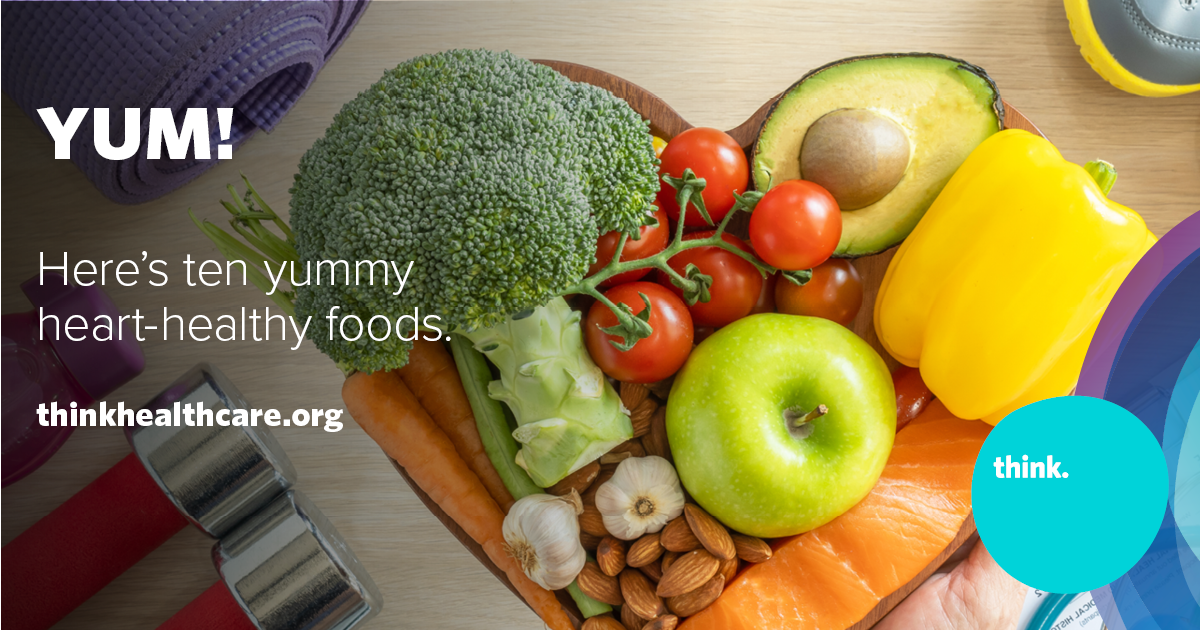
Eating heart-healthy foods doesn’t have to be a punishment. Here are ten favorite foods and a couple of easy recipes that will put a smile on your face and help lower your heart disease risks.

Why eat heart-healthy foods?

Every 36 seconds, a person in the United States dies of heart disease. Many of these deaths are due to poor dietary choices. Americans consume, on average, 3,600 calories a day which is roughly 1000 calories more than our average daily requirements. These extra calories–often from unhealthy foods–helps to contribute to obesity, diabetes, and heart disease. Making healthy food choices not only puts the right nutrition into your body but, by default, reduces your caloric intake. When you combine healthy food choices with activities that improve your health, you are setting yourself up for success and will improve your heart health.

Free from fat but still has a cost.

Even with healthier food choices, you can overeat and become overweight. Remember, in the late 1980s, when we were introduced to “Fat-Free,” and everyone jumped on the bandwagon? Consequently, people continued to gain weight. They didn’t realize they were substituting fat (and the flavor attributed to fat) for other unhealthy ingredients, like sugar, sodium, and artificial flavoring. Additionally, we began eating more because, well, it’s “Fat-Free,” assuming they were lower calorie. But the reality was, the food had the same if not more calories as the full-fat versions. Remember Snackwell Cookies?

Heart-healthy foods: Calories are not created equal.

Not all calories are created equal. Some foods are highly caloric and therefore pack a lot of energy (calories) into a very small amount of food. Still, your body interprets that large volume of calories in a short period as “surplus” and stores the energy in the form of body fat. For instance, 100 calories of Apple is about one medium apple. But, 100 calories of potato chips is about nine chips! Who eats just nine chips?

Ten heart-healthy foods

Meals don’t have to be boring and tasteless. Our top ten foods for healthy hearts can be incorporated into countless recipes that yield amazingly tasty dishes. Word to the wise, portion control is also important when eating healthy foods. Eating a whole box of Ghirardelli dark chocolates is not going to move you toward a healthy heart. So practice moderation

Avocados

An Avocado isn’t a fruit or a vegetable; it’s classified as a berry! It’s also very good for your heart. Avocados are high-calorie. Most of their calories come from the higher fat content (30 grams per serving). Fat in avocados is healthy when consumed in moderation. Avocados are a great source of natural fiber and essential vitamins and minerals.

Beans, legumes, or Edamame (soybeans)

Beans are an excellent food source. Beans naturally resist digestion and ferment in our digestive tract. This fermentation process aids in the breakdown and metabolizing of beans. The fermenting process improves our digestion and the microbiota that live in our guts.

There was a study done that tracked the cholesterol in participants’ blood. Participants who ate pinto beans saw a significant reduction in serum TC and LDL-C.

Soybeans, or Edamame, are rich in isoflavones that help reduce cholesterol levels. Soy is also a good source of dietary fiber and antioxidants.

Berries

Berries are a healthy way to satisfy your sweet tooth. Also, berries are packed with antioxidants like anthocyanins that help reduce inflammation and heart disease. Another study showed that eating strawberries helped reduce LDL Cholesterol levels.

Decadent Dark Chocolate!

Another healthier dessert or treat choice is dark chocolate. Dark chocolate has antioxidants that help reduce the risk of heart disease. The downside to chocolate is it usually comes with high sugar and calorie counts and should be eaten in moderation. If you have diabetes, consult your physician before incorporating dark chocolate into your diet.

Fish

Fatty fish is a good dietary option for improving their heart health. Fatty fish is rich in Omega 3 fatty acids and many vitamins and minerals. How you prepare your fish can neutralize the health benefits if you choose to fry fish in oil or serve it with decadent sauces like Hollandaise. Fish rich in Omega 3 fatty acids are salmon, tuna, mackerel, sardines, halibut, and trout.

Green Leafy Vegetables

“Eat your vegetables!” Leafy vegetables like kale or spinach are full of beneficial vitamins and minerals considered heart-healthy foods. Green leafy vegetables are a healthy source of fiber and help contribute to the sensation of being full–thus reducing our caloric intake. Making a salad for a meal is a wonderful way to incorporate leafy vegetables into your diet so long as you go light on the cheese, croutons, and dressing! 

Nuts like Walnuts and Almonds

Nuts are a great energy source (high calorie) and should be eaten in moderation. Studies have shown that tree nuts have a positive impact on the prevention of cardiovascular disease. Nuts are full of healthy fats, minerals, and nutrients attributed to healthy heart care. Did you know that just ten almonds can equal close to 70 calories?

Olive Oil

Olive oil is a great source of monounsaturated fatty acids, which contribute to heart health. This versatile oil can be used in cooking, baking, and even dressing your green leafy salad! Olive oil contains oleic acid, which is also beneficial to healthy hearts, and studies have shown it can aid in reducing heart disease.

Tomatoes 

Tomatoes are loaded with antioxidants and lycopene–a plant pigment with antioxidant properties. Along with vitamins and minerals, these nutrients help increase HDL (good) cholesterol and can aid in the reduction of free radicals in your blood system–helping to improve your heart health. Additionally, tomatoes are the most popular vegetable grown in home gardens!

Whole Grains

Whole grains like whole wheat, oats, rye, barley, brown rice, and quinoa are good substitutes for refined grains. Whole grains are best defined as grains that still include their germ, endosperm, and bran. Their counterparts are considered processed grains like all-purpose flour and white rice. Whole grains provide fiber and protective coatings, which require our bodies to work “a little bit harder” to digest and activate the good bacteria in our system. Studies have been done that suggest eating whole grains can reduce your risk of heart disease by as much as 22%. 

Final thoughts about heart-healthy foods.

No matter how old you are or your current heart health condition, it’s never too late to adopt healthier eating habits. Learning to substitute unhealthy options for healthy foods takes some time to adjust and build new habits, but the outcome is worth it. If you consider changing your diet, please consult your Primary Care physician first. They can ensure you are on the right path to a healthier heart.

Should I Get a Flu Shot?

A person wearing a mask shows their bandaged arm after a flu shot. Text reads: Flu vaccinations. Common questions answered. thinkhealthcare.org. Blue circle says think..

Common questions patients ask when deciding on getting a flu shot.

Each year, a new strain of Influenza hits the population. There are 4 types of influenza virus: A, B, C and D. Human Influenza A and B are responsible for our seasonal epidemics which most call “Flu Season” whereas Influenza C is mild and rarely caused flu and D is mostly found in cattle and are not known to affect humans.

One of the best methods to battle the influenza epidemic each year is to administer flu shots. These shots are formulated to help boost antigens for the prevalent influenza strain that season.

Here are some common questions patients have about getting the flu shot. 

Who should get a flu shot?

The CDC recommends anyone that’s 6 months or older should get a flu shot. There are different flu shots for different age groups so consult your physician or pharmacist who can recommend the proper vaccine. Pregnant women or folks with chronic health conditions can get the flu shot. Even people with egg allergies can receive the vaccine. Did you know that most flu vaccines are manufactured using chicken eggs?

Can I get the flu from a flu shot?

Contrary to what many believe, you cannot get Influenza from the flu shot. Flu shots are made from inactive viruses or only a partial protein composition. The nasal spray vaccines contain weakened live viruses that cannot cause illness.

You can however experience flu-like symptoms from other germs and viruses circulating through our population. These similar symptoms are oftentimes misinterpreted as influenza hence adding to the misinformation about flu shots causing the flu.

I had a flu shot last year. Do I really need another one?

Yes! Between the flu virus changing often and your body’s immune protection weakening over time, getting an annual vaccine will help keep your body protected.

What about allergic reactions?

Allergic reactions to flu shots are rare. 

Should I wait to get my flu shot until after my COVID booster? 

The CDC and FDA just approved Pfizer vaccines for use as a third dose therapy for immunocompromised patients. Additionally, they approved not having to have a wait period between the vaccinations. So, you don’t have to wait! 

Isn’t the flu better than getting the flu shot?

No. There are risks associated with getting the flu not to mention being out of commission for 7-10 days. Influenza is a serious disease and should not be taken lightly—especially if you are older or have existing health conditions. And even if you are healthy and younger, you are still at risk of having complications and possible hospitalization from the flu.

When should I get my flu shot?

Some people like to wait until late October or November to get their flu shot so the vaccination can carry them through March-April. It’s advisable to not wait. However, consult your physician to explore what is the best timing for your specific healthcare needs.

Why is it so important to get the flu shot this year?

Since the effectiveness of the flu shot tends to lessen after a period, annual vaccinations are important to maintain immunity. Additionally, each year, the flu vaccination is altered to combat the more popular strains for that flu season. In 2020, during the pandemic, many people chose not to get a flu shot because they were socially isolating. In addition to limiting their contact with others, folks practiced better handwashing and wore masks–further limiting the opportunity to contract Influenza. The combination of skipping a flu shot and limiting the exposure (not getting the flu) made people’s immunities for Influenza weak. What this means is this year, our flu season could be severe and getting your flu shot is more important now than ever.

How do they know what flu strain is prevalent each year?

Did you know 144 countries cooperatively work on identifying prevalent flu strains each year?  Twice a year the World Health Organization (WHO) assembles a panel of constituents who review enormous amounts of data collected from patients and determine which Influenza profile is most apt to be problematic. From these findings the pane makes recommendations on the composition of the season’s Influenza vaccination. 

What happens when the anticipated flu virus is identified?

Once the WHO panel makes their recommendations, private sector pharmaceutical companies commence the manufacturing of the flu vaccine. There are two methods to manufacture the vaccine. 

  1. Use egg cell technology and cultivate the antigen from chicken eggs. This process has been in use for more than 70 years!
  2. Cell-based technology is an alternative to Chicken Egg cultivation. It’s a bit more flexible and uses a cell-based candidate virus vaccine.

It takes up to six months to manufacture an adequate supply of vaccines so many companies will hedge their bets and begin producing vaccines anticipating the recommendations of WHO. This approach enables consumers to have access to vaccinations much early in the flu season.

If you don’t know if you should get one, talk with your doctor or provider about your concerns. Otherwise, it’s time to get your flu vaccinations now. Think Whole Person Healthcare has no-appointment/walk-in vaccinations during flu season or any other times through our thinkquick walk-in clinic, through your provider, or from 8 am to 3 pm, Monday – Friday in a vaccine clinic.