




Clinical Lab Services and Coordinated Diagnostics in Omaha.
Accurate diagnosis and quick tracking are key to managing both short-term illnesses and chronic conditions. At think, our on-site lab services offer advanced testing, safe sample collection, and reliable technology to check your health markers. We make sure patients get careful attention, so we can monitor changes, confirm results, and quickly share important information with your healthcare team.
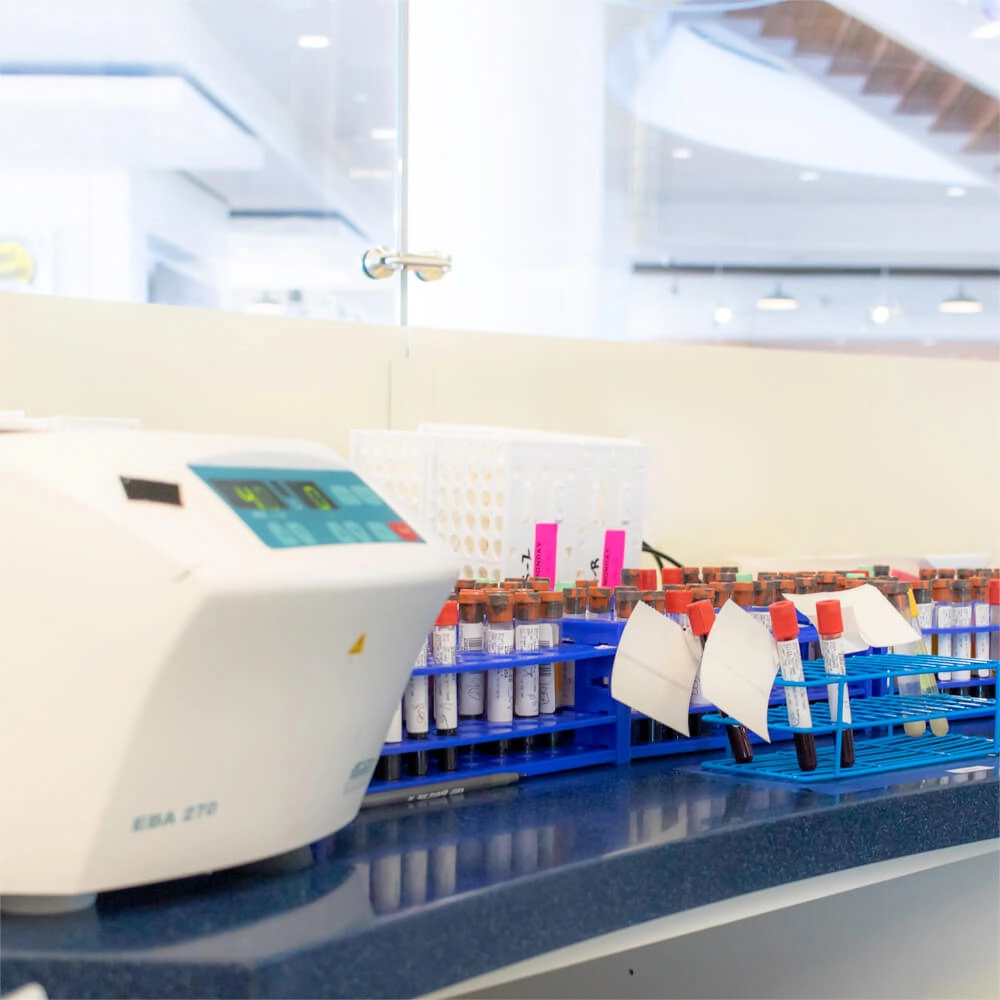
Our laboratory operates under a physician-led, integrated care model. Our laboratory technicians work directly alongside your primary care physician, chronic care coordinators, and internal specialists within the same Omaha facility. This unified structure supports rapid electronic data transfers, removes the delays associated with third-party offloading, and lowers overall patient costs by preventing duplicate testing and avoidable hospital admissions.
What are Lab Services?
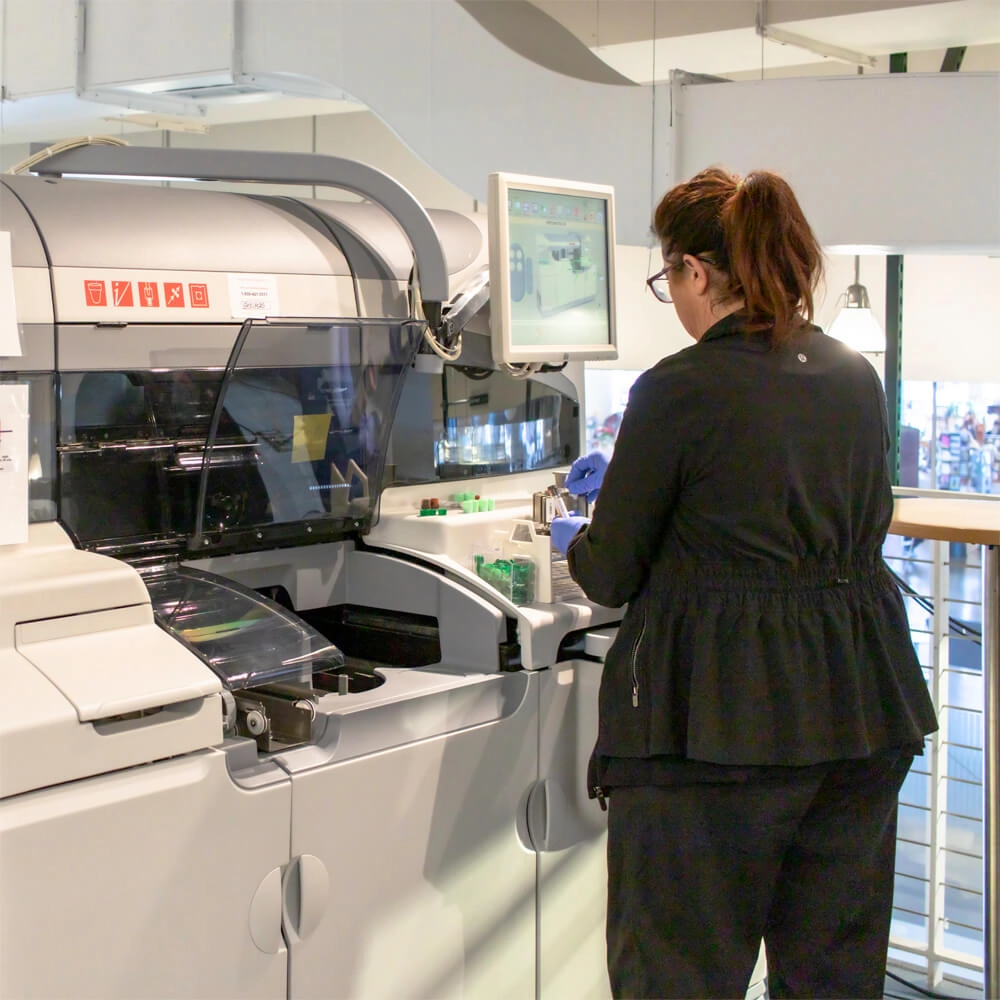
Clinical lab services include special tests on blood, urine, and tissue samples to check for changes in your body. Your body constantly releases chemical signals into your blood and other fluids, and changes in these signals can show how your organs and immune system are working. Lab tests turn these hidden changes into clear information that helps doctors find problems before you notice any symptoms.
Clinical labs must follow strict federal rules, like the Clinical Laboratory Improvement Amendments (CLIA), to make sure tests are accurate and safe. Trained lab scientists and technicians use advanced machines and tools to process your samples. By checking things like cell counts, enzyme levels, and bacteria, lab services give your doctor the facts needed to plan or adjust your treatment.
Our Laboratory Services and Testing Groups
Our department organizes routine blood draws, metabolic markers, and diagnostic cultures into clear clinical categories to support structured care delivery and scannable on-page formatting.
Complete Blood Count (CBC)
Measures the amount of red and white blood cells and platelets. This test helps find immune issues, checks for low cell counts, and can spot hidden blood problems.
Hemoglobin
Checks the level of the protein in red blood cells that carries oxygen. This helps find iron deficiency and track recovery from anemia.
Prothrombin Time
Measures how quickly your blood clots. This test is important for people on blood thinners or those getting ready for surgery.
Blood Glucose Tests
Measure the amount of sugar in your blood. These tests help find sudden changes and track how well your body uses insulin.
Hemoglobin A1c
Shows your average blood sugar over the past three months. This test helps confirm diabetes and track how well you are managing it.
Blood Cholesterol Tests
Measure the amount of fat in your blood. These results help your doctor check your long-term heart health and blood vessel condition.
Lipid Panel
Breaks down your cholesterol into HDL, LDL, and triglycerides. This gives a detailed look at your heart health and helps guide your diet.
Liver Panel
Checks certain proteins and enzymes in your liver, like ALT and AST. This test looks at liver health, checks for damage, and makes sure your body can safely process medicines.
Thyroid Stimulating Hormone
Checks the signals from your brain that control your thyroid. This test helps find thyroid problems early, like underactive or overactive thyroid.
Urinalysis
Looks at your urine in several ways to check for early kidney problems, changes in body chemistry, and urinary tract issues.
Various Cultures
Find and identify bacteria or fungi from samples like your throat, skin, or fluids. This helps your doctor choose the right medicine.
Why lab services matter to your whole-person health journey.
Your body works as a connected system. For example, changes in your liver can affect how you process medicine, and high blood sugar can impact your blood pressure and even your mood. If lab tests are sent to outside centers, the results may not fit smoothly into your care, which can lead to confusion. To keep you healthy, it’s important to review your test results together with your treatment history.
We review your test results alongside your diet and medications, so our team always knows how you’re doing. It helps protect your organs, saves you from extra appointments, and supports your overall well-being.
Meet your Laboratory Clinicians.
Our clinical laboratory department is staffed by licensed medical laboratory scientists, pathologists, and certified phlebotomists with advanced training in sterile specimen collection and automated diagnostic testing. Our laboratory professionals maintain active alignments with national clinical pathology organizations to ensure our testing methodologies match current evidence-based quality standards.
At think, our laboratory clinicians are part of your care team, forming your circle of care. They process your samples on-site and transmit the resulting metrics directly into our shared electronic network, keeping your primary care doctor and internal specialists fully synchronized. This internal alignment ensures your values are reviewed collectively against your active treatment milestones, placing experienced, coordinated medical data at the center of your daily care.
Our approach to Lab Services.
In many medical systems, lab tests are only ordered after you feel sick, and you may have to travel to another location for testing. At think, we focus on Whole Person Healthcare. When we schedule your lab tests, we look at your full medical chart, including your lifestyle, family history, and current prescriptions.
Our physicians, technicians, and clinical support staff form a circle of care with the patient at the center. Guided by our core values—Lead Change, Empathy, Accountability, Determination, Excellence, Respect, and Service—we make sure your lab tests and screenings are handled clearly and efficiently. Your lab results are shared directly with your care team, so your monitoring and treatments are always up to date.

Ready to take the next steps in your health journey, but have questions?
If you need a blood test, a yearly screening, or have a special sample to submit, our team is here to help. Just fill out the form below to contact a member of our Care Coordination team.
Frequently Asked Questions.
Whether you need to fast depends on the test your doctor orders. For example, lipid panels and fasting blood sugar tests usually mean you should only drink water for 8 to 12 hours before your test. Other tests, like a CBC or Hemoglobin A1c, don’t require fasting. Always follow the instructions you get before your appointment.
Since our lab is on-site at our Omaha center, most routine blood tests—like CBC, lipid panel, or blood sugar—are processed and sent to your doctor within a few hours. Some special tests, like cultures or hormone tests, may take 24 to 72 hours.
A complete blood count checks the health of your blood cells. It measures red blood cells (carry oxygen), white blood cells (fight infection), platelets (help clotting), hemoglobin, and hematocrit. Changes in these numbers can show problems like anemia, dehydration, or immune issues.
Yes. Our lab can handle test orders from doctors outside of think. If your specialist needs a blood test or urinalysis, you can do it here in Omaha, and we’ll send the results directly to their office.
Since our lab is in the same building as your care team and clinical pharmacists, your results go straight into your electronic health record. If there’s a sudden change or a problem with your medicine, your doctor and pharmacist are notified right away, so they can adjust your treatment quickly.
Written by thinkpress copywriters | Medically Reviewed by Name, Credential, board-certified of TITLE.