


Being Prepared for Emergencies

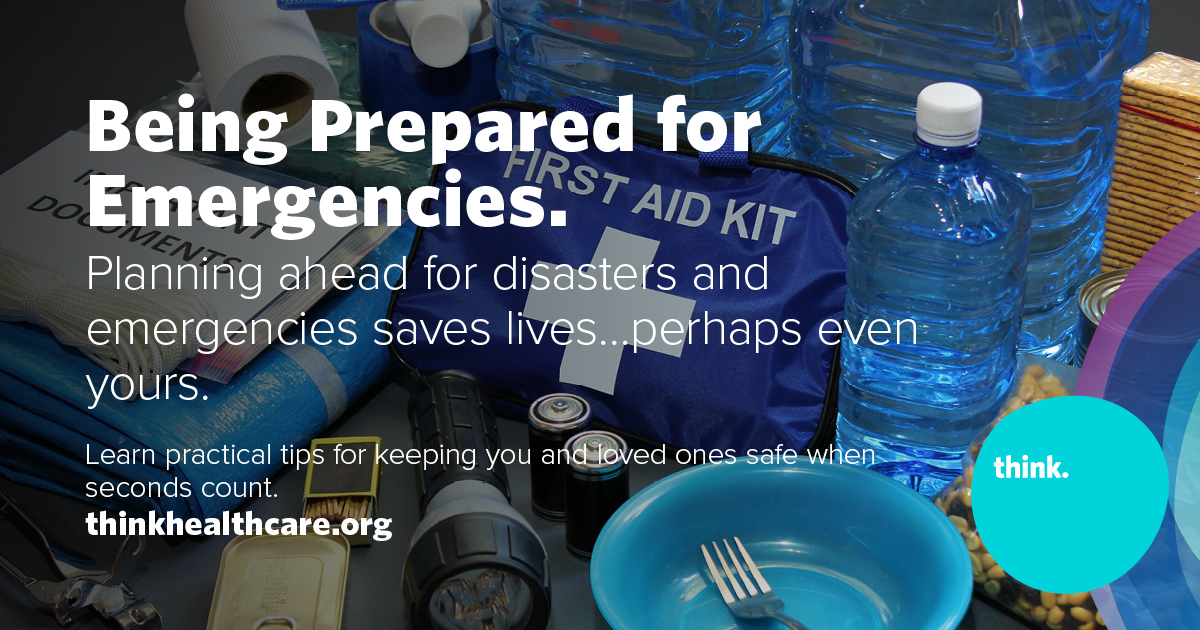
A collection of emergency supplies, including water bottles, a first aid kit, flashlight, batteries, whistle, rope, and canned food, with text encouraging disaster preparedness.

Do you have a safety plan in place for when an emergency strikes? Being prepared for emergencies like tornadoes, severe thunderstorms flooding, fires, explosions, or active shooters is essential since they can happen out of nowhere.

Before joining the think medical team, I worked in emergency care in an Iowa hospital. The main emergencies we encountered were car accidents and cardiac arrests, but we always had a public emergency plan in place. From medical school on, we trained for the community-wide disasters and emergencies that could happen at any time. 

As a family physician, I want my patients and the general public to stay informed and be prepared for emergency situations. The following are emergency preparedness tips and best practices for planning ahead any season of the year. 

Proactively plan ahead. 

Most every community is at risk for disasters and hazards. Do you know what risks are specific to your home and office in and around Omaha-Council Bluffs? Do you live or work in a flood-prone area? Could large tree branches fall on your property? Investigate where your home and property and business would be most vulnerable during a disaster. Knowing how and when to act in an emergency or hazardous situation can mean the difference between life or death for you and those you love.  

Create an emergency communication plan. 

You and your family may not all be together when an emergency arises, so you need to think through how to contact each other and how to reconnect if separated. Because I have two grade-school children, they know our family password in case we are not together in a crisis situation and I send someone else to pick them up. The U.S. government’s website, ready.gov lists a helpful form for creating an emergency communication plan. Because older adults and those with disabilities may have limited means to communication channels, be sure to include these family members, friends and neighbors in your emergency preparations.  

Make an evacuation and shelter plan. 

The American Red Cross focuses on three main priorities when disasters strike: clean water, safe shelter and hot meals. As part of your preparation for disasters and emergencies, be sure to map out which direction you would drive or walk during an evacuation and where you could find safe shelter. Be sure to include safety plans for your pets too. 

Gather emergency supplies. 

Being ready for an emergency or disaster includes putting together an emergency supply kit that is easily accessible. The following are basic supplies to include, but for a more complete list, see the survival kit supplies from the Red Cross. 

  • Water (one gallon per person, per day for several days for drinking and sanitation)
  • Food (non-perishable, easy-prep items for several days)
  • First aid kit
  • Flashlight with extra batteries (or solar-powered flashlight)
  • Battery-powered or hand-crank radio (National Oceanic and Atmospheric Administration (NOAA) Weather Radio is best)
  • Medications and medical supplies (i.e. glasses, contact lenses, syringes, etc.)
  • Sanitation and personal hygiene items
  • • Cell phone with chargers
  • Sleeping bag or warm blanket for each person
  • Extra cash (smaller denominations are best)
  • Pet supplies (food, water, ID, leash, bowl, etc.)
  • Books, game and activities for children

Stay updated on every family member’s medical information. 

One of the biggest issues we encounter in emergent care is if an injured or ill patient is unable to tell us their medical history, and we can’t quickly access their medical history, medications and allergies via an online records system. Medical teams are often left flying completely blind if we don’t know the patient or we can’t see their chart. 

I recommend people stay current with their medical information that they keep in their wallet or on their phone or through a wearable medical ID bracelet. In disasters and emergencies, it’s extra challenging for first responders and emergency departments to scramble to find medical information. Many cell phones now allow people to enter their medical conditions, medications and emergency contacts so first responders can bypass the lock screen and access the patient’s vital medical information.  

Safeguard critical documents. 

Be sure to keep important documents such as copies of identification, medical records, bank accounts, insurance policies, etc. secure in the cloud or on a password-protected flash drive. For extra security (and if you’re not particularly tech savvy) keep these valuable documents in a fire-proof, water-proof safe box that you can take with you in an emergency/evacuation. 

Stay informed with alerts and warnings. 

Local, state and national emergency agencies continue to improve on ways to notify the public before, during and after an emergency or disaster. Warning alerts include Wireless Emergency Alerts sent as brief messages by public safety officials and the National Weather Service, for example, to any WEA-enabled mobile device in local targeted areas. 

The national public warning system, the Emergency Alert System (EAS), allows the U.S. president to address the nation within 10 minutes during a national emergency. State and local authorities may also use the EAS to deliver disaster/emergency details including imminent threats and weather information. FEMA offers an app for receiving real-time weather, emergency alerts, location of shelters and more. 

Because mobile phone networks can be unreliable during emergencies, use text messages, social media and email to connect with family and friends. Facebook allows users to easily post their safety status during a time of disaster. To let family and friends know you’re okay during a public emergency, you can also register with the Safe & Well site hosted by the American Red Cross.

The Nebraska Emergency Management Agency and Alert Iowa emergency messaging systems also allow state and local authorities to speedily disseminate emergency information to local residents. Each statewide system is free and available to all counties. 

Refresh first aid/CPR skills. 

When it comes to medical preparedness, I advise teens and adults to stay current on first aid and CPR skills. You can find first aid and CPR certification classes through local organizations including the National Safety Council for Nebraska and the Red Cross. I do advise in any emergency medical situation to take your own pulse first. Assess your own condition first and help yourself before you help anybody else. Nothing good comes from panic. 

Outside of these often life-saving tips for emergency and disaster preparation, I stress the importance of looking out for the older adults in your life whether that’s a grandparent, parent, neighbor or local friend. Often seniors might not have emergency alerts set up on their phones or they might not have the TV or radio on to hear emergency broadcast alerts. Sometimes poor hearing or cognitive decline issues keep elders from knowing about public emergencies. Be kind. Be vigilant in looking for older adults in hazardous situations. 

At think, our entire group of healthcare providers want you and everyone in our greater Omaha and western Iowa area to be prepared in any season for public emergencies and disaster threats. We are here for you come rain, shine, tornado, flood, fire or whatever else comes our way. Together prepared, we all stand stronger. 

NEED MEDICAL CARE? CONSIDER THINK YOUR GO-TO FOR BETTER HEALTH

Think Whole Person Healthcare is dedicated to keeping you healthy through preventative care and treatment for a wide range of medical conditions. From the allergic reactions to the broken bones, our physicians, advanced practice providers and specialists are committed to you and your family’s lifelong health and well-being. 

Our walk-in clinic treats anyone, even those who are not a think patient or do not have a primary care provider currently. To learn more about our comprehensive healthcare services, visit our Services page online and choose your own think medical professionals by visiting our Meet Your Doctor page. 
We help you stay healthy. Give us a call at 402.506.9000.
Toy and Gift Safety

Three children play with colorful building blocks at a table. Text reads: Toy and Gift Safety—choose fun, engaging toys that keep your child safe. Learn tips at thinkhealthcare.org. A blue circle says think..

Toy and gift safety has improved over the past several decades, but still precautions are needed to protect both children and adults from injuries. December is Safe Toys and Gifts Month and the busiest season in the world for buying and giving gifts. With the right awareness on how to purchase safe and age-appropriate gifts, you can keep the smiles and excitement of the holidays going long after the wrapping paper cleanup. 

Toys and gifts from your youth may bring back nostalgic memories, but not everything you once played with would be safe for kids today. In recent years, Good Housekeeping published a “20 Most Dangerous Toys of All Time” list featuring harmful and deadly products including Aqua Dots, the small beads you spritz with water to fuse together a creative design. The problem? The beads’ coating, when ingested, released GHB, the date rape drug. Three children who swallowed the toxic pieces went into comas. The Consumer Product Safety Commission (CPSC) recalled 4.2 million of the popular kits. 

Those ‘70s acrylic Clackers balls that you would knock together? Gone. The novelty toy would often crack or shatter sending tiny shards flying. And the classic Easy-Bake Oven burned children whose fingers got stuck in the mini appliance. The newer Hasbro version uses a safer electric heating element.

Common Injuries from Toys

As a think Family Practice doctor who also worked eight years in the emergency room, I have seen my share of toy injuries to children. Choking hazards generally top the list. Often it’s an older child’s toy or game that a younger child gets into that causes a problem. Kids leave Legos and other small toys all around the house and little ones love to put everything in their mouth. Swallowing small magnets and button batteries, in particular, can cause airway obstructions and issues in the gastrointestinal tract. Ingesting any of the toy beads that swell in water can also completely obstruct the intestine.

Toys that start to flake paint or contain a toxic coating can lead to poisoning or chemical burns in the mouth and throughout the digestive system. Toys and games with sharp pieces or projectiles pose another danger to kids. Head injuries from crashing bicycles, skateboards, skates, scooters and other moving toys are another threat to the health of young ones. 

Top Safety Hazard List

According to the Centers for Disease Control and Prevention (CDC), every hour one child dies from an injury in our country. Every four seconds, a child is taken to an emergency department for an injury. Many of these accidents and fatalities are related to safety hazards with toys. 

The U.S. Consumer Product Safety Commission has compiled the following list of common injuries that can affect all adults and children: 

  • Allergic reaction
  • Aspiration
  • Burn
  • Carbon monoxide
  • Chemical burn
  • Chemical ingestion
  • Chemical explosion
  • Choking
  • Collision
  • Concussion
  • Crash
  • Drowning
  • Electrical burn
  • Electrical shock
  • Electrical smoke
  • Electrocution
  • Explosion
  • Falling
  • Fire
  • Ingestion
  • Inhalation
  • Laceration
  • Paint
  • Poison
  • Projectile
  • Puncture
  • Roll over
  • Safety equipment malfunction
  • Scalding
  • Smoke inhalation
  • Strangulation
  • Suffocation

How to Prevent Toy Mishaps

  1. Always inspect toys before you purchase them. Avoid toys, dolls, games and other items for children with little parts, sharp edges or parts that can be easily pulled off. 
  2. Buy age- and skill level-appropriate toys. When purchasing play and educational items for kids, be sure to consider their age currently not what you think they will someday grow into. 
  3. Check product safety labels. Toys should have an ATSM (American Society for Testing and Materials) label that proves it meets safety standards.
  4. Stay with the reputable toy manufacturers. Companies that produce knockoffs of popular toys or are made of inferior materials should be suspect. 
  5. Never give toys that can heat up or toys with cords and ropes. Only purchase nontoxic, crayons and paints. All electric toys should be UL certified.
  6. If you give a child a scooter, bicycle, skateboard or other kid-sized vehicle, give a helmet as part of the gift. Statistics from the National Safety Council and other sources note that annually in the United States about 100 children are killed and 254,000 are injured in bicycle accidents. Properly fitting protective helmets save lives. 
  7. Actively supervise children at all times. Many child injuries and deaths occur when parents and adults are distracted or too busy to keep an eye on young ones.  
  8. Stay current on first aid steps and take a basic life support class. If a mishap such as choking or drowning does occur, your quick response can truly save the life of your child or someone else’s child. 

Resources That Can Help

Here at think, we consider child safety a vital priority. Our physicians and advanced practice providers are always ready to assist with questions about how to keep everyone in the family safe while still enjoying fun activities. If an injury does occur, we offer comprehensive, compassionate care for everything from x-rays and CAT scans to splints and medications to help your child heal fully. We can also connect you with community resources such as first aid classes to keep you updated on ways to assist your child in an urgent situation. 

LEARN MORE ABOUT CHILD TOY SAFETY BY SPEAKING WITH YOUR THINK PHYSICIAN

Think Whole Person Healthcare makes it easy to receive both preventative care and treatment for a wide range of health conditions. From that cut that needs stitches to the persistent coughing and wheezing, our physicians, advanced practice providers and specialists are committed to you and your family’s lifelong health and well-being.

Our walk-in clinic treats anyone, even those who are not a think patient or do not have a primary care provider currently. To learn more about our comprehensive healthcare services, visit our Services page online and choose your own think medical professionals by visiting our Meet Your Doctor page. 

Ten Important Steps to Avoiding the Flu

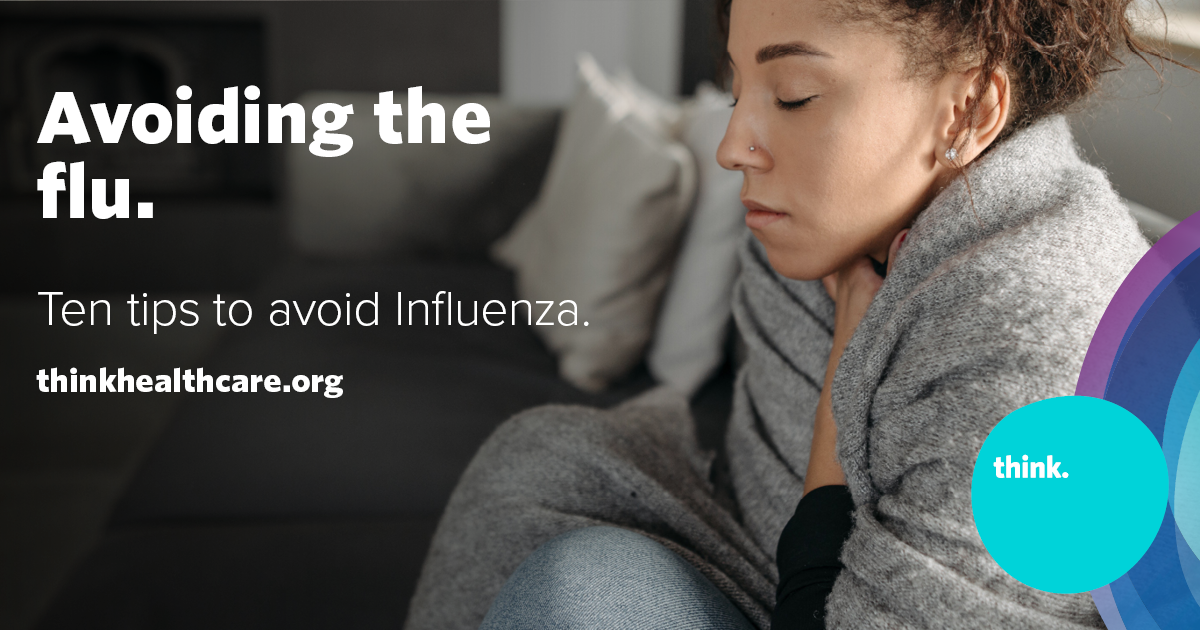
A woman wrapped in a gray blanket sits on a couch looking unwell. Text reads: Avoiding the flu. Ten tips to avoid Influenza. thinkhealthcare.org. Blue circle with think. appears on the right.

Avoiding the flu can be a challenge. Here are ten suggestions that can help you and your family members minimize the chance of catching the flu this season.

Influenza is a highly contagious virus that attacks the respiratory system causing cough, fatigue, shortness of breath, fever, muscle aches, sore throat, and runny noses. Influenza infects millions of Americans annually. There are several ways to avoiding the flu. Here are my top ten that are most effective.

Ten ways to avoiding the flu:

Washing your hands can help avoid the flu.

Next to inhaling influenza, the most common method of contracting the flu is through picking up flu germs on your hands. Germs are picked up and passed on through touching your eyes, mouth or nose. Creating good habits around frequent and proper hand washing (with soap and water) will greatly reduce the chances of contracting the flu. If you have young children, this is an ideal time to help cultivate healthy habits regarding washing your hands. Good handwashing habits are important, especially if children go to daycare or school where they are exposed to groups of children. Remember that hand sanitizer is nice to use, but nothing beats good hand washing!

Avoid touching your eyes, nose and mouth especially during flu season.

Influenza germs access your body through your eyes, nose and mouth. On average an adult touches their face 16 times every hour! 

Cover your mouth when you sneeze or cough. 

You can pretty much bet that particles from a cough will travel up to 6 feet. Covering your mouth (using your elbow rather than your hand) reduces the distance and can help minimize potential exposure to your neighbors.

Avoid people who may be ill or show symptoms of the flu.

Exposure to people who are sick is one of the fastest ways to getting sick yourself! If you can avoid people who are showing signs of influenza or any sickness, the best course to avoid getting ill is to avoid sick people altogether. If you do have to be around people who are sick, wear a mask, wash your hands and avoid touching your face or getting too close to the person.

Stay home if you are sick or think you have the flu.

The best thing you can do to help reduce the spread of influenza is to not go out if you are sick. Stay home. Some flu viruses are highly contagious and staying home and out of the population, will decrease the opportunity for the virus to spread. If you need medical care, you can schedule a telehealth appointment with your doctor. Think‘s Virtual Care Connection is simple and secure. Get medical care from the comfort of your home.

Rest.

Keep up on your sleep. When our bodies are well-rested, we have the energy to help fight off viruses. If we are fatigued or tired, your body will need to work even harder to maintain everyday operations, oftentimes sacrificing fighting off germs.

Hydrate.

Believe it or not, you can become dehydrated in cold weather and our bodies don’t work properly when they are dehydrated. Do you have trouble drinking enough water? Try our Seven in Seven challenge!

Clean and disinfect areas and surfaces often. 

Influenza germs can live up to 3 days on hard surfaces and 8-12 hours on fabric surfaces. 

Boost your immune system.

Incorporate exercise, eating fruits and vegetables, and stress reduction into your daily lifestyle. Healthy foods and habits will help your body be as strong as it can, making it hard for the influenza virus to take hold. The healthy activities may not help you completely avoid getting the flu, but it can help reduce the symptoms. 

Get your flu shot.

If you only choose to do one of these 10 things, get your flu shot! Influenza vaccinations help your immune system build up antibodies that can fight the flu virus. Each year, Influenza A and B (there are 4 types) mutate and new strains are identified. Therefore, you need to be vaccinated every year. It’s recommended that everyone get a flu shot (unless otherwise directed by your physician). It’s especially important for older folks or people with compromised immune systems to get the flu shot. As always, with all medications, consult your doctor before getting your flu shot!

Where can I get a flu shot?

Think Whole Person Healthcare offers no-appointment walk-in flu shots during our business hours. Bring your ID and insurance card and we can get you vaccinated in less than 10 minutes. Most insurance plans cover flu shots with zero or minimal copay.