



The Impact of Mental Health on Physical Health

Smiling older woman with glasses and earrings among a diverse group, overlaid with text: The Impact of Mental Health on Physical Health. The Mind-Body Connection. Learn more at thinkhealthcare.org..

The Mind-Body Connection

In our fast-paced modern world, the connection between mental and physical health is undeniable. Yet, the intricacies of this relationship are often overlooked. Mental health concerns can have a profound impact on physical well-being, influencing everything from chronic conditions to lifestyle habits. We had the privilege of diving into this topic in an interview with Lyndsay Dean, DNP, a think Advanced Practice Psychiatric and Family Nurse Practitioner with a wealth of experience in behavioral health.

Embracing a Holistic Approach to Healthcare

Neglecting mental or physical health can reverberate throughout our lives, impacting our overall health and vitality. Below, we’ll journey through Lyndsay’s insights on how mental health intricately shapes physical well-being, and how adopting holistic, whole-person, self-care practices can pave the path to a healthier and balanced life.

Understanding the Mind-Body Connection

Chronic stress is not just a mental or emotional burden but can manifest physically, often appearing as migraines, gastrointestinal issues, and obesity. As Lyndsay aptly articulates, “Chronic stress can manifest in myriad ways, from migraines to gastrointestinal distress, and even obesity.” 

This revelation about the physical symptoms of stress points to a deeper, cyclical relationship where mental health issues exacerbate physical symptoms, which in turn, can worsen the mental health condition. Unhealthy lifestyle choices such as poor diet, lack of exercise, and disrupted sleep patterns often accompany this cycle, each element feeding into the next, creating a challenging cycle of health deterioration. Lyndsay points out the importance of recognizing these stress manifestations as not merely coincidental but as potential outcomes of mental health struggles.

Nurturing Your Body and Mind: Practical Strategies for Holistic Wellness

To counteract the adverse effects of chronic stress, Lyndsay advocates for holistic self-care practices that prioritize proper nutrition, regular physical activity, and sufficient restorative sleep. She recognizes how the food we eat directly impacts our physical and emotional health, so she suggests prioritizing a protein-rich diet. Snacks like almonds, pistachios, cottage cheese, and Greek yogurt not only help stabilize blood sugar levels but also provide sustained energy, which can be crucial for managing stress and maintaining overall vitality throughout the day. 

Furthermore, she highlights the benefits of consuming whole, unprocessed foods. She advises against the easy temptation of fast foods or heavily processed options, which are often high in unhealthy fats and sugars. Instead, she encourages incorporating fresh fruits, vegetables, and whole grains, which nourish the body and support mental health due to their high content of vitamins, minerals, and essential nutrients. Consulting with your primary care doctor and a registered dietitian can be beneficial for those seeking personalized advice. 

Embracing Healthy Habits: A Lifestyle Approach to Wellness

In alignment with her recommendations, establishing consistent sleep routines and minimizing exposure to stressors are pivotal in nurturing both mental and physical health. Ensuring a regular sleep schedule and creating a calming nighttime routine can significantly enhance sleep quality, which is crucial for both mental alertness and physical health. Effective strategies, such as avoiding electronics before bedtime and maintaining a comfortable sleep environment, help facilitate deeper, more restorative sleep.

Minimizing exposure to stressors is another critical element. Modern life often exposes individuals to a plethora of stress-inducing situations which, if not managed carefully, can lead to both mental and physical ailments. Lyndsay highlights the importance of setting boundaries around work and personal life and suggests engaging in activities that reduce stress, like spending time in nature or practicing relaxation techniques. Additionally, regular physical activity is not simply about staying fit; it’s about enhancing overall well-being. Exercise acts as a natural antidote to stress, boosting mood through the release of endorphins, and improving overall energy levels. Activities don’t have to be strenuous—consistent, gentle exercises can also yield significant benefits.

Lyndsay pointed out the risks associated with the overconsumption of stimulants such as caffeine and energy drinks. These can disrupt sleep patterns and lead to cycles of energy spikes and crashes, which may exacerbate stress and anxiety. Instead, she advocates for incorporating mindfulness-based practices, such as meditation and deep-breathing exercises, which promote an overall sense of mental well-being. These practices help cultivate a state of mindfulness, encouraging individuals to stay present and engaged, reducing stress and enhancing mental clarity.

Seeking Support and Accessing Resources

For individuals grappling with mental health challenges, Lyndsay stresses the importance of seeking professional help and leveraging available resources when you need them. Therapy, in its various forms, plays a pivotal role in mental health care. Whether through one-on-one sessions or group settings, therapy provides a structured environment where individuals can explore their feelings, confront their issues, and develop coping strategies under the guidance of a trained professional. These interactions can be profoundly transformative, offering not just relief but also a pathway to deeper self-understanding and resilience.

Lyndsay also advocates for the incorporation of mindfulness-based practices into daily routines. Techniques such as meditation, progressive muscle relaxation, and guided imagery have been shown to significantly reduce stress levels, enhance emotional regulation, and improve overall mental clarity. These practices help individuals cultivate a state of mindfulness, wherein they can more effectively manage their thoughts and emotions, leading to improved mental health outcomes. 

In addition to mental health-focused practices, Lyndsay suggests leveraging dietary and physical wellness resources. Consulting with your primary care physician and dietitians can provide individuals with tailored nutritional advice that not only supports physical health but also stabilizes mood and energy levels. Similarly, fitness centers offer structured environments for physical exercise, which is known to alleviate symptoms of depression and anxiety through the release of endorphins.

Lastly, the digital age offers an abundance of accessible resources right at our fingertips. There are numerous apps available that can guide users through meditation exercises, sleep improvement techniques, and habit tracking, all of which contribute to whole-person wellness. The integration of these tools into one’s daily life can empower individuals to take charge of their mental and physical health, creating a balanced and healthy lifestyle.

Embracing Holistic Healthcare: A Collaborative Approach to Wellness

At Think Whole Person Healthcare, our commitment extends beyond the treatment of symptoms to a deeper understanding of the interconnected dynamics of mental and physical health. Recognizing this complex relationship, we employ a holistic, whole-person-centered approach to healthcare, which considers every aspect of individual wellness. With the expert guidance of Lyndsay Dean, DNP, and our multidisciplinary team, we create an empowering environment for our patients, encouraging them to actively participate in their own healthcare journey.

Our professionals, ranging from physicians to mental health specialists, collaborate closely not only with each other but also with every patient. This collaborative process ensures that all aspects of health are considered, paving the way for comprehensive treatment plans tailored to meet the unique needs and goals of each individual. Such an approach fosters a deeper patient-provider relationship built on mutual respect and open communication, which is fundamental to the success of holistic care.

At Think, we believe that a holistic and collaborative approach is key to unlocking the full potential of healthcare. By bridging the expertise of various health disciplines and harnessing the power of partnership with our patients, we lay a strong foundation for not only addressing immediate health concerns but also promoting a lifelong journey of health and well-being.

Looking Ahead: Integrating Mental and Physical Health

Prioritizing mental and physical health is paramount for leading a fulfilling and balanced life. By implementing Lyndsay’s insights and embracing holistic self-care practices, you can cultivate resilience and thrive in all aspects of life. Remember, you’re not alone on your journey to well-being—our team at Think is here to support you every step of the way.

NEED MEDICAL CARE? CONSIDER THINK WHOLE PERSON HEALTHCARE AS YOUR GO-TO FOR BETTER HEALTH.

Think Whole Person Healthcare is dedicated to keeping you healthy through preventative care and treatment for various medical conditions. From that nagging cough to mysterious leg pain to mental health concerns, our physicians, advanced practice providers, and specialists are committed to your and your family’s lifelong health and well-being. 

To learn more about our comprehensive healthcare services, visit our Services page online and choose your own think medical provider by visiting our Meet Your Doctor page. 

Our team helps you stay healthy. To schedule an appointment, call us at 402.506.9049.

The Heart and Soul of Love

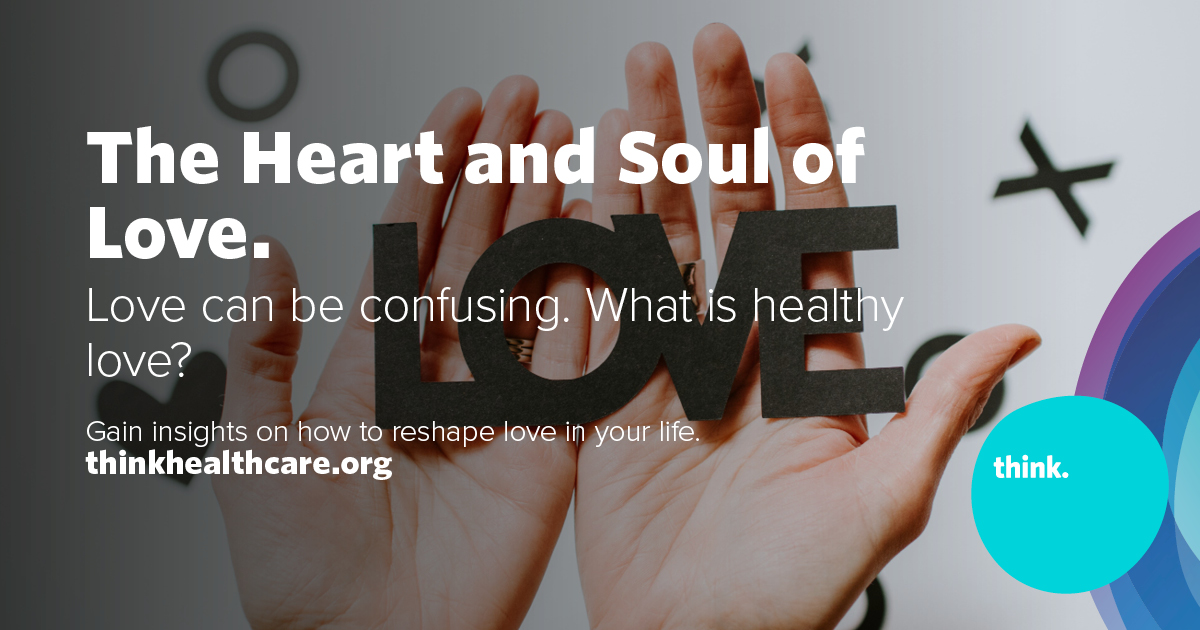
Two hands hold cut-out letters spelling LOVE with a message about understanding healthy love and a website link for more insights. Abstract shapes are in the background.

The Beatles declared, “all you need is love.” Lady Gaga wants “your stupid love.” Beyonce is “drunk in love.” Love can be confusing. What is healthy love? Discover helpful tips to love yourself and others well.

You don’t have to look far to see the word love used in our world today. If you do a quick online search, love appears at least 15,570,000,000 or 155.7 billion times on the Internet. People can say they love a great steak or a Runza® or the Huskers or the Hawkeyes, but what really is love and why do we all need it in our lives?

What is the importance of love? 

The importance of love is simplistic and complex at the same time. Love is necessary, and it’s a need not a want for every living creature—especially us as humans. The idea of what love can feel like and be like is that love is not just a noun, it’s a verb. Love is an action. Love is a warm blanket for your soul. You can receive and feel love and give love to yourself and others. Love is so important because it really does shape our entire lives. 

When it comes to our identity, what’s truly going to shape us is how we were nurtured. We can ask ourselves: Was there patience in my life? Was there guidance in my life? What was I taught? The degree of investment of love by those around you will shape you for the rest of your life. I don’t know anything else that’s so prominent as a life-shaper.mi

How does love shape us?

The idea of shaping love begins when you were a child. Your parent’s role or a caregiver’s role was to educate and to discipline. Both educating and disciplining have to be done with the idea of nurture. When there’s nurture, there’s love. More specifically, if I nurture you, I am going to lift you up. If I’m going to correct you with respect, I am going to discipline you and then hug you. I am going to remind you how special you are and then tell you, “Honey, there’s a better way you can choose.”

Shaping love for someone involves tone of voice and word usage. It’s modeling humility. Shaping our view of love when we were a child has a layer of complexity. But what was modeled to us can also prevent us from giving and receiving love as we grow up. If love was not modeled to us in a healthy way, we can run into problems throughout our lives. 

What makes love scary?

If love is conditional, it comes with an expectation. For example, if you know you can’t make mistakes, or you have to be a certain way, or you have to earn love, then the message you receive is, “I’m only worthy of love on a conditional basis.” As you grow up, if you feel like you are not worthy, you may be cautious of giving and receiving love. If you were raised in a household with harshness and abrasiveness, then you may not know how to give and receive love in a healthy way. For a lot of people, love is scary because they didn’t experience healthy love on a consistent basis as a child. 

How can love be reshaped?

I stress the importance of your relationship with yourself. If you can’t love yourself or you don’t have a healthy relationship with yourself, you will struggle with giving and accepting love. It is important to get interconnected with your innermost vulnerabilities. One vulnerability may be a tendency to feel responsible for other people’s emotions. If you’re in a relationship with your child, partner or parent, for example, and this loved one is growing through something tough, you may be quick to throw aside everything and try to claim responsibility for fixing things. When you do, you may not be able to enjoy your own interests and passions because you feel like you have to hold space for the other person. 

Or maybe your vulnerability is a sense of jealousy in relationships. If you know you can get jealous, maybe you learn to check that vulnerability at the door and allow people to be independent. Or perhaps you are aware you tend to be codependent because you worry the other person is going to leave you. There may be some abandonment issue behind all that. 

The more you can recognize your vulnerabilities, the more you will feel safe and calm in a relationship of any kind. When you become more self-aware and extend compassion and love to yourself, you become less fearful of giving and receiving love. The relationship with yourself sets the tone for every other relationship that you have. That’s why we all need time to step back and think and meditate on and process our thoughts and emotions. 

What happens to us physically and emotionally without healthy love?

The body holds the score of the mind. If we don’t feel like we’ve received the type of healthy, consistent love that we need, we will feel it mentally and physically. If we were not modeled healthy, consistent love, then we were shaped with unhelpful assumptions of love and our role in the world of relationships. We take those unhelpful assumptions in and carry them into adulthood. In behavioral health, we call that adult-child issues or adult-child vulnerabilities. Often we don’t know why we have an unhelpful assumption or we’re not even aware that we have this unhelpful assumption.

An unhelpful assumption could be that we’ve become conditioned to faulty automatic negative thinking about ourselves, about others, about love, about what we choose to be in life. This negative thinking becomes so heavy on the mind, which a lot of times leads to depression or post-traumatic stress, depending on how severe the situation we faced. Anxiety can be daunting with this too. Depression can create a part of us that holds anxiety. 

As these emotions affect us, they can affect our physical health too. Common physical symptoms of depression include pain in the joints, limbs and back, gastrointestinal upset, fatigue, sleep disturbances and appetite changes. Anxiety can leave us with a racing heart rate, heart palpitations and chest pain. Anxiety can also cause headaches, upset stomach, high blood pressure, fatigue and continual worry and irritability. If left unchecked, anxiety can become chronic and increase our risk for depression. 

Not dealing with underlying emotional stress can interfere with your quality of life from many angles. So much of your emotional angst can be traced to your childhood and an unhelpful viewpoint of loving nurture. But guess what? You can correct this. You can update your system. In essence, you can give yourself what you need now that you didn’t have then. Nothing is beyond repair is this regard. 

How can we build healthier love into our lives? 

Besides getting to know your yourself and understanding the relationship that you have with yourself, it is life-affirming to also recognize what you value. Know what you value and then put your time and energy into things that match your values. This is how you love yourself. This is self-respect. 

So know your values and make sure your time is aligned with your values. And then understand what you need and not be afraid to recognize those needs. Ask yourself, What are my needs in life? Then communicate assertively and openly those needs to the appropriate people. Be sure to meet yourself where you are and always with self-compassion because that’s one thing you can never have enough.

Communication is really an art. If you’re not used to communicating your needs, then this can seem foreign. But the more you practice communicating what you need, the more you do it naturally. It’s also important to recognize any automatic negative thinking. I call it our mental tape deck. If you hit “reject,” your brain won’t hear those negative message. I like to tell people, if you learn the power of your mind, you’d never tell yourself another negative thing. So be aware of how you speak to yourself. 

Does reshaping our viewpoint of love really work?

Absolutely. One woman I was working with was not modeled healthy, consistent love as she grew up, and that taught her to be quite hard on herself. But the more she learned to love her inner child and love herself, everything else in her life fell into place, especially with her husband. 

When you learn to love yourself, you learn to recognize your own vulnerability. You also learn to spot other people’s vulnerability more quickly — their pain, their suffering, the things that shaped them. When you can do that, you’re able to step outside of the box and take things less personally. 

For this client, learning to understand her vulnerabilities helped her spot her husband’s vulnerabilities. This helped her see him for who he is, his strengths, his weaknesses and his struggles. She realized she didn’t need to react to his vulnerabilities because she now understood that his vulnerabilities had nothing to do with her.

Seeing this helped her to communicate more love to him and helped him get the help he needs. Love and compassion create a domino effect. It only takes one person to model compassion and love consistently to reset our mind’s connection with healthy experiences of love. 

When is it time to seek professional help with mental health?

When the little things that don’t normally get us down start to feel like big things that are really adding up, this is an indicator that our mental health cup is too full. We all have a mental health cup in which none of us are superheroes. No one is immune from the challenges of life. If you feel this mental log jam, it is time to unpack that and process because maybe you’re more vulnerable than you realize. 

If you find you’re not able to self-regulate or you can’t find your inner peace or grounding zone, that space that gives you relief in your self-care, it’s probably another indicator that it’s time to make some space to clear your mind.

Think Mental Health Resources 

At Think, we understand the interconnection of physical and emotional health. The Think Whole Person Healthcare’s Behavioral Health services are here for you when life’s challenges feel too much to handle alone. Our insightful and caring therapists and psychiatrist know just how to guide you through a variety of mental health concerns, including anxiety, depression, grief, obsessive/compulsive disorder, substance abuse, addiction, acute mental health issues and more. 

Our licensed mental health professionals will discuss with your Primary Care physician how to best attend to your individual physical and mental health. We can arrange sessions with individuals as well as with couples and families. All of you — including your thoughts and emotions — matter significantly to us.

LEARN MORE ABOUT BEHAVORIAL HEALTH BY SPEAKING WITH YOUR THINK PROVIDER

Think Whole Person Healthcare makes it easy to receive both preventative care and treatment for a wide range of health conditions. From the fluctuating blood sugar levels to the persistent joint pain, our physicians, advanced practice providers and specialists are committed to you and your family’s lifelong health and well-being.

Our walk-in clinic treats anyone, even those who are not a think patient or do not have a primary care provider currently. To learn more about our comprehensive healthcare services, visit our Services page online and choose your own think medical professionals by visiting our Meet Your Doctor page. 

Explaining Seasonal Affective Disorder (SAD) 

Seasonal Affective Disorder

Seasonal Affective Disorder is an elusive mental health disorder that affects individuals in many ways. This article will try to provide some background and context to this often misunderstood disorder and offer some tips and tricks to mitigate the effects.

What is Seasonal Affective Disorder (SAD)?

Seasonal Affective Disorder, often referred to as SAD, is a form of depression. SAD usually cycles with the changing seasons and is prominent in the winter months when days are shorter, and the weather forces people to stay indoors. Symptoms of Seasonal Affective Disorder often appear at the onset of winter (or the season) and dissipate when the weather changes.

Like depression, SAD can present a variety of symptoms. Some of the common symptoms folks experience are:

  • Fatigue
  • Sadness
  • Irritability and intolerance with others
  • Fighting with loved ones for insignificant reasons
  • Lost of interest
  • Difficulty sleeping or excessive sleeping
  • Changes in eating habits like eating more sweets
  • Weight gain
  • Feelings of hopelessness and despair
  • And in some cases, thought of suicide

Get Immediate Help

If you or someone you know is in immediate distress or is thinking about hurting themselves, call the National Suicide Prevention Lifeline toll-free at 1-800-273-TALK (8255). You also can text the Crisis Text Line (HELLO to 741741) or use the Lifeline Chat on the National Suicide Prevention Lifeline website.

Seasonal Affective Disorder is usually associated with the winter months, but SAD can affect people in the summer months. Some common symptoms people experience in the summer months are:

  • Difficulty sleeping
  • Loss of appetite and weight loss
  • Agitation
  • Anxiety
  • Aggression or violent behavior

Symptoms of Seasonal Affective Disorder usually last between 3-5 months. Patients can be misdiagnosed as having major depression or even bipolar disorder. It’s important to talk with your provider and share as much information as possible to diagnose and treat your symptoms properly. Your healthcare provider may have you complete a questionnaire or ask you some qualifying questions that can help diagnose SAD.

Treatment for Seasonal Affective Disorder (SAD)

There are a few theories as to the cause of SAD. Serotonin and Melatonin are two chemicals in our brains that regulate important functions. Serotonin helps regulate mood, and Melatonin helps regulate sleep. People with SAD often have lower levels of Serotonin and higher levels of Melatonin. Studies also suggest that Vitamin D influences how the body produces Serotonin. Humans get Vitamin D in a couple of ways. We get Vitamin D when we eat Vitamin D-rich foods, and our bodies produce Vitamin D when the sun hits our skin.  

There are four primary therapies to treat Seasonal Affective Disorder (SAD). 

Medication Therapy (psychiatry) 

Selective Serotonin Reuptake Inhibitors (SSRI) address symptoms of depression and work for those with SAD. Research shows that Serotonin levels are lower in people with depression. SSRI medications help regulate Serotonin levels. As with any medication, it’s important to speak with your Psychiatrist, Primary Care physician, or Clinical Pharmacist about any adverse side effects.

Light Therapy

Sunlight hitting the skin promotes Vitamin D production. And Vitamin D helps in the production of Serotonin. Full-spectrum lights can mimic the sun’s rays and create the same effect as natural light. Light Boxes will not cure SAD but may relieve symptoms associated with Seasonal Affective Disorder. We recommend a healthcare provider monitor your use of light therapy as you can overdo it and trigger insomnia, hyperactivity, and ocular issues.

Vitamin Therapy

Ideally, Vitamin D intake should occur naturally through diet and sunshine. Over-the-counter Vitamin D can help supplement your intake; however, looking at your nutrition and making adjustments may be sufficient. Vitamin D supplements are readily available at most drug stores, supermarkets, and online. If you choose to take a supplement, it’s best to begin taking Vitamin D before the decrease in daylight hours. As with any medication or supplement, we always recommend you speak with your Primary Care physician or Clinical Pharmacist first.

Cognitive Behavioral Therapy (psychology)

People who experience Seasonal Affective Disorder (SAD) often experience other emotional and cognitive challenges. Therapy, specifically Cognitive Behavioral Therapy (CBT), can help patients manage their feelings and thoughts while providing tools to help work through bouts of SAD and other emotions. CBT or Talk Therapy used in treating SAD involves several visits with a therapist. Depending on your needs, a therapist may recommend sessions throughout the winter months. In Cognitive Behavioral Therapy, therapists work with patients to explore and identify the negative thoughts and feelings associated with the winter months and replace them (or reframe them) with positive and constructive alternatives. In addition, therapists can help patients identify pleasant indoor and outdoor activities that can jumpstart their engagement with daily living. 

Tips to living with Seasonal Affective Disorder (SAD)

Although there is no cure for SAD, through proper management (either through medications or other therapies), patients can live fulfilling lives. Here are a few tips and recommendations that may help mitigate your symptoms worth implementing.

Socialize
Spend time with family and friends. You’ll find that most people are excited to spend time with you and will make accommodations to see you. Be careful not to pass up invitations because of how you “might feel,” but accept invitations with the caveat that you may need to leave early or may cancel if your SAD symptoms persist. 

Exercise
Physical activity can help jumpstart metabolisms and trigger chemicals in our brains that regulate mood. Vigorous exercise may sound overwhelming, and that is okay. We recommend starting with a walk around the block or riding a stationary bicycle for one 30-minute program. If you are up to it, going to a gym and participating in structured workout programs can greatly improve your management of SAD.

Diet
Some foods have a direct influence on how we physically and emotionally feel. Be conscious of how different foods affect you and make healthy choices. With SAD, people may crave “Comfort Foods,” which, when eaten in moderation, can be a positive experience. Practice caution and restraint as not to overindulge. 

Consuming foods rich in Vitamin D can be beneficial. Some foods to consider are:

  • Dairy or fortified foods
  • Oily fish such as tuna, salmon, and cod
  • Eggs

Final thoughts

Seasonal Affective Disorder may not be curable, but the symptoms are manageable. If you or a loved one experiences SAD, seek professional help. At Think Whole Person Healthcare, we have Primary Care physicians and a Behavioral Health team that can work together to design a treatment program specifically for you. Don’t go another season suffering!

Three family activities to help cope with cabin fever

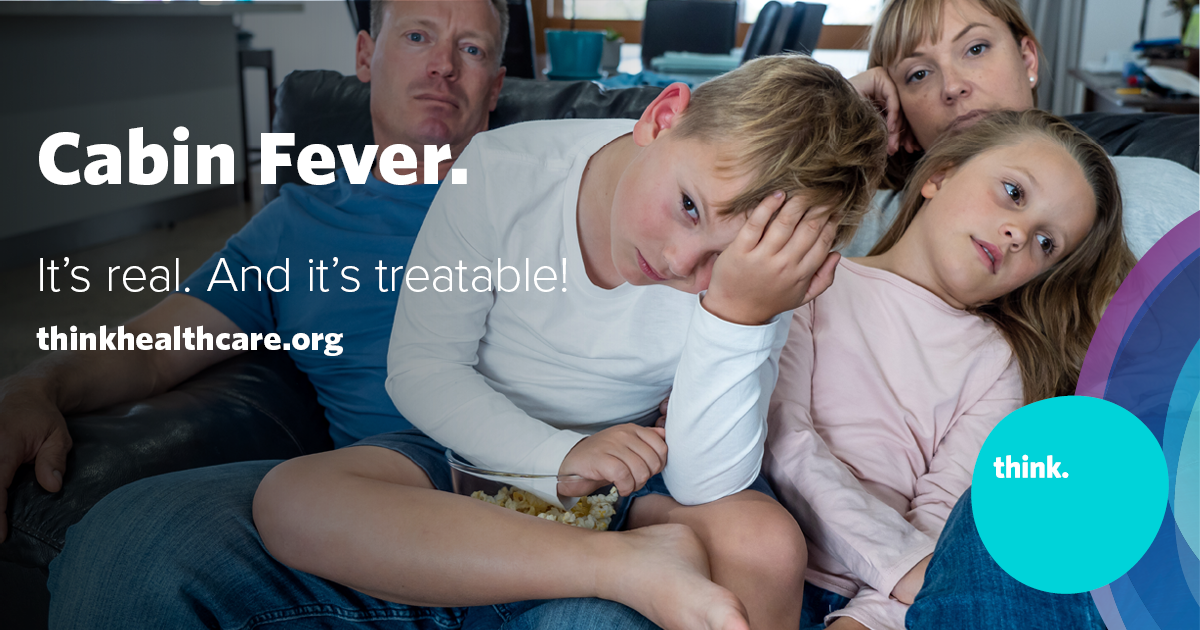
A family of four sits on a couch looking bored and unhappy. Text on the image says, Cabin Fever. Its real. And its treatable! thinkhealthcare.org. Blue and purple graphics are in the corner.

Cabin fever usually impacts families right about now each year. Here are some fun (and familiar) activities the whole family can enjoy.

What is cabin fever?

Did you know there is a medical definition for cabin fever? Cabin fever is the combination of psychological symptoms felt when a person feels restricted indoors.

People tend to experience cabin fever at different intensities based on their age, activity level, and how long they expect to be inside. In the wintertime, people tend to feel cabin fever around January or February. We know winter is almost over, but we also know that snowstorms and winter can drag on into April in the Midwest. Not knowing when the weather will give us a break can heighten our feelings associated with cabin fever. Many people experienced signs of cabin fever during the COVID-19 pandemic.

  • Some common symptoms are:
  • Anxiety
  • Restlessness
  • Loneliness
  • Depression
  • Lack of energy or motivation
  • Intolerance or impatience
  • I have cabin fever. Now, what do I do?

Here are four ways to help combat cabin fever.

Go outside

Even if it’s cold, taking a brief walk around the block or even stepping outside for a few minutes can help combat cabin fever. If you can, spread your errands out over a couple of days so you can get outdoors a couple of times a week.

Social support

If you aren’t able to go outside, interacting with others can help mitigate cabin fever. A phone call, Facetime, or even a zoom call are great ways to stay in touch with others and get some human interaction.

Stimulate your mind

Making productive use of your time helps make the days go by—getting you closer to Springtime. Choose a book to read with a friend and create a mini-book club. Commit to reading a section of the novel and schedule a call to discuss. Consider learning a second (or third) language. It’s never too late to learn! You may be interested in an artistic outlet like coloring, painting, or knitting. YouTube has hundreds of how-to videos available for free.

Playing games

But the all-time favorite is reliving childhood games with family members. Here are three of the best games for all ages to play indoors or outside (weather permitting).

Hide-n-seek for inside

Everyone in the house can play hide and seek. It’s a simple game. But, it can get a bit rowdy indoors. Everyone is in one room, and the Leader goes out into the house and hides an object. The goal is for the participants to find the identified object and return it to the Leader. The person/team that returns the object to the Leader takes over as the Leader for the next round. If participants have trouble locating the object, the Leader should offer clues to help keep the game progressing. Pair younger children with older adults, and they can work as a team.

Variations can include elements of “I Spy” where the Leader doesn’t disclose the object but provides a clue. The participants have to figure out what the object is and locate it before the others.

Simon Says

This activity can be fun for parents to play with their kids. It creates a wonderful opportunity for children to learn valuable listening skills while getting an opportunity to burn off some energy. If you aren’t familiar with the game, the rules are simple. The participants all stand up in from of the Leader, who we call Simon. The Leader says “Simon says” and includes some action like “touch your nose” or “jump up and down.” After a few Simon says instructions, the Leader omits to say “Simon says” before giving the task. Individuals that do the task sit down—the last person standing wins and takes over as the Leader.

Some timeless instructions are:
Touch your nose

  • Do a jumping jack
  • Turn around
  • Touch your toes
  • Take a step forward.
  • Clap your hands

Dance Party

This one can be a bit rowdy and awkward for individuals who may be self-conscious, but it can be fun and empowering. Try finding music with an upbeat rhythm. A favorite song the whole family can dance to is Happy by Pharell Williams. Children and older adults must see you having fun with dancing. So be weird. Laugh and exaggerate your movements, so they see it’s okay to look funny. Make the whole dance party exciting. For older adults, sitting in a chair and moving their upper bodies is equally beneficial. Clapping hands and singing along is also a fun way to elevate the activity.

A couple of considerations:

  • Make sure sharp edges and breakable items are stored safely away so participants can’t hurt themselves.
  • If you have children who tend to overstimulate, you may want to select different music that may be lower energy.
  • If you have participants who have mobility issues, more meditative music may be ideal.
  • Select music that’s relevant to the group. Ask for suggestions.

If possible, play the music video on your television during your dance party session. Omit if your audience is easily overstimulated.

The most important thing to keep in mind is to have fun! Dance Party is about shedding your self-consciousness and moving around—getting your heart rate up and burning off energy.

A final note about cabin fever.

As with any changes to your routine, check with your Primary Care physician, especially if you have a relatively sedentary lifestyle or health issues. If you don’t have a Primary Care physician, visit our Meet your Doctor page and schedule an appointment today.