


Cervical Health Awareness

Three teal awareness ribbons lie on a teal background. Text encourages cervical health awareness and preventing cervical cancer, with a website link and a circular graphic labeled think..

There are some health issues that every woman needs to know about, whether she’s a teen or a senior. Cervical health is one of them. January is designated by the U.S. Congress as Cervical Health Awareness Month to highlight the importance of how women can protect themselves from cervical disorders, particularly HPV (human papillomavirus) and cervical cancer. 

Raising awareness gives women choices and those choices can lead to improved health and even save lives. In America, more than 14,000 women each year are diagnosed with invasive cervical cancer. The risk of developing cervical cancer is still possible as women age — over 20% of cervical cancers are detected in women over age 65. Fortunately, most cervical disorders are preventable with vaccination and appropriate screening.

Disorders of the Cervix

As the lower part of the uterus (womb), the cervix is the opening to the vagina. The cervix is covered with a thin tissue layer comprised of skin-like squamous cells and glandular cells that produce mucus. Common diseases of the cervix include:

  • Cervicitis is an inflammation of the cervix usually caused by an infection.
  • Cervical incompetence can happen during pregnancy when the cervix opening widens long before the baby is due.
  • Cervical polyps and cysts can form abnormal growths on the cervix.
  • HPV is a sexually transmitted disease commonly spread through vaginal, anal or oral sex. HPV can cause genital warts and cancers including cervical.
  • Cervical cancer occurs when abnormal cervical cells grow out of control over time. The cancer cells invade deeper in the cervical tissue and can eventually spread to other organs. 

Prevention of Cervical Diseases

To lower your risk of cervix health problems, you can make intentional choices to strengthen your overall health and immune system by eating nutritionally, staying active and avoiding smoking. Following your healthcare providers guidance on Pap test screenings and HVP vaccination are two of the most important steps to detect cervical abnormalities, infections and cancer early. 

Because women with early-stage cervical cancer or pre-cancer usually experience no symptoms, it can be lifesaving to know the common signs and symptoms of cervical cancer. The American Cancer Society has compiled a beneficial list of common cervical cancer symptoms.  

HPV and Preventative Vaccination

There are more than 100 types of Human papillomavirus (HPV) and about 30 strains can affect the cervix and genital area. HPV infection causes most cases of cervical cancer, and because HPV typically shows no symptoms, most people do not realize they are infected. HPV can also cause other cancers such as cancer of the vagina, vulva, penis, anus, and tongue and back of the throat (oropharyngeal). 

Since it was introduced in the United States in 2006, the one-time HPV vaccine has proven safe and effective in preventing cancers linked to HPV. At Think Whole Person Healthcare, we follow the United States Preventative Services Task Force and Centers for Disease Control and Prevention (CDC) guidelines on HPV vaccination. The vaccination recommendation is for:

  • All preteen boys and girls at age 11 or 12.
  • Everyone through age 26, if not previously vaccinated. 
  • Some adults ages 27 – 45 who are not vaccinated, may choose vaccination if their healthcare provider determines a higher risk for new HPV infection.

Most HPV infections clear up on their own by the time a person is age 30, but if a person past this age has new sexual partners or other factors that raise their cervical cancer risk, they need to stay consistent with regular HPV screening. The CDC notes that “every year, about 19,400 women and 12,100 men experience cancers caused by HPV.” 

By the time women reach age of 70, roughly 70% of them will have been exposed to HPV. Finding HPV on a Pap test (Papanicolaou test, also known as a Pap smear) can help determine how often you should be tested for HPV. If you test positive, you may need more frequent testing in the future to help ensure that you do not develop cervical cancer. The general guideline is to have HPV testing every three years 

Pap Test Screening

During a Pap test, a special tool gently collects cells from the cervix lining for examination under a microscope. The pap test can look for both HPV infection and abnormal cells. In the past, Pap results were labeled either normal or abnormal. Today, higher-powered diagnostic lab equipment allows for categorizing abnormal cells down to their specific DNA, which helps with determining treatment options. 

It can take years for HPV to develop into cervical cancer, which why it’s important to stay consistent with Pap tests to find cervical changes before they escalate into widespread cancer. The Pap test can detect precancerous abnormalities and catch cancer at an early stage. Discovering cervical changes early helps improve treatment outcomes and helps prevent long-term problems and cancer mortality. 

The USPST guidelines for Pap tests are:

  • Women under age 21: No testing. Cervical cancer is quite rare in this age group. If sexually active teens are infected with HPV, almost all these infections go away on their own within a year or two without changes in the cervical cells.
  • Women aged 21–29 years: Screen for cervical cancer every three years with cytology alone.
  • Women aged 30–65 years: Screen for cervical cancer every three years with cytology alone, every five years with HPV testing alone or every five years with co-testing with a pap and HPV test.  
  • Women aged 65 and older: No screening for cervical cancer is recommended, if previous regular screening is clear from past 10 years, or for women who have had a full hysterectomy with removal of the cervix, or who otherwise are not at high risk for cervical cancer.

Depending on your specific medical and family history and risk factors for cervical disease, your think healthcare provider will discuss the best screening schedule for your health needs. It is important to still get a yearly physical even if you are not scheduled for a Pap and pelvic exam. 

Countless women make the mistake of only seeing their gynecologist during their child-bearing years and skip over regular blood work for such things as cholesterol and blood sugar levels and a check of their blood pressure, heart rate, reflexes, balance and more. Our think healthcare providers understand the priority of paying attention the overall health of the total person.

It’s been said that we spend two-thirds of our medical dollars in the last one third of our lives, and we need to turn that around. Why not invest two-thirds of our medical money in the first one-third of our lives to prevent illnesses and diseases in later life?  Staying current with your cervical health is one of the best proactive choices you can make throughout your lifetime. 

LEARN MORE ABOUT CERVICAL HEALTH BY SPEAKING WITH YOUR THINK PROVIDER

Think Whole Person Healthcare makes it easy to receive both preventative care and treatment for a wide range of health conditions. From that cut that needs stitches to the persistent coughing and wheezing, our physicians, advanced practice providers and specialists are committed to you and your family’s lifelong health and well-being.

Our walk-in clinic treats anyone, even those who are not a think patient or do not have a primary care provider currently. To learn more about our comprehensive healthcare services, visit our Services page online and choose your own think medical professionals by visiting our Meet Your Doctor page. 

Vaccines Throughout Your Life

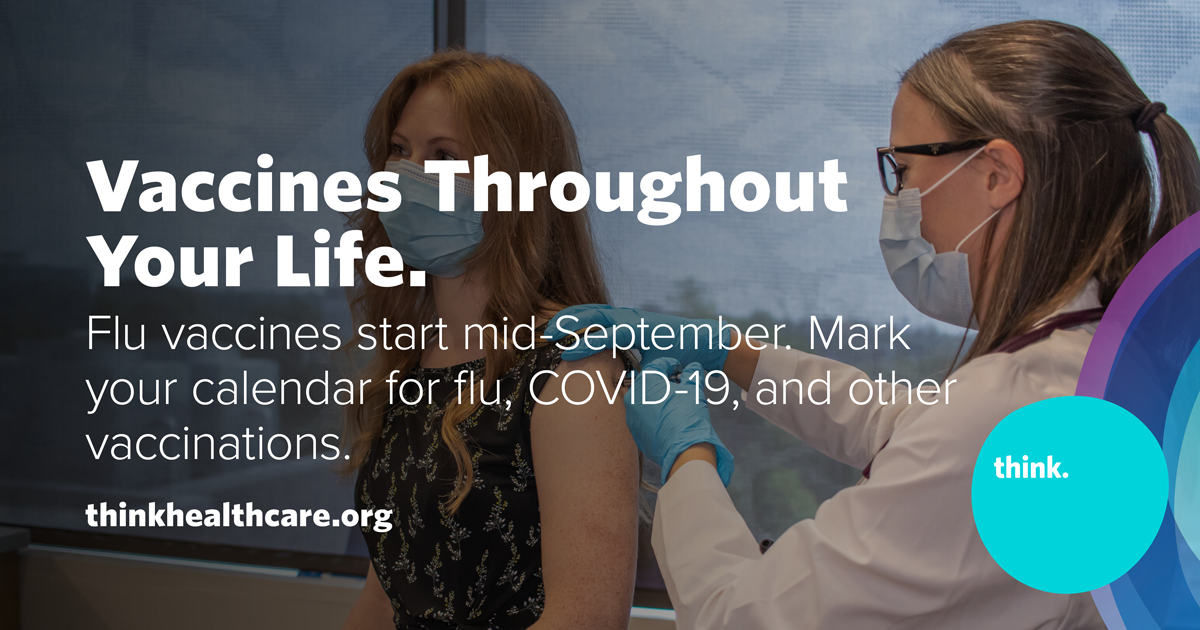
A healthcare worker in a mask gives a young woman a vaccine shot. Text reads: Vaccines Throughout Your Life. Flu vaccines start mid-September. Mark your calendar for flu, COVID-19, and other vaccinations.

August is National Immunization Awareness Month which highlights the importance of vaccinations for people of all ages. The ever-advancing fields of microbiology, immunology and virology have made vaccines safe and effective at preventing illnesses and serious, life-threatening diseases. 

Although vaccinations over the years have helped limit many serious diseases in America such as smallpox and rubella, these illnesses still exist and can affect people who are not vaccinated. With the influx of worldwide travelers or unvaccinated immigrants moving to the United States from Mexico, Afghanistan, Ukraine and other nations, uncommon diseases are making a resurgence or being newly introduced to our country. Polio and monkeypox are two of them. 

You as an individual have the power to protect yourself and your family, friends, and co-workers from vaccine-preventable diseases. The following is an overview to help you and your family take control of your health today and for years to come. 

What is the difference between immunization and vaccination?

Essentially, they mean the same thing. Immunization is typically used interchangeably with vaccination or inoculation. Immunization is the process of making a person immune to a disease or pathogenic agent. Protecting someone from an infectious disease usually happens via a vaccine given by needle injection or nasal spray. The act of introducing a vaccine into the body is called vaccination. 

What are the main recommended immunizations for children?

In addition to COVID-19 vaccines, the Centers for Disease Control and Prevention (CDC) recommends a specific vaccination schedule for children beginning at birth through age 18. Parents and guardians can help protect young ones from widespread diseases including chickenpox, mumps, measles, whooping cough, flu and nearly a dozen other communicable diseases in our country. Preteens and teens encounter higher risks for serious disease such as meningitis, bloodstream infections, tetanus, diphtheria, and cancers caused by HPV. Your think primary care provider will walk you through the recommended vaccinations and what is best for younger children and those in their middle school to high school years. 

What are the main recommended immunizations for adults?

Routine vaccines are not just for children and teens. As we age, immunity from immunizations during childhood can fade. Older adults are at higher risk for certain infectious diseases such as pneumonia, influenza, tuberculosis, and hepatitis. Health conditions, work, travel, and other lifestyle choices can accelerate the need for adults to safeguard their health through proactive vaccinations. 

The CDC recommends the following immunizations for adults 50 years and older to prevent:

  • Shingles
  • Pneumococcal disease and pneumonia
  • Hepatitis B 

Think family doctors are also seeing a rise in whooping cough (pertussis) and respiratory syncytial virus, or RSV, in older adults. An estimated 177,000 and more older adults are hospitalized each year from RSV infection and 14,000 of them die. Young children who get the DTaP vaccine are protected from diphtheria, tetanus, and whooping cough. The Tdap vaccine protects preteens through adults from these three diseases. An RSV vaccine is available for children and currently in development for adults. 

Think flu and COVID-19 Vaccine Boosters begin mid-September

Please see your provider or visit ThinkQuick Walk-in Clinic for your flu shot.
The vaccine clinic (for flu shots and COVID-19 boosters) starts in mid-September, Monday – Friday, from 8 am to 3 pm in the lobby.

Are the COVID-19 vaccines and boosters still important?

Yes! Getting accurate, up-to-date information about COVID-19 and available vaccines is crucial to your health and the community’s health at large. With misinformation still circling around about the coronavirus, it’s important to note that COVID-19 vaccines can help block new variants from emerging. The world has made tremendous progress on defeating SARS-CoV-2 and its multiple subvariants, but the ever-evolving infectious disease will be with us for some time. 

Recent data indicates that COVID-19 vaccine effectiveness lessens over time, especially for people 65 years and older and those with compromised immune systems. Research finds that the mRNA booster strengthens the immune response and significantly reduces serious illness, hospitalizations, and death. 

The CDC advises everyone ages 6 months and older receive COVID-19 vaccines and boosters for every individual 5 years and older. The new Moderna Spikevax Bivalent vaccine/booster targets the original strain of COVID-19 and the BA.1 omicron subvariant. Other vaccines to target additional subvariants are still being formulated and tested. 

Think Whole Person Healthcare starts offering the Moderna Bivalent vaccine booster for those ages 18 and older this fall. The booster is available in the vaccine clinic, located in the lobby, from 8 am to 3 pm Monday through Friday.

Who needs the flu shot?

The contagious respiratory illness, influenza (flu) is a virus that infects the nose, throat, and lungs. Some older adults, young children, and people with certain health conditions such as diabetes, asthma and heart disease are at higher risk for potentially serious flu complications. 

To protect yourself and others from the seasonal flu, the CDC recommends everyone 6 months and older needs a flu vaccine every year. Think health professionals will start giving flu shots in mid-September during regular practice hours. In addition, during the fall and winter flu season, think will offer a special flu shot clinic Monday – Friday, 8 a.m. – 3 p.m., also beginning in mid-September.

Where do I start with getting vaccinations?

  • Talk to your think healthcare provider about scheduling any routine vaccines. 
  • Be sure to discuss any underlying health conditions that might affect the types of immunizations you need and the timing of the doses. In rare cases, some individuals with specific health risks and life-threatening allergies should not vaccinated for certain diseases.
  • Note that some vaccines require more than one dose for best protection. Each recommended dose is important to your complete, long-term health. 

LEARN MORE ABOUT VACCINATIONS AND DISEASE PREVENTION BY SPEAKING WITH YOUR PRIMARY CARE PROVIDER

Think makes it easy to receive both preventative care and treatment for your overall health and well-being. Our walk-in clinic treats anyone, even those who are not a think patient or do not have a primary care provider currently. To learn more about our wide-ranging healthcare services from family medicine and internal medicine to senior healthand physical therapy, visit our Services page online and choose your own think medical professionals by visiting our Meet Your Doctor page. 
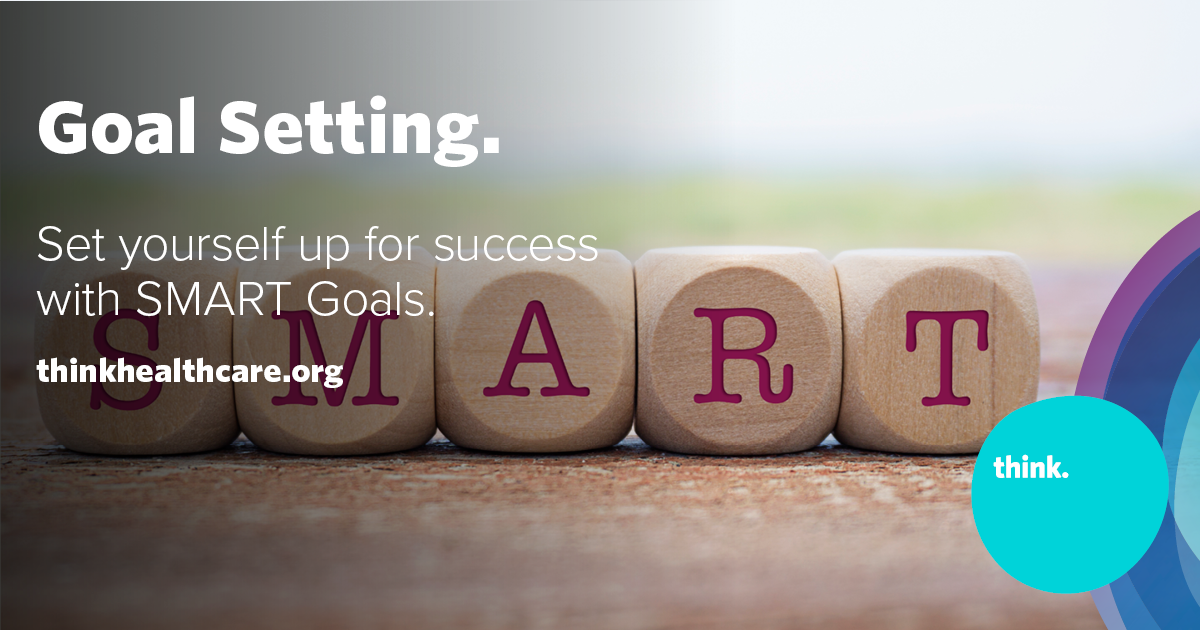
Set yourself up for success with SMART Goals.

Illustrates SMART Goals

Goal setting shouldn’t create a sense of dread or failure; it should be empowering and clarifying. 

What are SMART Goals?

Wikipedia defines S.M.A.R.T. as a mnemonic acronym, giving criteria to guide in setting objectives, such as in project management, employee performance management, and personal development. That’s a lot of words to say “a smart and effective way to structure goals so you can have a sense of accomplishment.” So, let’s break down SMART into each of the criteria and offer a bit more context.

SMART goals that are Specific

SMART goals should be specific enough that there is very little room for confusion or loopholes. Regardless of their desire to achieve a goal, most people will gravitate to loopholes and ultimately fail at achieving their goals. There’s a lot of theory as to why we act this way. I suspect the biggest component is our subconscious activating our risk manager (that little voice that keeps us safe). Goals usually mean some significant change in our lives. And with change, there is often some risk. “Will I like the results of losing 20 pounds, or will it be meaningless?” 

Some examples of specific SMART goals are:

  • “I am going to walk 2 miles 4 times a week.” Not, “I’m going to walk a couple of times a week.”
  • “I’m going to be healthier.” Verses, “I’m going to exercise 3 times a week and eat fewer carbs.”
  • “I’m going to get more sleep.” Or, “I’m going to go to bed at 10 pm and wake up at 6 pm on workdays.”

The more specific you can be, the better your odds of not getting around the goal and succeeding. Trust me, the frustration of drilling down to a specific goal will yield a lot of pride and accomplishment when you achieve it. So, get specific but also keep it simple.

SMART goals that can be Measured

How will you know if you achieved your SMART Goals? That’s where having specific measurements incorporated will help you:

  • Gauge your progress.
  • Breaks goals into easily managed segments.
  • Let you know when you achieve your goal.

Which of the following goals would you consider to be measurable?

  1. I will save money this year.
  2. I will stop eating so many sugary foods.
  3. By my birthday, I will lose 25 pounds.
  4. I will walk 5 miles a week.

Although all four are worthy goals, achieving them may provide some sense of accomplishment; you can only measure two. Numbers 3 and 4 give specific amounts (25 pounds and 5 miles) that can qualify the achievement of the goal.

In goal number 1, how do you define “save money?” Is it saving $5 a week or $5,000 a year? With Goal number 2, is it a similar scenario? What defines “so many” in this particular goal?

Make your SMART goals Attainable & Achievable

The beginning of the new year is fraught with enthusiasm and bold statements. People declare they are changing every aspect of their lives, like going to the gym twice a day for a year. Or they are getting their high school body back by a reunion. Setting attainable goals sets you up for success. With true success, you will build confidence and motivation to set more goals, creating a healthy and sustainable cycle of self-improvement. 

Since everyone’s abilities are different, giving examples of attainable goals may not be applicable. When you are writing out a goal, ask yourself these questions:

  1. Is this something I can achieve in the designated time frame? Is there enough time in the day to go to the gym twice a day? 
  2. Do I have the means to accomplish this goal? Will your goal require you to spend a large sum of money to outfit a home gym to meet your daily workout goal? Does your goal require a large chunk of your time, leaving very little time to sleep, work, do chores or socialize?
  3. Am I setting the bar too low? Sometimes we shy away from stretching ourselves, and we never quite push enough to grow. Be honest when setting your goals, and don’t shortchange yourself on personal growth. 

Set goals that are challenging but attainable. Set daily, weekly or monthly goals that you can measure, whether it is saving a certain amount of money, walking a certain number of steps or practicing a lifestyle change on a regular basis. By making your goals and desired changes attainable and measurable, you can assure yourself success.  

Creating Relevant and Realistic goals

If a goal has meaning and is relevant to a current situation, that goal will become more important. Have you ever asked yourself, “Why am I doing this?” A good way to determine if your goal is relevant is to ask yourself, “Is this something that I want?” 

A good example of a relevant goal for a person with unstable blood sugars due to poor diet and inconsistency with taking their medications would be to take their medications as prescribed for the next 30 days and follow their physician-directed diet.

Having realistic goals is also critical for success. It’s not realistic for a sedentary person to set a goal to run the Boston Marathon in three months. Or, a morbidly obese person to lose 100’s of pounds before their high school reunion that’s in a couple of months. When setting goals, always ask if this is realistic. If you struggle with determining whether or not it’s realistic or relevant, ask a loved one their opinion. Please note, whenever a goal involves drastic changes in physical activity or dietary changes to produce significant weight loss, you should always check with your Primary Care physician.

Make your goals Time-bound or Timely

Did you know that most habits form after 21 days of consistent behavior? The goal with most goals is to change behavior that no longer works. Having a goal that’s time-bound and timely will create not only a sense of urgency but give you a specific timeframe to focus your attention on your behavioral changes. Here are some good examples of time-bound goals.

  1. I will save $100 each month for two years. 
  2. I will meditate for 10 minutes each morning for 30 days.
  3. I am not drinking soda for the next 90 days.
  4. By my 30th birthday, I will have my student loan paid off.

The biggest take-away from setting time-bound goals is to set yourself up for success and not to be overly aggressive with deadlines or timeframes. You want to make goal setting positive and rewarding, not punitive. 

Time to activate your goals.

Becoming good at setting goals takes practice and commitment. It may help to have someone you can be accountable to by checking in regularly on your progress and asking for help when you need additional support. 

Final thoughts.

Whenever you are making big changes in your life that may impact your emotional or physical health, please consult your Primary Care physician or behavioral health clinician. It’s important that you are physically healthy and consider how your goals could challenge your body. Your doctor may want to do a physical exam if you plan to lose weight or undergo a new exercise program. If you are making behavioral or mental health changes in your life, you might consider consulting a behavioral health provider. Whatever your goal may be, your think providers and health team are here to help you every step of the way!

Getting to Know Cheryl Lindly

Smiling person with short gray hair and glasses, wearing a blue shirt. Text reads: Meet Cheryl Lindly, PA-C. Internal Medicine. thinkhealthcare.org. Blue circle with think. on the right.

Cheryl Lindly is a Physician Assistant at Think Whole Person Healthcare that focuses on Internal Medicine. Learn more about Cheryl by watching her brief video.