




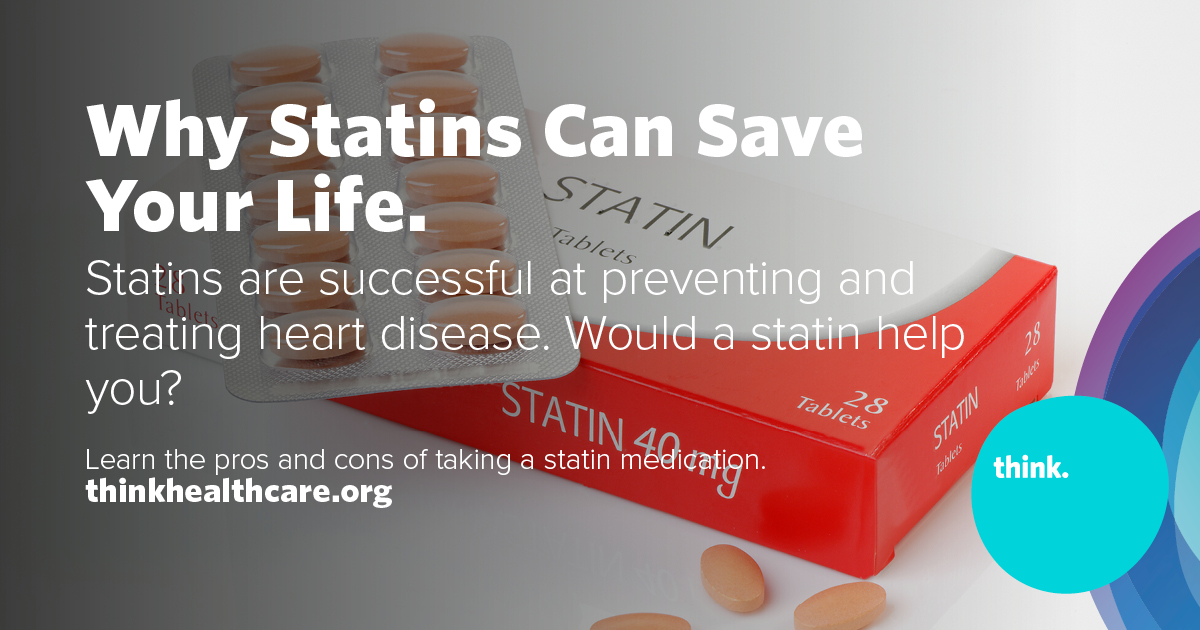
Statins are prescription medications that help people lower their cholesterol, a waxy, fatty substance that circulates in the bloodstream. If too much cholesterol is in your blood, you may be at higher risk for cardiovascular disease, including heart attack and stroke.
There can be confusion over taking statins because of conflicting reports about the pros and cons of taking a cholesterol-lowering medication. Overall, statin medications have been extraordinarily successful at preventing and treating heart disease. Common statins on the market include Lipitor® (Atorvastatin), Crestor® (Rosuvastatin) and Zocor® (Simvastatin). Clinical trials see a consistent 25%-30% reduction in heart disease with statin medications, sometimes more.
How do statins work?
The evolution of cholesterol lowering is an interesting one. The exact mechanism as to which statins lower the risk of heart disease is fairly well understood, but it’s not perfect. Statins lower LDL cholesterol, commonly referred to as “bad” cholesterol. HDL cholesterol is considered the “good” cholesterol. Statins reduce the level of cholesterol that the liver makes and helps rid the blood of already-made cholesterol. Even a low dose of a statin can cut LDL cholesterol in half for most people, although individual responses may vary.
Statins also have anti-inflammatory effects for artery walls and stabilize cholesterol blockages from damaging organs such as your brain and heart. It is important to note that LDL cholesterol isn’t some terrible thing that’s floating around your bloodstream and trying to kill you. LDL cholesterol plays many important roles in the body including delivering cholesterol to different body tissues and aiding in immune function by tracking bacteria in your body. Some studies have shown that people who have higher LDL cholesterol levels tend to have a lower risk of infection.
When we lower cholesterol with a medication, it’s not like treating an infection with a medicine for a couple of weeks and then you go off of the medication. If we get a patient’s blood cholesterol levels normalized, we expect the cholesterol levels to go back up if we stop the medication and no other lifestyle changes were made. Cholesterol-lowering medications are generally lifelong treatments, not just a pill you take every now and then.
What are the positive benefits of taking a statin?
The amount of evidence supporting the use of statins in patients who have pre-existing heart disease is overwhelming. Likewise, statins have fairly consistently shown a reduction in heart disease risk in patients with diabetes and genetic abnormalities in blood cholesterol levels. If you do not fall into one of those categories, it is harder to know how much benefit you would receive from a statin medication. Your doctor should do a full heart disease risk assessment to ultimately determine if you would benefit from a statin medication.
The magnitude of absolute benefit from a statin hinges on how high risk an individual is at baseline. For example, someone who has a 1% chance of developing a heart attack over the next 10 years could see their risk drop to 0.7%, which for some is not enough to commit to a lifelong treatment. For others, the risk for a heart attack can exceed 50%, so a statin medication could lower the risk down to 35%, maybe even more if the right metrics are followed.
What are the risks and side effects of taking a statin?
Most patients do quite well with statin medications with few side effects. However, some patients can experience muscle aches, pains or weakness, and if this occurs, talk to your doctor or clinical pharmacist right away. If you have a problem with a certain statin medication, that does not necessarily mean you will have a problem with all of them.
There are no shortages of these types of medications and not all of them are created equally — there are plenty of strategies to ensure you get the maximum benefit from your medicine while avoiding potential side effects. For example, some people may have difficulty tolerating one statin, but have absolutely no problem with another.
Most mainstream physicians regard any possible side effects as a tradeoff to the benefits of statins lowering blood cholesterol and improving a patient’s overall heart health.
What heart health screenings are most helpful?
Generally, when patients are over age 18, we start looking at the heart disease screening metrics like measuring blood pressure. Most guidelines recommend running blood work at least every five years, particularly after the age of 40, although more and more experts are recommending screening earlier. The bloodwork would include a lipid panel, as well as a comprehensive metabolic panel to review your blood glucose, electrolytes, kidney function and liver function. We’d also check blood pressure and other vitals to get a solid picture of overall risk assessment. If your blood pressure, glucose or other tested levels are too high, we’d manage with lifestyle changes and perhaps medication if needed.
Based on these various metrics, including the lipid profile, we would make an assessment on whether you were a candidate for a cholesterol-lowering pill or not. If you don’t have full-fledged diabetes, if you’ve never had a heart attack or genetically elevated blood cholesterol levels, then whether you use a statin is kind of a gray area, and an overall risk assessment must be performed.
Sometimes the answer is not clear as far as who will benefit from a statin. In these circumstances, you could ask your provider about ordering a coronary artery calcium score. This is a relatively inexpensive, low-risk CAT scan of the heart, which does not require any contrast dye. The scan is a quick, no-pain screening. Based on your age and score, it can tell your doctor a lot about what is “going on under the hood” with the blood vessels and determine with greater accuracy as to whether you would benefit from a statin.
Should some people pass on taking a statin?
I like to run a couple of other metrics with my providers’ patients. Outside the standard lipid panel, we like to measure what’s called apolipoprotein B or apoB for short. Apolipoprotein B-100 is a protein that assists with moving fat and cholesterol throughout your body. We look at high lipoprotein (a) as a genetic risk factor for heart disease. We also look at some inflammatory markers. These extra labs help us better understand your personal overall risk and determine how much benefit you may receive from taking a medication.
My cholesterol is normal, why am I on cholesterol-lowering medication?
The bottom line is whether you have high cholesterol or not, we know that if we lower your LDL cholesterol, we can lower your risk of heart disease. When we look at treating people with statin medications, we’re looking at not just cholesterol levels but also your risk for developing heart disease.
So do you have a history of preexisting heart disease? Have you had a heart attack or a stroke before? Do you have diabetes? Do you have genetic abnormalities such as what we call familial hypercholesterolemia, in which your LDL cholesterol is extremely high? These people with significantly high LDL present with heart attacks in their 30s.
We also look to see if you have high blood pressure. Do you have a high waist to height ratio? Do you have other risk factors that might put you at a higher risk for developing heart disease? We can use different risk calculators to get a ballpark idea of how high risk a person is for heart disease.
How else can you lower the bad LDL cholesterol?
There are several ways to lower LDL cholesterol without medications including losing weight, replacing some saturated fat (red meat, butter) with monounsaturated fats (olive oil, nuts or avocado) or polyunsaturated fats (canola oil, high oleic safflower oil) and increasing dietary fiber (leafy greens, fruits and vegetables, beans and legumes). Not all medications that lower LDL cholesterol lower the risk of heart disease so it can be challenging to find the right balance on which medications you should take – that’s why your think provider and clinical pharmacy team work so closely together.
Statins can be life-saving medications for many patients who are at high risk for heart disease, but keep in mind, lifestyle changes remain as the mainstay for prevention. These lifestyle recommendations include maintaining a healthy body weight with a nutrient-dense diet, exercising regularly, getting plenty of sleep, avoiding tobacco, minimizing alcohol, etc. Unfortunately, some people somehow think they can replace a healthy lifestyle with a pill. That is just simply not the case.
The tricky thing is heart disease tends to take decades to develop so you want to stay current on regular health checkups and your blood levels to catch any coronary issues early. Your think provider will discuss with you your specific health situation and risk factors to determine if taking a statin will be of benefit for you.
How does working with a think clinical pharmacist help?
Our think healthcare providers look at the big picture of a patient’s health history, clinical exam, screening tests and lab work. If the provider recommends a medication, then one of our clinical pharmacists can set up a telephone appointment with the patient to go over the lab metrics in detail and discuss the various options with the patient. Our pharmacists want to be sure we provide patients with all they data they need to make an informed decision about their health and their medications.
We help unpack all the nuances and what to expect from a specific medicine. When people understand their medications better, they are more likely to take them and more likely to have success with their medication. This includes statins.
LEARN MORE ABOUT STATINS BY SPEAKING WITH YOUR THINK PROVIDER
Think Whole Person Healthcare makes it easy to receive both preventative care and treatment for a wide range of health conditions. From the nagging cough to the swollen joints, our physicians, advanced practice providers and specialists are committed to you and your family’s lifelong health and well-being. Our walk-in clinic treats anyone, even those who are not a think patient or do not have a primary care provider currently. To learn more about our comprehensive healthcare services, visit our Services page online and choose your own think medical professionals by visiting our Meet Your Doctor page.